
SHIBOU YUUGI DE MESHI WO KUU.
STATUS
COMPLETE
EPISODES
11
RELEASE
March 18, 2026
LENGTH
24 min
DESCRIPTION
At just seventeen, Yuki is a professional death game player. She’s survived enough rounds to know that survival is calculation, not luck—and that failure is final. For most players, the games are a nightmare with no escape. For Yuki, they’re simply business. Yet in a world where rooms turn into graves and every choice could be her last, even experience offers no protection.
(Source: Crunchyroll)
Note: The first episode aired with a runtime of ~47 minutes as opposed to the standard 24 minute long episode.
CAST

Yuki Sorimachi

Chiyuki Miura

Kinko

Inori Minase

Hakushi

Shizuka Itou

Mishiro

Rio Tsuchiya

Kokutou

Haruka Satou

Aoi

Rena Motomura

Moegi
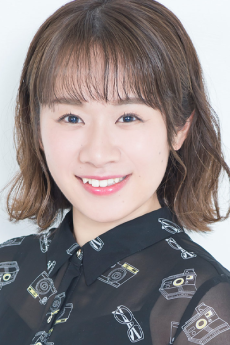
Natsuko Abe

Kotoha

Shion Wakayama

Momono

Rina Kawaguchi

Kyara
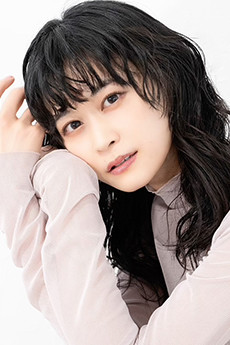
Rina Honizumi

Sumiyaka

Ayana Taketatsu

Chie

Rui Tanabe

Azuma

Haruka Oribe

Beniya

Mutsumi Tamura

Yuuki no Agent

Yukiyo Fujii

Airi

Yume Miyamoto

Shion
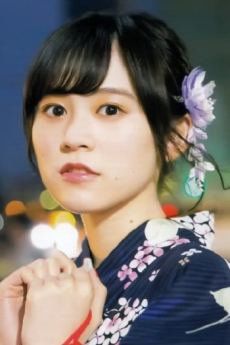
Yuki Nakashima

Keito

Wakana Maruoka

Riko

Sumire Morohoshi

Jinmenju
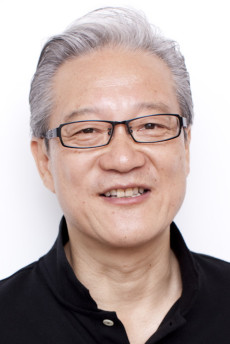
Houchuu Ootsuka

Mizunoto
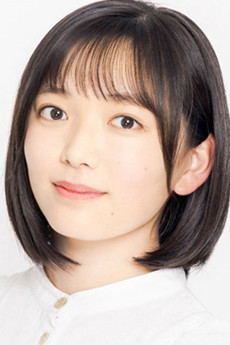
Minori Fujidera

Ookami
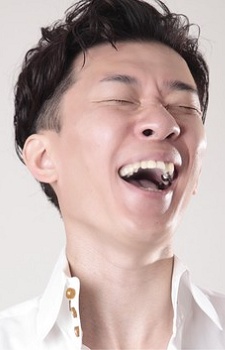
Yoshimitsu Shimoyama

Kabane

Yukina Shutou

Amon
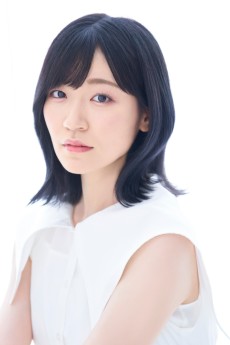
Ami Maeshima

Funabara
EPISODES
Dubbed
Not available on crunchyroll
RELATED TO SHIBOU YUUGI DE MESHI WO KUU.


REVIEWS

ZNote
Ueno’s direction makes ghosts of everything, which is both its great attractor and great repellent.Continue on AniList(Video includes audio. Be sure to unmute) In his bid to create something alienating and perverse, director Ueno Souta used the experience of directing Days with My Stepsister to iron out some of his cinematic language for whatever awaited him next. Having earned his early notice through arranging both the teenage characters and the setting in such a way that things appear seen through a glass darkly, SHIBOYUGI: Playing Death Games to Put Food on the Table is the most sensible continuation of what he sought to find. He understands the inherent draw of the material intimately: despite all the maid outfits, bunny suits, and wrapped towels in the giant bath that might on the surface appear titillating, he makes no pretense about this being a “fun” series in the sense of having “likeable” (in the way we typically understand the term) characters or situations. The titular games are an endlessly encroaching monolith casting massive shadows against the floor until everything is swallowed wholesale. I do not simply mean the characters, including those fortunate enough to survive whatever macabre scenario the organizers have cooked up for them. The swallowing manifests in its visual-acoustic sensibility, obliquely disarming and carrying an abject horror felt in the stomach and in the eyes.
At the center of this horror lies Sorimachi Yuki. Necometal’s and Osada Eri’s design itself is ghostly, with long white hair, pale skin, and empty eyes. Given a quiet and wisped voice by seiyuu Miura Chiyuki, it’s apparent that her very existence in the world is itself rather ghostly. Long sequences of quietly being in her room barely moving, or moving through streets with little direction or purpose, evoke a listlessness that screams in its silence. Memories flash in her mind like a television screen, disassociating herself from herself as a mental and physical presence. She has effectively lost any ability to function within the so-called real world, a figure best thought of as a vague déjà vu and passing by in the gentlest breezes…or at least, that’s what it would initially seem.
She has a refuge in the myriad death games, and it makes ghostly or phantasmal presences of everyone and everything. Its girl participants are both willing and debatably-willing (if what they are claiming is true). Engineered to be as macabre as possible without crossing into whatever the organizers determined is improper taste, Ueno likewise directs them with the same scalpel-sharp incisions or perfectly detailed architectural blueprints. Blood replaced with polyfill fluff in-universe makes death come not through bleeding out, but through destruction of body or mind. It takes effort to die, though many such moments are shown away from the camera itself. There are indeed times that the games are loud either with dying or panicked screams, yet most of the time, they are quiet. Long, agonizing silences or the echo of shoes touching the floor seem to embody the specter of death hanging over everyone. Details on characters are often blanked, as though they can no longer be distinguished by defined traits or qualities, and the music’s ambience provides little concrete body as well. Animations move slowly, if at all, giving weight even to incidental motions. The result is a strange floating, like treading water, with the sense that the leg strength could give out at any moment. It carries a deliciously alluring hypnosis that bends the mind in unusual directions, almost akin to David Cronenberg’s Crash – violence without the stereotypical or pleasurable fanservice or catharsis associated with it.


(Ueno’s direction paints the games as oblique and draining, as though the attempt to reflect their hardship and difficulty directly translates into the viewer’s experience itself. It is both slightly disorienting and quite seductive) But there is indeed a real, more tangible world outside of the ghostly nature of the death games. SHIBOYUGI makes it clear that the real world is just as much a factor in things. It is, after all, the circumstances of the real world that dictate why the girls are in the death games in the first place. This influence also impacts how they are perceived: an “audience” is occasionally mentioned by the players, and while it could be said that “the audience” is a meta commentary on us as anime fans (simply by watching the show, we are a part of the audience watching these girls and their suffering), the question of audience also relates to who is diegetically watching these games. It’s an ambiguity that proposes two possibilities, which the anime makes no claim to answer: the first is the larger societal public has wholly accepted the existence of these games and delights in the prolongated slaughter of its own youths. The second is that the games are run primarily by ultra-capitalist smegma who keep it secret from the public and have stopgaps in place to prevent the truth from ever coming out.
The lack of answer ties both into Ueno’s presentation of the material and what the material itself implies. There exists an entire social sphere of game participants, such that mentorships are given and training—be it physical or mental—is developed. Players are aware of rumors and legends like the infamous Candle Woods game, and the “Wall of Thirty” implies a vernacular among veteran game players that is well-known enough to be a thing that they’re wary of succumbing to, arbitrary as the number might be. Information is not the most closely guarded secret, and participants seem able to find each other in the real world if they so choose. Players evidently are not forced into the games (contrary to what some in the show might say), which implies that their independence is acknowledged by the organizers, despite the sheer sadism they feel of watching them get eviscerated.
If the superstructure of the real world compels or tricks the characters into participating, the anime gives no indication that the larger society does so beyond half-abstractions or vaguely sensible allusions related to capitalism. Aspects of the world are shown to be decidedly plain when abstraction is left at the door. SHIBOYUGI’s death games might be the primary ground for the material’s sense of character exploration, but a largely psychological or cerebral glimpse doesn’t clarify or demonstrate the mouths to feed (after all, the title mentions putting food on the table) or lives to live outside of the games. The “deranged world” thus feels far more in-line with the death games and how Yuki and others navigate them through their own psychology rather than the real world that engineered the games’ existences in the first place. The answer is a formless ghost, present but seemingly unapproachable and ungraspable.


(Each glimpse of the world outside the games are often shown through either abstract constructions to reflect a character’s psyche, or with heavily filtered details that mask a true glimpse of reality. This makes what the world is actually like, including whether the greater public is aware of these games and condones them, hidden from the viewers) Character problems or ideologies that lead them to the games therefore seem individualistic as opposed to being something far more social in scope. As such, most of the characters that receive a more thorough or sharper focus beyond the vague in some way, shape, or form are presented as either psychopathic, antisocial, cynical, or some combination thereof. A character that expresses interest in killing in the real world appears more conceptually compelling than someone playing the games primarily because they need the money. Many of these girls likewise are tied together through mentorship or deranged forms of “love” with someone else, seeking connection in and through the games that actively seeks to break them. In that sense, there’s kinship between them and Yuki. Real lives are as much a death game as the death games themselves. They walk through the valley of the shadow of death. They fear no “evil,” for their rods and staves / their needs that the death games fill comfort them.
But the affect isn’t quite so precise. When everyone important is deranged or messed-up (or well on their way to being so), the knife is dulled. Intrigue towards them tends to derive from Ueno’s directorial treatment via his style rather than what the anime’s writing presents. As though pulled out of a hat with numerous slips of paper to choose from, references to stories can read as shockingly clunky compared to the cold blunt slicing of Yuki’s introspection. The oblique nature of the real-world depictions and the expansive quiet and space within the death games cannot always make up for the lack of developmental endgame. Because many of the “later” arcs are centered around these characters and their warped worldviews, they don’t always make for the most fascinating foils to Yuki both in concept and resolution. The games being shown achronologically correlates to total increased carnage from one game to the next, as well as moving from trap navigation to battle royales. Consequentially, the structural meat of both the games and who awaits inside for Yuki to face may swing between blood to something resembling polyfill fluff. It’s as though as the series continued, it could take on ghostly visages of what it was at first despite my loving its aesthetic more with each passing minute.

But I feel that I’m being a bit unfair. Only yesterday, I published an online article about how being overly concerned with The Plot™ or its writing unjustly penalizes some anime and diverts attention away from what they do so well. I might as well have written about SHIBOYUGI. I cannot say that the underlying writing within this anime actually thrilled me most of the time, but seeing Ueno’s direction gave such pointed and neverendingly conscious texture to what might have otherwise passed as apparition. That alone made watching the anime worth it. For all my grievances, I find myself in the frankly intriguing place of sincerely recommending SHIBOYUGI even though I don’t think I can bring myself to say that I like it. I guess I find the notion of wanting someone to discover for themselves what it has to offer too enticing a prospect to pass up.
That discovery for oneself is a game unto itself, too. And, as Jigsaw once so famously said, “I want to play a game.”

TheAnimeBingeWatcher
You are complicit. Don't you dare look away.Continue on AniListChances are, most of you are unfamiliar with the name Souta Ueno. It's understandable; his first few years in the industry were spent on journeyman animation work and random episode director spots across various studios. It wasn't until 2024 that he got the chance to debut as a full series director, and that first show he was in charge of... well, it was called Days With My Stepsister. I can hardly blame anime fans for assuming the worst from that title alone and passing it without so much as a three-episode test. That's certainly what I was going to do, but thanks to some positive chatter I heard on Twitter, I ended up giving it a shot anyway. And it absolutely blew me away. Stepsister is no mere incest rom-com; it's a hypnotic tone poem that sinks you into its characters emotions with such riveting visual storytelling that it feels like you might drown in it. Light and shadow cast the world in painfully intimate contours. The background noise puts you at the center of a living, breathing soundscape. Shots fade between dream and memory, distance and closeness, pulling the show's physical reality apart to vividly portray the emotional reality of what falling for your step-sibling would actually look and feel like. It's a tour-de-force of directorial talent that purposefully rejects all of modern anime's usual tools in favor of something far, far more absorbing. And while it certainly wasn't perfect, it left me with one absolute certainty: this Ueno guy is going to be one of the most exciting artists of the decade.
Well, two years later, it seems that Ueno has officially found his niche as a director: taking the most disreputable, trashy genres of anime and twisting them with an overwhelming level of arthouse pretentiousness that pulls them apart at the seams. Days With My Stepsister transformed the incest rom-com into an interrogation of the mechanics of incest itself; now, Ueno turns that same subversive lens upon edgy death game anime. Shiboyugi: Playing Death Games to Put Food on the Table is a show with horrific violence yet almost no blood, brutal slaughter that's almost never shown on screen, an exercise in cheap exploitation that refuses to let its audience indulge in that exploitation. It's a show in which a bunch of gorgeous porcelain dolls in fetish outfits are made to suffer and die for our enjoyment, all while it stares you dead in the face and dares you to take pleasure in their pain. The average episode will leave you choking and suffocating in empty air. It's cruel, miserable, utterly unforgiving, and I fucking love it.
The premise is simple enough: in a world gone mad, people- mostly cute girls- play death games to put food on the table. These games can range from massive, multi-level escape rooms where cooperation is necessary to survive, to full-on bloodbaths where the only path to victory is killing anyone who stands in your way. Our protagonist, a ghostly shell of a girl named Yuki, has set herself the goal of completing 99 games. What she hopes to achieve by doing this, we don't know; in fact, it's an open question whether Yuki knows herself. The show jumps back and forth through time, taking us through 4 of the most pivotal games in Yuki's career, and what becomes clear very quickly is she is desperately trying to hide from herself. She narrates the events of her life in two different voices that speak simultaneously in first-person ("I didn't want to hurt her.") and third-person ("Yuki didn't want to hurt her.") Memories play in the movie-theater of her mind as she desperately tries to rationalize the horrors she's experienced and perpetuated on others. She's as much a spectator to her suffering as we are, fully depersonalizing from herself as the weight of her barely repressed traumas eats away at her soul. This is not a linear story about moving forward through plot; this is one horribly damaged woman's self-interrogation that drags us right into the whirling storm of her mind and forces us to reckon with the cost of viewing her pain from an impassioned distance.
That sense of voyeurism is central to Shiboyugi's brilliantly nasty hook. In universe, the games are a spectator event, a Hunger Games-esque TV show for the braindead masses to enjoy from the comfort of their living room. But we're never shown this audience in person; hell, we barely spend any time at all in the "real world" outside the death game complexes. There's one single episode dedicated to following Yuki's daily life in the outside world, and it's the one that most feels like an abstract waking nightmare. On one level, that's to show how deeply this has come to define Yuki; she's become so wrapped up in the games that they're the only thing she recognizes as real anymore, the normal world little more than a void she stumbles through between contests. But the larger point, I think, is obvious: WE are the audience of this deranged world. WE are the spectators sitting down to revel in the mutilation of the female body, denied any chance to view them as people outside their roles as entertainment. Since we only view Yuki and her fellow competitors through their time in the games, we are denied the comfort of knowing what exists outside this malaise of death. We simply view them as they were meant to be viewed: spectacles of blood to slake our sadistic thirst for cute anime girls being brutalized.
And it would be so easy for Shiboyugi to become the very thing its criticizing. This is, after all, a show in which a bunch of flawlessly beautiful girls subject each other to horrific violence while dressed in maid outfits, bunny suits, and other skimpy otaku-approved attire. There was every chance it would indulge in that exploitation and shove our faces in the gore and tits until its attempted satire is buried. But Ueno is far too smart a director for that. Under his vision, Shiboyugi pulls far, far back, turning these gruesome games into something we're only allowed to glimpse from a distance. Most of the actual violence occurs off screen; we're shown the aftermath of lost limbs, chests torn open, comrades sacrificed to deadly traps, but the moment of bloodletting itself is almost never portrayed. The camera often stands so far away that the characters lose their linework and become abstractions of themselves. A lot of times we can't even see their faces or features, let alone take in the erotic details of the fetish outfits they're forced to wear. The in-universe audience may be able to enjoy the gruesome, up-close details, but Ueno's direction refuses to let us indulge so cheaply. Instead, it makes us horrifyingly aware of our role as spectators, how all of these supposed carnal thrills are little more than empty, sickening cruelty that robs us of our empathy for the lost souls exploited in this death trap.
Perhaps my favorite detail in all this, however, is the stuffing. Through some bizarre sci-fi treatment, the girls in the games have their blood spiked with a substance that literally turns it into stuffing when it leaves their bodies. You could get your arm blown off by a shotgun, or a sword plunged into your chest, and it would just look like a doll being torn apart with white cotton spewing everywhere. It's a singularly horrifying piece of worldbuilding that encapsulates everything about Shiboyugi's portrayal of female exploitation. In-universe, the girls get this treatment because the audience is too squeamish to watch real blood and guts spill out on screen; it's much more palatable reduced to spilled cotton. So instead, these beautiful doll-like girls are turned into actual dolls. Now the audience doesn't even need to wrestle with the discomfort of watching actual woman being torn to pieces; after all, why cry over a sexy fetish toy getting worn out or broken? There will always be another to take its place. It's objectification in its purest form, women turned into literal objects to spare the audience the trouble of viewing them as people when they're reduced to shreds. Even in their very deaths, they are denied the right to be seen as human.
The sum total of all this is a show that isn't just dark, isn't just horrifying, but one that simmers with an uncontrollable rage. Shiboyugi is furious at the suffering its characters endure. It is furious at how easily women's lives are crushed and devoured as cheap entertainment. While every player has their own reasons for participating, some less virtuous than others, there is no one enemy Yuki can defeat to surface from her waking nightmare; the system itself has consumed them all far past the point of wanting to fight back. And Ueno's stunning direction drowns us in this darkness with suffocating sound design, shifting aspect ratios, haunting hallucinations that repeat half-remembered stories like mantras of death, moments of pure visceral agony as we discover just how gruesome cotton stuffing can truly be. We are denied the catharsis of the violence itself, but we are buried in its consequences, its physical and mental scars accumulating with each unforgivable choice Yuki and her rivals are forced to make for our supposed enjoyment. We are swallowed by the very nightmare we brought upon them and never allowed to forget the cost. This show made me feel complicit. I will never be able to watch another death game anime without Shiboyugi's shadow clinging to my back, asking me how much of my soul I'm willing to sacrifice this time.
Is that a fair ask of an audience? To try and make you feel bad for enjoying what's, in the end, just a trashy anime genre? Art this actively confrontational is a challenge to pull off; if the point isn't made clearly enough, or isn't worth making in the first place, no one's gonna get the message. And if there's one way Shiboyugi's methods work against it, it's in characterizing the cast. With the camera pulled so far back and the atmosphere such a removed, icy cloud of imagery and ideas, most of the characters besides Yuki are left unexplored by the narrative. They're reduced to symbols fleshing out the show's thematic texture, not fully realized characters in their own right. That's intentional, to some extent- Yuki's disassociation keeps her at emotional arm's length from her fellow competitors, so that's where we stay too- and there are a couple supporting players that contribute some of the show's most wrenching moments.. But for the most part, the entire show is carried on one character's back. and that's a heavy burden for even the best-written characters to bear.
And nowhere is this more obvious than the show's middle arc, a bathhouse brawl that introduces a massive cast of side characters to be developed and slaughtered in the space of just two episodes. The result is Shiboyugi's weakest arc by a country mile, painfully rushed and half-baked with too many walking ciphers to get invested in before they meet their end. At times it feels like there are scenes outright missing with how quickly it montages through "developing" these bit players. The only reason it manages to stay compelling in spite of itself is just how fucking good Yuki's VA is at selling the rage and despair she endures. Seriously, why hasn't Chiyuki Miura been in more things? Her performance as Yuki is outright hypnotic, drawing you into the depths of her repressed feelings with an icy precision that can't quite paper over the roiling cauldron of misery that's eating away at her. All she needs is a single whisper of "good game" at the end of episode 7, and this entire middling arc is redeemed. It's an undeniably star-making turn, and if this woman isn't booked in every high-profile series possible next year, we will have failed as a society. Not as badly as Shiboyugi's society failed, but close enough.
In all seriousness, though; I'm truly glad a show like this exists. We've gotten so used to easy, non-threatening art that's too scared of its own shadow to say anything meaningful. Shiboyugi, and Ueno's entire artistic vision, is a wrecking ball smashing through the balls of our blissful ignorance. It's a furious, spine-crawling reminder of the horrors buried in our culture's rot, a warning not to numb yourself to exploitation as entertainment lest it swallow you and your morals whole. It is, without question, going to be the feel-bad masterpiece of the year. And if Days With My Stepsister hadn't already proven it, it's clear now that Ueno is going to be one of the most exciting directors of the modern era. Which genre will he put in his crosshairs next? Harem? Ecchi? Dare I hope for a pretentious arthouse isekai? The possibilities are endless! But even if he vanishes off the face of the earth tomorrow, at least he'll have left us with this wonderfully twisted modern fairy tale to linger in the corners of our nightmares long after the lights go out.

Baleygr
"This is a story about a deranged world. But this is also the story of the world they lived in."Continue on AniListSouta Ueno 上野壮大, ever the prolific filmmaker, has become a name of considerable renown within the Japanese animation industry, to a point where his magnificent achievements are of a notable persuasion that goes against everything that every other anime takes for granted, through no fault of their own of course. His ability to surpass the limitations of artistic expression, irregardless of the severe constraints of production woes (as is the case with Studio Deen's fairly meager resources) exemplifies someone with a keen eye for bending the rules in lieu of commonplace practices.
Almost two years ago he took on the task of adapting Days with My Stepsister, a herculean one at that, to critical acclaim. The cinematic language, the breadth of technical aspects and auditory techniques on display, were cut and parcel definitive art of the highest degree. Through Ghost Mikawa's work he took on and exhibited a near infinite understanding of the material's strengths and weaknesses and sought to deliver something tangibly coherent so as to elicit new interpretations that would resonate with the viewer. Now, those specific skillsets can also make or break enjoyment, but it's all in the eye of the beholder. You either like his brand or not, and that's perfectly understandable.
Although his directing style proves alienating at first, there's something inherently unique about him that sticks out, to an aesthetic sense. For SHIBOYUGI Ueno uses his remarkable experience to iron out the kinks in his managerial position to more accurately continue heightening sensibilities intrinsic to his frame of mind, and with a title as thematically perverse and provocative as a genre-defining outlier like death games, that assortment of coherent storytelling avenues reaches a new euphoric high.
Just as with Gimai Seikatsu he understands the main draw of the work to an analytical extent. The setting and characters, minus Yuki, interchangeable at the drop of a hat, can be seen through an imperceptible glass of reality, where the original intention becomes more or less indistinguishable from the genuine article. Despite the titillating fanservice and invasive hypervigilance the girls are held under, Ueno makes no qualms about highlighting the seriousness of these death games. They are not fun. They are not black or white. It's life and death. And the seductive allure behind confronting death straight in the face becomes like a second skin for mentally impaired individuals like Yuki. Each game has their own stylistic spin on the macabre, until eventually, the psychological barriers behind each participant reach their own breaking points wherein Ueno entreats his own practical spin on abstraction and visual modernistic sensitivities that encroach on emotional investment.
Junichi Matsumoto is another character of unique renown that deserves a special mention, on account of their beautiful score, which, interlaced with one of the most striking sound directions, displays immaculate mastery over tension and sentimental mood.
Transgressive and transformative, the ghostly impression carried by the protagonist takes a life on its own. Ueno demonstrates time and again his willingness to go past the curve/testing the waters when it comes to taking advantage of commercial animation's benefits, contending against mainstream narrative structure, diverging at times from the original literary tools that author Yuushi Ukai has conveyed to readers. The results are a rarefied ingredient of abridged, if not imperfect, manifestations of the story's world and characters, but still palpably intimate and powerful, all in the veins of servicing a complete work of art that favors a fulfilled, unbending vision. In a genre oversaturated with heady substances like blood and gore, a venerable subsistence on violence and escapist fantasies, it's with heavy relief and exaltation to see an anime rather choose the latter approach, unrelenting in bypassing the visual splendors of brutality, even point blank refusing to assuage viewers' curiosity and concisely aim its efforts on creating an enrichment of empowering, life-changing storytelling (admittedly through the perspective of someone damaged by society)
Although it is comparatively rough and otherwise lacking in certain areas when compared with his best work (Gimai Seikatsu), it's still strong enough to warrant apt consideration. Some arcs didn't quite hit the home stretch that was intended, but there's something appealing about the inconsistency of its ups and downs that make it stand out. Which, in and of itself, was in service to the romanticization of a person as dead inside but wanting of gratification as Yuki was, twisted as she is, yet morally sound and compassionate in searching for a contorted "love" that escaped her, unawares of her specialness.
SIMILAR ANIMES YOU MAY LIKE
 ANIME DramaDeath Parade
 ANIME ComedyBakemonogatari
 ONA DramaTomodachi Game
 ANIME PsychologicalGyakkyou Burai Kaiji: Ultimate Survivor
 OVA ActionImawa no Kuni no Alice
 ANIME ActionDarwin's Game
 ANIME ActionJuuni Taisen
 ANIME ActionAkuma no Riddle
 ANIME ActionAkiba Meido Sensou



SCORE
- (3.55/5)
TRAILER
MORE INFO
Ended inMarch 18, 2026
Main Studio Studio DEEN
Favorited by 1,095 Users
Hashtag #死亡遊戯