
KIICHI VS
STATUS
COMPLETE
VOLUMES
11
RELEASE
June 28, 2013
CHAPTERS
111
DESCRIPTION
Ever more uncompromising in the face of injustice, Kiichi has become a star. Known around the world for shaking the Japanese establishment, he doesn't intend to stop there. Now at the head of a big company, between school of thought and mafia, whose members number in the thousands, he wants once again to get the population moving, even if it means provoking the powerful of the country!
(Source: Editions Delcourt, translated)
CAST
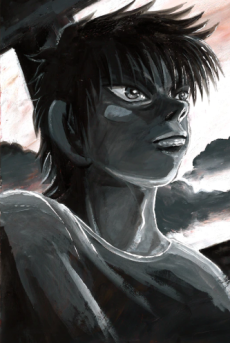
Kiichi Someya
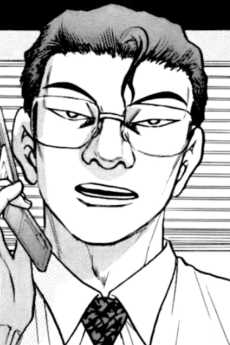
Keiichiro Kai
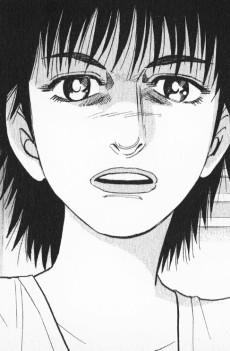
Aya Tanaka
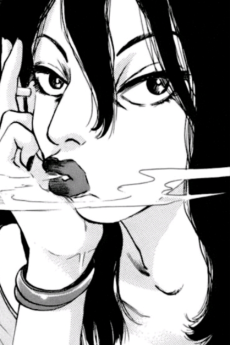
Misato Saji
CHAPTERS
RELATED TO KIICHI VS
REVIEWS

KiChUgO
"He will grow up to become a man of unparalleled virility"Continue on AniListKiichi is my first time experiencing a Hideki Arai manga and he hasn't disappointed me at all. The story revolves around a young boy named Kiichi Someya who was prophesied to become a man who has the strength, energy and charisma to change the world (Virility). The predominant and reoccurring theme of Kiichi is how a single person can stand up and make a huge impact and difference in the society which is completely run by a corrupted government and the influence of people with money and power. Might be my favourite aspect of the manga. Arai sensei has illustrated the government which was run by corrupted people who hid themselves behind the law after committing atrocious crimes by their influence and money accurately and which is relative to the current state of the society that we live in. I love the way Arai sensei has incorporated reality into this manga. Kiichi at first doesn't start off with facing the evil society. At the beginning it shows the life of our protagonist a.k.a Kiichi Someya. He goes through various life scenarios which were exponentially gruesome and uncanny for a normal 3 year old child. But because of these challenges he was able to know more about human nature and how the world works despite being a dumb brat. Kiichi has been represented as the evolution of human beings throughout the whole series, started as a primate and concluded as a human who upholds the true meaning of humanity more than anyone else. Kiichi easily has one the best developments and progression in animanga. Kiichi and Kai's dynamics is of the striking and remarkable aspects of the story. Their amazing team work to expose the criminal politicians and big shots, having conflicting ideas at the beginning of VS, then later on realising the mistakes they have made in the way to inform people about the corrupt government and finally weaving together the best way to disclose the information is just perfectly done. The whole execution of the 2nd plan might be my favourite sequence in the manga. Kiichi and his ways of reacting at first was questionable but his charisma has upheld his way of executing them. Love Kiichi so much man. His speech and actions moved me. Throughout the whole manga, Arai sensei gives us readers many reality checks which are very concerning and eerie to us humans as it characterises some of the worldly things that are actually happening. Kiichi is such a thought provoking manga that ends up questioning ur morale. And the conclusion of Kiichi is tragic yet poetical. Hate to say it but it's the best conclusion u could give to Kiichi and probably one of my fav endings in fiction. He sacrificed everything for the upcoming generation and his loved ones so they could live in a better society. In conclusion,
This is easily my 2nd fav socio-political fiction I've experienced and moved mountains for me. I never expected this manga to be emotional but it made me cry at the end which is something rare for me to do.
Thank you Arai sensei for creating Kiichi9.75/10

smolet
Kiichi... you are Alive!Continue on AniList
PREFACE:
"There's Daddy, Mommy, and Kiichi. Daddy was born in the mountains, Mommy grew up by the sea, and in the city, we held hands before we even met. But in the end, it led to your birth, Kiichi."
My experience with Kiichi was a journey of ebb and flow, its story often teetering between highs and moments of lag during its buildup arcs. While these preludes occasionally dragged, once the narrative took flight, it became a dopamine ride. The charm lies not only in Kiichi's growth but in how the political rhetorics has been presented in an unadulterated manner from the lenses of the Japanese side of things.
PROTAGONIST:
"Kiichi, born on the day of prediction, would turn out to be a man of unparalleled virility."
Initially, Kiichi appeared unremarkable, almost a cliché of the "cool, edgy protagonist" often seen in seinen works. Yet, a significant shift occurs during the time skip to his adolescence. While early story arcs faltered due to their weak buildup, Kiichi's evolution shone as a highlight, breaking free from these narrative shortcomings. My perception of him transformed as he began to break out of his shell, connecting with characters like Kai and facing his past traumas. These experiences shaped his erratic behavior — vulnerable, and prone to adopting others' beliefs.
But fast forward to Kiichi VS, and he has matured, adopting a logical, more socially conscious demeanor. This transformation not only marked a shift in Kiichi’s character but also in how I saw him. Juxtaposing the naive child he once was with the man he became underlines a factor in play: the weight of responsibility and duty often demarcates childhood from adulthood. Having endured more than most could fathom, Kiichi’s young mind grappled with the harshness of mortality. In response, he shouldered burdens far too heavy, attempting to mimic adulthood’s facade while subconsciously yearning for security and simplicity. By the close of the first book, traces of change begins to appear.
Kiichi VS presents a matured Kiichi whose sparks of rebellion flares more into flames of life upon meeting his soulmate. This love reawakens a long-lost innocence, softening his hardened resolve and drawing out a new tenderness. The battle within him shifted, from a life driven by rage against death to one focused on cherishing life. Through love, Kiichi's understanding of life and death matured — not as opposites but as intertwined facets of living fully. During the Mt.Fuji spreads we see Kiichi was nothing more than a normal human, shouldered by weights of responsibilities, weights of his parents death, which he sub-consciously blamed himself, breaking away from those shackles of duties, he broke free. Where he lowered himself to the normality of the typical, he wanted love the final piece which defined him. All he ever wanted was Love, a forgotten chunk.
POLITICAL VIEWS:
It wouldn't be a big surprise if Kiichi never received an official english translation or high recognition especially in the west, considering how Arai unveiled the truth of “Americanization” in the Japanese society. Much like Billy Bat, Kiichi stood firmly when it came to showing the dark side of America and it's actions without sugar coating or pulling the punches. The prequel book dives into the corrupt facets of Japanese Government, shedding light to the ignorance of the upper echelons on the societal issues like Homelessness, Homicide, Corruption, Political Exploitations etc, while giving more emphasize on Child Prostitution.
My views about the manga took a big turn from this moment on, presenting the true nature of the government and society to such a depraved activity while the society is being ignorant to it and not batting an eye while the government is taking no measures about it but also unsurprisingly having an active participation in the very act of child prostitution itself. This isn't fiction this is reality in Japan; Child prostitution or CP isn't a big deal in Japan, By the gradual molding of the laws and judiciaries this case is now being overlooked and being turned into the new normal. An example to jog your memory is the Controversy of the Rurouni Kenshin Mangaka, who held a surprising amount of CP in his custody but got off the leash with a $1000 fine.
On the Sequel Story, Kiichi VS the story takes a turn more towards the international stage, by bringing in the “American” aspect to the play. American government holding a special treatment in Japan where any crime done by the US Army officials wouldn't be an issue as America is the scaffold for Japan. Arai didn't go softly when expressing this issue into his manga, boldly showcasing what the Americans have done to the Japanese society. The Mad Cow disease is another example in the manga on how an American Capitalism driven more importance to business than human lives.
Even after Japan became republic and democratic the direct influence of another country (America) meddles with their decision making, a dog in the leash scenario. Arai tries to put the limelight into this problem which most Japanese people are ignorant about or just didn't know about. The story is more political than you think it is. The political problem's being overlapped with each other into fooling the people with the facade of “it’s for the betterment of the nation and people” is more than natural and this doesn't apply to any one nation but many. While most of the people reading this would be not understanding what this all means especially the American influence on Japan watch this video.
The manga comprises of two parts: Kiichi & Kiichi VS. It always boggled my mind as to why the sequel manga's title was named Kiichi VS? VS in usual terms means versus, but who is Kiichi fighting against? Could it be with himself, or could it be the invisible figure without a singular identity, The Social Construct a.k.a The Society. The invisible figure which manipulates the masses?
FINAL VERDICT:
Lke i previously said, my experience with Kiichi as a whole is filled with ebb and flow. The story seriously lacked in an interesting build-ups which made the whole journey a rough one, not necessarily a bad one... or atleast “Kiichi” picked the drowning ship up. Also let me set this straight, Politics in a story is always a good thing, Politics or Governance is one of the best form for the depiction of Human vices and Human virtues in tantamount scale. It's one of those spices which elevates the narrative exponentially.
The story is more grotesque and realistic than I initially thought it to be. Arai did a great job working with the expression of his Political and Social views of Japan while trying the best to be unbiased. The vileness of the human society and the corrupt mechanisms inbuilt into this system which sub-consciously made the people weak in the spine, lacking the push to criticize against, there was a need for revolution, a need for the VOICE, This made Kiichi. The story was really well put, bringing real life references to put up a sliver of realism to the already grotesque setting. The manga was phenomenal. Kiichi as a protagonist was exceptionally crafted, growth from a rebellious uncontained fire to a polished diamond, Kiichi's growth is something to be witnessed. Became one of my favourite protagonist all over the animanga genre.
A great manga but definitely not the pinnacle nor the greatest piece of literature, the strength's were often overshadowed by the flaws present, but it wholly presented what the story meant surmounting those obstacles.

“KIICHI... YOU ARE ALIVE!!!”
~~~~
atomx
Breaking Free Of The Promised PathContinue on AniListDeconstructing Kiichi VS! - Hideki Arai’s Message To The World
Kiichi!! ended with an awakening of Japan. Kai and Kiichi had achieved to broadcast the prostitution scandal and send out a message to the country. Ten years later the fight is still ongoing but in a much different way.
Raw violence is not the solution to change the system. To truly create a better world they have to gain political power - Kiichi has to become prime minister. At least that's what Kai thinks. His and Kiichi’s relationship has become much more tense after the timeskip. He is a realist that has to deal with the logistics and finances of the company while Kiichi relaxes and dreams about a better world.The Kurita warehouse affair becomes the main subject for the second volume. After the government abolishes laws that overview the health standards of meat, a disease starts infecting cows. To save costs and avoid profit loss a company called “Green Pastures” starts repackaging imported meat as Japanese meat. Employees are pressured from above and have no choice but to comply as they are reliant on their wages.
When calling Mr. Kase Kurita gets a song lyric as a response - “From tomorrow on, I’ll live like today!” The lyrics basically depicted the point of the story. It contradicts itself and shows the never-ending cycle of compliance to the system. Becoming an accomplice to the system is the safest choice and Kurita slowly realizes how he had never questioned this way of living. He himself thought that marrying his daughter would ensure a safe life for her, although he was opposed to it originally.
As soon as the scandal comes to light, Green Pastures manages to twist the situation. They show their fired workers and picture themselves in an empathic way. The media attention quickly dies down and Kurita is left with a failed company. Unemployed workers become mad at Kurita even though he did the right thing.“Justice and integrity, we don’t fill our stomachs with that”
Kurita did the right thing, he exposed companies that were willing to sacrifice the health of consumers for extra profit but the media twisted the narrative and even his own workers became mad at him, as he had ruined the company. If standing up to injustice results in nothing then what is the right thing to do?
“Why does no one help those who fight against the state? Because there is nothing to gain from that.”
Changing the system might require you to give up all your comfort, sacrifice what you have built and there is nothing you will gain from it. It’s not surprising that most people do not possess the strength to do so.

“So open your fucking ears now, those who fail to protect the country are deceiving you, stop believing in them!! The rich are also deceiving you! They are your enemies, stop believing in them!! The police is at their orders, stop believing in them!! The law? Bullshit to serve their interests, stop believing in it!! The ones you see on TV, the ones who write the newspapers, they only defend those who drool over money, stop believing in them!! The deities and the buddhas, they’re just tools to make more money, stop believing in them!! All those things you used to have faith in, stop believing in them!! Because me, from now on, all of you who never doubt, all of you who never get angry.. I don’t believe in you anymore!!”
Kiichi’s final speech in the Budokan arena is the highlight of the first few volumes. He declares war to all of society, to all of those who put profit over people and to all of those who ignore what is happening. It also causes Kiichi and Kai to finally have an eye to eye talk. It has been 10 years since they met and both of them have changed. Kai has grown into a full fledged businessman who has to manage the company to ensure that Kiichi’s revolution will succeed. This is where the conflict between both of them ensues. Kiichi is an idealist, partially reliant on the fact that he is simply too stupid to understand revolution from a financial standpoint, who does not agree with Kai’s way of working. Contrast to this is Kai, who has become sick of Kiichi’s inflexible dreams and ideals. They have a heated debate that results in Kiichi realizing that he will finally have to act.
“Kai if we’re going to rip everything out, we have to remove things down to the roots”
“We swear that neither them nor their associates will have a single day of peace. We swear it! They will shiver in their sleep.”
The Haramita Theatre Group is a group united by anger and hatred. Each member was in some way abandoned by society and now bears a deep grudge against it. Kiichi resents this deeply. When Aya first tells him of their agenda he tells her that anger does not suit her. Their reason for rejecting the method of killing government leaders is that it is a selfish act for one's own pleasure. The Haramita admit to it as well, their plans are not for any greater good. They simply have been done wrong by the entity called the nation and want to let their anger out.
But this anger will never go away. Politicians will be replaced or even gain sympathy after their death. Kiichi tells Aya that she should not dirty herself and stay beautiful the way she already is. Taking the easy route and letting your anger out is seen as dirty by Kiichi. In contrast to this is accepting what has happened and learning to live with it. His parents were humans that were killed by another human. Aya is beautiful because she has been enduring the pain of losing her son for so long. She shouldn’t fall victim to her anger and become a slave to it.
In a way it’s an analogy to the greed and selfishness of the average citizen and also shows how hypocritical the members of the Haramita are. They pretend they are something better by criticizing society constantly but all of them only follow their own interests. There is no difference between them and the average citizen, both follow the easy way and chase their own desires.“The people who keep blabbering about the world yet do nothing, only cause they hate violence, those who want to change the world, yet think that as long as they themselves are fine, everything, just everything with the current situation is all right. If you don’t drag tose people in your plan too, and try to change them and the world altogether. The anger that you have, it will never ever go away!”
Revolution cannot be done with a pretentious group that only cares about themselves. To truly change society you have to take the people with you. Even if they are dumb, oblivious and compliant. You have to help them too.
In the final scene of the hanging Aya threatens to kill Kiichi if he doesn’t cooperate. He himself kicks away the ladder he was standing on so that he dies. He will not let Aya dirty himself and would rather kill himself. A true testament to his iron will.
So far Kiichi VS has been centered around Japan only but it does not stop there. Although the occupation of Japan officially ended in 1952 the US still has military bases in japan which are used by soldiers. When soldiers commit a crime in Japan they are often protected by the US who won’t allow local police to prosecute the soldier even though they might be guilty. Aya’s son was killed by a speeding US soldier and the military instantly found an excuse to free the soldier from any punishment.

Kiichi’s version of russian roulette is his way of showing that he is finally committed to his revolution. He tells the four killers that they should forget about what is to gain or lose and to just follow him. After it he calls Kai and tells him he won’t be returning to the company. He is ready to die for his goals and no longer fears anything.
Following this is the start of the three kidnappings. They gather info on their targets and Kiichi visits old man Toraji who tells them an interesting story about a goldfish he found:
“The fish who hates the world he lives in, I want to see if he has the power to destroy its own aquarium. So once you’ll be ready to change the world at the risk of dying with it, I’ll lend you all my power”
Kiichi has not yet proved to him that he is ready to die. He might have told him about his plans but so far he has not done anything.
“And our thing it’ll be just like the elections: After we’ve done it, nothing will have changed! Shit, it’s not because we kidnap 3 big jerks that the world will shake in fear!! It’ll just be another subject of conversation for those who have nothing else to do. But it still has some meaning!!”
The kidnapping won’t suddenly change Japan but it will set the country on fire.

After reuniting with Kai and teaching the group of kids the truth about Japan’s political system, Kiichi finally reveals the reason for the kidnapping: It was to save the woman he loves. If he had not intervened Aya would have become dirty.
In his final public speech he admits that he won’t be able to change the world. He wants to do what he likes and not fight for any longer. Now it is the public's responsibility to do something. Every person has the responsibility to keep the system working. Following the reveal that he is the one who kidnapped the politicians the public becomes conflicted and some rebuke his actions. Others question if there even is any choice left other than what Kiichi did.
“If the state becomes oppressive and starts doing whatever it wants without caring about the citizens' lives. And if neither protests nor elections shake it anymore. What means of opposition are left for the people? Other than terrorism, what solution is there? The state as soon as it finds the slightest crack in people's private information. It always takes the opportunity to monitor and control. It’s its obsession. I feel like it doesn’t want to leave any space for the freedom of people.”
In the final few chapters before the bombing of Aokigahara, Kiichi dies and is born again. The person he was, his rebellious self, is no more and he has become someone new. It might seem hypocritical of him to sidetrack from the goal he had all his life but that is not what Arai is trying to tell us. Is there a way we should live our life? Does Kiichi have to change society, just because it was what had fueled him all those years? There is no end goal to your life. You can’t betray someone by suddenly switching your objective. With each new thing we learn we change, and our goals do too. Kiichi was so obsessed with revolution all his life that he never even had the chance at a normal childhood.
Before joining the Haramita, Kai has a talk with Kiichi in which they reflect upon their youth. Kiichi questions if the path they have chosen really was chosen by them or if it was promised. Sometimes it may feel like the road ahead is no longer the road you want. Maybe then it is time to choose another road.“The war is over and Potchi died for nothing”
Kiichi may have not accomplished a revolution but he surely did not die for nothing. For the first time in his life he was truly alive.
“Thanks for giving me a chance to live. If you think this once in your life, it means you’ve won. This time I’m sure I’ve won”
“Acting for the sake of the world is important too, but you have to take care of yourself first, no?”

The Story of Samson
Before ending this review I want to interpret this metaphor in the context of the ending, given that it is an inspiration for the story as a whole.
In the Book of Judges, Samson is described as a powerful Nazarite who was born by an infertile woman that had made a promise with an angel. He possessed superhuman strength and fought the Philistines in multiple battles, always decimating their soldiers. To beat Samson the Philistines sent Delilah to find his weakness. Samson fell in love with her and after giving her wrong hints he would ultimately tell her his weakness:
“If my hair was cut, I would be an ordinary man”
Delilah later betrays Samson and cuts his hair. The Philistines gouge his eyes out and make him push a giant grindstone. In the Opera “Samson et Dalila” by Camille Saint-Saens, Delilah later regrets her decision as she had also fallen in love with Samson. In the final scene of the Opera Samson regains his power after praying to god and destroys the temple of the Philistines alongside him and Delilah.
Kiichi is a representation of Samson. He has been gifted with an iron will and never stops until he achieves his goal. When he meets Aya (Delilah) he falls in love and gets his haircut by her (Chapter 40). His goal of destroying the Philistines (changing society) is halted by her and he gets captured by the Philistines (police/government). In the final moments he regains his strength and symbolically destroys the temple (Aokigahara).
Aokigahara and Mount Fuji are a motif present through the whole manga, it’s where it starts and ends. Both of them are a representation of Japan as a whole (Fuji often being the symbol of Japan). The bombing of the forest is the same as the temple crumbling after Kiichi destroys the two pillars.

Although Samson returned to god just for a short time he was able to break free and fall in love with a woman. For just once he had the chance to be alive and even if he died under the rubbles of a temple, he won in the end.

SIMILAR MANGAS YOU MAY LIKE
 MANGA AdventureThe World Is Mine
 MANGA ComedyKanojo, Okarishimasu
 MANGA DramaOyasumi Punpun
 MANGA ActionShingeki no Kyojin
 MANGA AdventureUchuu Kaizoku Captain Harlock



SCORE
- (4.25/5)
MORE INFO
Ended inJune 28, 2013
Trending Level 1
Favorited by 369 Users