
AME TO KIMI TO
STATUS
COMPLETE
EPISODES
12
RELEASE
September 21, 2025
LENGTH
23 min
DESCRIPTION
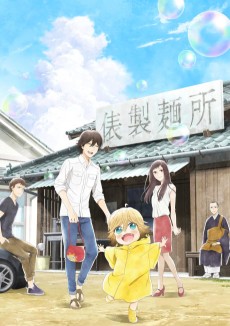
On a rainy day, Fuji meets a cute critter posing as a dog and offering an umbrella and a cue card that says, “Please take me home” and she can’t resist. With this dog-poster’s quirky charm and mysterious ways, life together becomes a heartwarming adventure of friendship and shared seasons.
(Source: Crunchyroll)
CAST

Fuji

Saori Hayami

Kimi

Anna Mugiho

Ren

Satomi Satou

Mimi

Yuna Kamakura

Krause Ella Kii

Yuzu Yumoto

Teru

Kikunosuke Toya

Tatsuo

Youji Ueda

Wako

Yumiri Hanamori

Arata

Yume Miyamoto

Michiko

Mie Sonozaki

Noriko

Hikaru Toono

Maracas no Ko

Momoka Terasawa

Kuro Neko
Anna Mugiho

Juui-san
Chafuurin

Emma

Rei Sakai

Hashigami

Sumire Morohoshi

Medaka

Miyari Nemoto

Hiura

Shuuhei Sakaguchi

Houjou

Mitsuho Kambe

Kinako
Anna Mugiho
EPISODES
Dubbed
RELATED TO AME TO KIMI TO
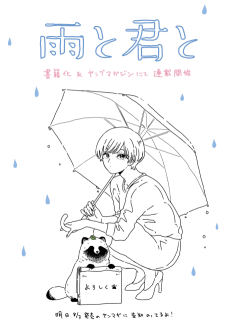 MANGA ComedyAme to Kimi to
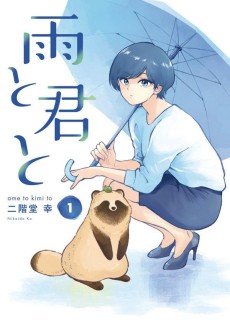 MANGA ComedyAme to Kimi to
REVIEWS

Scheveningen
A decently endearing slice of life show that lacks consistent narrative focus to give its themes a strong impactContinue on AniListAme To Kimi To is a decently endearing slice of life show that unfortunately lacks a consistent narrative focus that would give its themes and character exploration impact. This is partly due to how AmeKimi is structured, with most of the stories that comprise each episode being a mix of general slice of life fluff where Fuji interacts with her friends and family, or sitcom style skits where Kimi’s antics are often the focus. These loosely connected vignettes do paint a relatively vibrant picture of Fuji’s life, relationships and past, but they often lack a clear focus that would give them a sense of intentionality or purpose within a wider story. This leaves a major part of the premise, Kimi’s introduction into Fuji’s life, feeling like it serves little narrative function since the experience of having a pet does not act as a catalyst for any substantial change, nor does the show commit to utilizing Kimi’s perspective as a lens to explore Fuji’s character or the human condition more generally. AmeKimi certainly has moments that do give some insight into how Fuji views the world or have something meaningful to say about being an introvert or creative. Yet all these character beats feel distinctly disjointed, or at the very least lacking the appropriate build up to really make such moments resonate with the viewer and feel earned. It is only towards the latter half of the show where things start to come into focus, with Fuji’s experience as a creative taking centre stage as what AmeKimi seems have chosen as its main focus. However, this comes far too late with much of the earlier episodes, and even Kimi’s entire role in the narrative, feeling like tangents to nowhere or meandering fluff while the show is only now beginning to search for themes to fit its premise. There is still plenty to find charming in the show, and its comedy is at the very least endearing even if it does not create waves of laughter. But there is simply little else to give AmeKimi any sense of purpose as a story beyond being feel good surface level fluff much of the time.
While the show initially pays a lot of attention to Kimi’s entry into Fuji’s life, covering the initial phase of owning a pet and getting a decent amount of comedy and fluff from it, there is surprisingly little exploration into the experience of being a pet owner. This in itself is not a dealbreaker with how the show eventually settles into being pre-dominantly from Fuji’s point of view and centring around her as a character. Yet it raises the question of what Kimi’s function is within the story beyond being a mascot, or perhaps even a gimmick. The thematic and emotional core for most of the episodes frequently stem from Fuji’s relationship with other people while Kimi plays at best a tangential role in causing that interaction or inspiring some kind of change. The premise never necessitated AmeKimi being a story about owning a pet and how it affects someone, but that was also the implicit and most intuitive major theme the audience was primed to expect. The show’s pivot to focusing on its human characters does eventually become clear. But it does this in a painfully slow manner by increasing the number of substories that focus on other themes one by one each episode instead of being more explicit in its direction. It all leaves the first half of the season feeling disjointed or even aimless by not following up on the ideas it brings up, instead preferring to spend time dipping its toes into far too many tangents without committing to their potential. There are still times where Kimi is used as a means for Fuji to effectively monologue to herself and reflect on ideas that cross her mind or a recent event, but it is rarely something unique about Kimi’s presence in particular that draws this out of her. This does show some of the experience of being an introvert, with owning a pet being a source of companionship without having to be sociable, but this is a best an implicit point that is not well emphasized or accentuated by the rest of the story.
The bulk of the thematic and character work in AmeKimi comes from Fuji’s relationships with a surprisingly wide number of other characters. While this does have the benefit of having Fuji feel like a more concrete character with how well realised her wider life is, it does not support the initial themes and atmosphere the show seemed intent on exploring. The angle of the first episodes, juxtaposing the subdued Fuji with her boisterous father, create a strong opportunity to show how her relationships can change thanks to Kimi’s presence. This also prevents the show from feeling too mellow or flat by having more lively characters introduce some variation and range in its tone. There is an eventual link being drawn, albeit implicitly, to the idea that Fuji’s acceptance of Kimi and his quirks also helps her look past some of the embarrassment she feels with her father’s behaviour. But there is little follow up to reinforce this as the direction the show wishes to go in with exploring the rest of Fuji’s relationships. Much of the other characters introduced like Fuji’s neighbour, the rest of her family, and friends from school all end up having little interaction with Kimi beyond heavy fluff or comedic moments, rendering his presence in the story almost non-essential.
Instead of a rather insular and introverted protagonist that Kimi can help bring out of her shell, Fuji is quickly revealed to have an abundance of consistent and deep relationships. It precludes examining Fuji’s character from a different angle such how she might form new relationships in this stage of her life, which her neighbour Kii could have examined if she started the story as more of a stranger that she comes to connect with instead of them already being relatively friendly. Even when the show seems poised to follow up on this idea when it introduces a mangaka character that Fuji is meeting for the first time, the plot thread is left entirely hanging, only adding to the sense of meandering disorganization in the story. Of course, it is not necessary to follow the stereotype of an introverted character being partially isolated, and going against that grain can make for an interesting story. However, this decision leaves AmeKimi feeling like it lacks an obvious and intuitive direction to move it since there is little for Kimi to change in Fuji’s life that would be thematically or narratively impactful. In effect, Fuji was doing more than fine before the start of the narrative, and a story about how she reflects on her relationships could have been told entirely without Kimi.
This feeling of aimlessness is compounded with how Fuji’s relationships with most characters are rarely shown to grow or change, even subtly. Most of the narrative frames its character moments as Fuji realising something about the other people in her life that was already occurring. This is not an unserviceable approach per se, but it feels limited and almost flat with how much AmeKimi seems to rely on telling the audience about the connection between many of its characters instead of demonstrating it. This is in large part due to there being close to a dozen secondary and tertiary characters that all end up vying for a role in the narrative and time to be developed, with all of them having an already established relationship with Fuji on top of that. It leaves the already episodic story feeling choppy with how there is never a consistent cast of characters to focus on and for the audience to develop a rapport with beyond Fuji and Kimi. This is a key element that a lot of other slice of life shows leverage to have the fluffy moments of their story also serve a greater purpose. The intimate familiarity the audience gains through seeing the characters interact with each other over an extended period allows for exploration into them to feel more compelling and for gradual shifts in their dynamic to be organic and noticeable. While AmeKimi still has sufficiently strong character writing and voice acting to endear them to the audience, they drop in and out of the narrative so frequently with little set up that it is hard to feel particularly attached or familiar with any of them.
This results in AmeKimi needing to set up and pay off many of its emotional beats in quick succession, all on top of those beats relying partially on preexisting history between Fuji and another character that needs to be told to the audience. There is little time for these emotional moments or realizations to feel built up to or earned by the audience and gives it even less time for them to linger, all usually occurring not only within the same episode, but often within a ten-minute subsection of it. This primarily affects Fuji’s relationship with her friends from both high school and elementary school. Their main emotional beats rely on flashbacks that end up immediately explaining the origins or their connection and how they view their relationship instead of it being something that is gradually shown to the viewer through scenes in the present. The monologues from Fuji that these substories lead to do have something interesting to say, at least in concept. But their impact is simply lacking because there is little build up or wider thematic support to make them resonate. In particular, a lot of the beats surrounding her experience as a creative, with people assuming it is an easy job, or that she is making money handover fist, do feel real enough. Yet they are far from realizing the full emotional weight that could be achieved because of how late in the season they come into focus. All while the threads that were laid earlier that might have supported the show going in this direction have been left hanging for substantial periods of time, making them hard to distinguish from the many tangents, fluff or thematic dead ends. It all serves to create a feeling that AmeKimi has a distinct lack of structure, with some substories within episodes arguably being close to pointless since they say or do little beyond being cute. The characters are still portrayed endearingly in their animation and voice acting, and the technical work within episodes like the cinematography, scene pacing, and setting of tone and atmosphere are all relatively good. But that is simply not enough to compensate for the lack of a strong vision in the story’s themes or even simply the direction it wishes to go in.
Overall, AmeKimi is still a decently endearing and charming slice of life show on the surface, but it is failing to realise its purpose as story and derive any greater emotional impact from that. There are signs in the last episodes that narrative is finally coming together with a clear sense of purpose surrounding Fuji’s experience as a creative. Yet it still distinctly appears like AmeKimi was conceived as more of a one-shot or short run story that has been stretched out and has spent the better part of a season looking for something to say. It is hard to blame an author for this since not all stories are made from the outset with a narrative or thematic goal in mind. But it is hardly engaging to watch six to eight episodes of a show that seems to meander through multiple narrative dead ends before circling back to its earlier thematic threads. It ought to have been worked out in an earlier iteration of the story or in editing, but perhaps that is more the serialised and shortform nature of webcomics to blame rather than the adaptation not doing a drastic retooling of its source material to adapt its story structure for a season of TV. With that, it is hard to say the show is more than a 6 out of 10. Perhaps a viewer who is particularly taken by the characters or atmosphere could give it a 6.5 or even a 7, but its themes are simply too weak for it to be exceptional. At worse, it even turns the rather superficial jab at the slice of life genre being all fluff with no substance into almost a half-truth. There is still potential at the moment with where the story has finally found itself and any follow up season would certainly benefit from it, but it is hard to pre-emptively give AmeKimi credit for what might come, or entirely overlook what it took to even get to this point.

GustavoSchiavon
Um anime muito lindo que mostra muito a vida e a dificuldade de qualquer escritor kkkkkkkkkContinue on AniList
O anime é sobre uma escritora que mora sozinha que num certo dia chuvoso (tai a jogada do título, logo no começo kkkkkkk) acho um CACHORRO, sim, ele é um CACHORRRO, eu juro que eu é um CACHORRO... totalmente não é um tanuki não cara, não não ele não tem uma folha na cabeça não e é totalmente normal um CACHORRO saber escrever num caderno

A história vai passando com os dois vivendo junto, mostrando muito sobre a vida e a dificuldade de qualquer escritor, mesmo que não mostrou muito sobre oque exatamente ela estava escrevendo, então dá de se dizer que o anime é muito mais sobre a convivência de oque acontece pela vida deles
De personagem a gente tem a Fuji, a protagonista que trabalha como escritora, mas é bem reservada nesse assunto que até virou o tema de um episódio quando a Kii descobriu sobre e ficou curiosa; Muito legal ver como ela tenta lutar contra o "writters block"
Ela é um personagem difícil de se escrever sobre e não ajuda a foto que vi só um episódio por semana já que vi enquanto lançava então é o de sempre comigo, coisa importante eu não anotei e acabei sem ter oque falar no meio do Review

O outro "protagonista" é o "Kimi", o CACHORRO, ele tá como esse nome, mas não é como se esse fosse o nome dele, já que no anime inteiro a Fuji não deu o nome para a porra do cachorro dela kkkkkkk, aparentemente eu fui o único que achou estranho. Ele é um bixin esperto, podendo escrever e se começar não verbalmente melhor que muita gente que eu conheço pela internet e muitos confundem ele e não acreditam que ele é um CACHORRO
Não tem nível para explicar o quanto eu ri de ele usando a plaquinha para dizer que era um cachorro kkkkkkkk

Também como personagem a gente vê a família da Fuji e seus amigos que vem e volta aparecem, mas não muito para ter uma construção muito grande, acabam aparecendo mais no primeiro episódio que aparecerem e depois voltam por um tempo
Uma coisa engraçada que no episódio 5 apresentou uns 30 personagens kkkkkkk
o anime é bem bonito, mas em questão de animação ele não tem muito pela quantidade de still frame que acontece

Opening muito linda, ending também é bonita, mas o que mais me chamou atenção é como o notebook é literalmente um MacBook, nem tentaram disfarçar(no segundo episódio mostra mais o computador e também dá de ver direto que é um MacBook, loucura). Gostei assim das músicas da opening e ending, mas não me vejo escutando elas foram do anime, mas a arte nelas são muito bonita que acabava que eu sempre assistia
Uma pena que assisti no celular, teve muito parte que eu quase me cuspi de rir e que ia ser perfeito para um clip, mas ia ser um saco tentar clipar pelo celular. No PC eu tenho configurado certinho o OBS para clip e garanto que deve ter um jeito fácil de fazer clip pelo celular, mas é muita coisa, ainda mais que só tô assistindo coisa de temporada no celular mesmo. Uma coisa louca dele que a maioria dos episódios são aquilo de cada metade do episódio ser uma história diferente, menos no episódio 7 que acontece um monte de coisa.
O episódio de praia também vem rápido, já foi no terceiro kkkkkkk, isso e o episódio 5 que só apresenta um monte de personagem mostra que esse anime é bem fora dos padrões, ele dá um ponto de vista bem novo e achei isso muito bacana
Gostei muito do último episódio e como que ele me representa, como que pode ser tão difícil tentar colocar pensamento em palavras e acabei tomando um susto com a ending ficar no meio dele, achei que tava gostando tanto do episódio que foi super mais rápido e dai fui ver o tempo e descobri que tava no meio ainda kkkkkkkkkkkk
Para finalizar queria falar o quão triste foi não poder escrever melhor sobre esse anime, gostei muito e tem tanto aspectos que fez o anime parecer muito um espelho para mim, tá aí um anime que eu acho que ao invés de ter assistido no lançamento eu tinha que ter assistido completo de uma vez. O manga tá numa situação estranha, diz que tem dois e os dois estão lançando e como que não parece ser muito conhecido ele deve ser um pouco mais difícil de achar, vai saber agora, garanto que ia gostar, mas como que coloco tudo que eu vejo na lista para ler vai ver que vai demorar para eu finalmente pegar para ler sendo que até manga que eu gosto eu chego a demorar para ler kkkkkkkk


Troopup
I enjoyed my time watching "With You and the Rain" despite it's flaws. I admit, this may be due to my weak heart.Continue on AniList__"Loving it just isn't enough."__ 
__ The following review may contain minor spoilers__ "With You and the Rain" is a 2025 series based on a manga of the same name by the author Kou Nikaidou. It follows the life of Fuji, a novelist who meets a curious critter on the street and decides to take it home. The series follows Fuji as she faces creative struggles and explores her relationships with other people.

The series starts off by introducing Fuji as a character and showcases her hardships that come with with owning a pet. That serves as a good foundation for further exploration of who she is in my opinion. During these episodes I also found Kimi (as the unnamed cat/dog is often called) very endearing. The decision to humanise it with its frequent use of cue cards and the ability to draw and write goes a long way in making it an active participant in the events that unfold. It also serves in making its and Fuji's bond more genuine beyond just the cute moments and vibes as Kimi often asks her questions and is generally curious about her life. As for Fuji, she's presented as a complicated person with a relatively simple life. When we first see it her flat is empty aside from the bare essentials and books. It's later that we learn that she has a deeply developed inner world, which naturally makes it hard for her to forge relationships as she has a hard time reading people. She and Kimi forge a bond over their shared uniqueness. I found Fuji and the bond she shares with Kimi to be written very well. So well in fact that viewers might find it easy to immerse themselves into the series, seeing as they can empathise themselves with the main character from the beginning.

Later episodes focus on Fuji's relationships with her family and friends. It's at this point that the narrative starts feeling a bit disjointed, in a way that makes the message that the author was going for elusive, at least in my opinion. I'm not sure if it's the pace that doesn't allow the message to fully resonate, or it's just me not getting it. For example, we learn that Fuji prefers to enjoy the beach alone rather than with her friends. Furthermore, her idea of a day at the beach clashes with Kimi's, who naturally wants to run around and play. She still finds a way to compromise for them, but it turns out she doesn't spend her beach day any different from how it usually goes according to her friends, except that Kimi is there. I'm just not sure what the viewer is supposed to get from that. I enjoyed these episodes regardless, even if just for the simple fact that I got to see Fuji and Kimi interacting with themselves and other people. The highlight of these episodes for me was when Fuji lost Kimi during a summer festival. Seeing her distressed for the first time made my pulse quicken for some reason. I suppose that is a statement to how attached to these characters I've grown over the span of just four episodes.

I suppose this would be a good time to touch on some of the side characters that stood out to me. Over a vast array of characters for Kimi to interact with, I enjoyed her close friends, Ren and Mimi the most. Ren is a person with a bubbly personality, while Ren is more straightforward and down to earth. Their personalities work well with Fuji's in a way that makes watching them talk or hang out fun. Just like Fuji's relationship with Kimi, their interactions feel grounded in a way how real long time friends act with each other.

The last portion of the episodes focuses on Fuji's struggles as a creative. Unfortunately these also can be hit or miss with their message. I liked them for the most part, like when Fuji questions why she's a writer in the first place or when the show explored the anxiety that comes with sharing your work with those close to you as well as the pressure of your work meeting expectations. I found that for the most part these topics were explored well. However, where the show stumbled again was when the topic of inspiration came up. When Fuji has a writer's block she ends up doing a lot of things but none of them seem to resolve the issue, and at the end she gives up on writing for the day, leaving the topic unresolved in my opinion. Even then, I enjoyed this part the most out of the whole show. To my mind stories where the author touches on the topic of the creative process are deeply personal and reveal a lot of who said author is and how they view their work.

In conclusion, I enjoyed my time watching "With You and the Rain" despite its flaws. I admit, this may be due to my weak heart being swayed by touching scenes and music as I come from a Shōnen and comedy background. Still, I believe that this is the kind of series that everyone experiences differently. As such It's worth anyone's time, even if just to see how they interpret it on their own.

SIMILAR ANIMES YOU MAY LIKE
 ANIME ComedyRamen Aka Neko
 ANIME ComedyGal to Kyouryuu
 ANIME ComedyKawaisugi Crisis
 ANIME ComedyUchuujin MuuMuu



SCORE
- (3.65/5)
TRAILER
MORE INFO
Ended inSeptember 21, 2025
Main Studio Lesprit
Trending Level 1
Favorited by 486 Users
Hashtag #雨と君と