

CHAINSAW MAN: REZE-HEN
MOVIE
Dubbed
SOURCE
MANGA
RELEASE
September 19, 2025
LENGTH
100 min
DESCRIPTION
Theatrical follow-up to Chainsaw Man.
Denji became “Chainsaw Man”, a boy with a devil’s heart, and is now part of Special Division 4’s devil hunters. After a date with Makima, the woman of his dreams, Denji takes shelter from the rain. There he meets Reze, a girl who works in a café.
(Source: MAPPA CHANNEL)
CAST

Denji

Kikunosuke Toya

Reze

Reina Ueda

Makima

Tomori Kusunoki

Power

Fairouz Ai

Aki Hayakawa
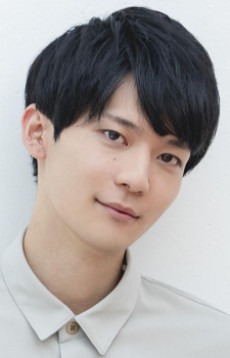
Shougo Sakata
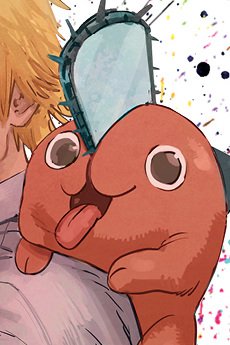
Pochita

Shiori Izawa
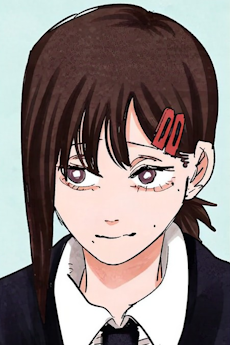
Kobeni Higashiyama

Karin Takahashi
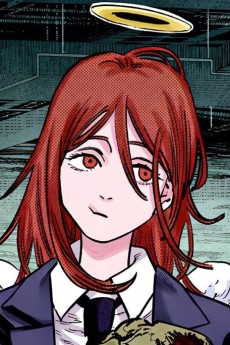
Tenshi no Akuma

Maaya Uchida
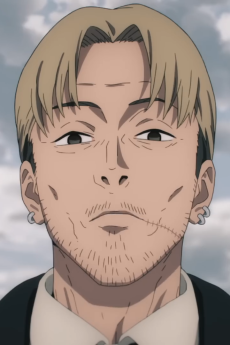
Kishibe
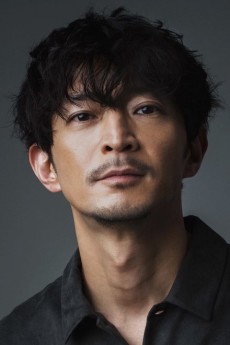
Kenjirou Tsuda
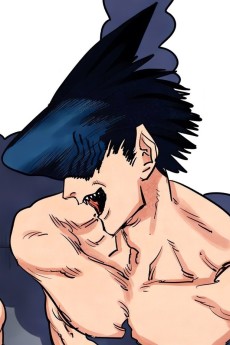
Beam
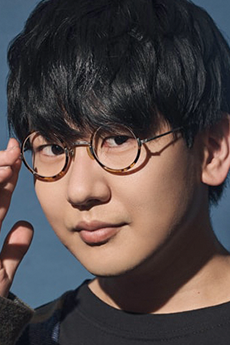
Natsuki Hanae
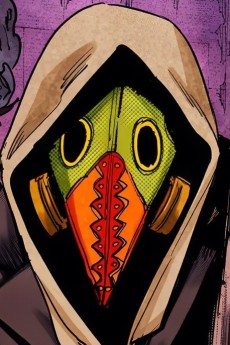
Bouryoku no Majin
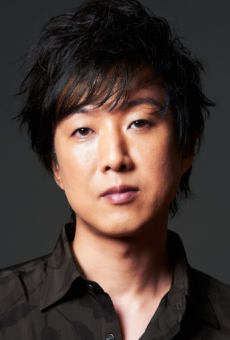
Yuuya Uchida
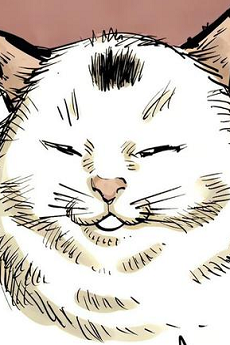
Nyaako
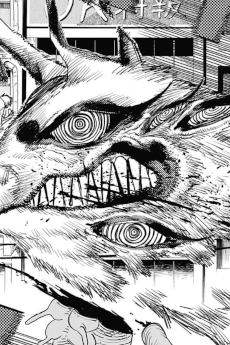
Kitsune no Akuma

Yuuko Kaida

Nomo
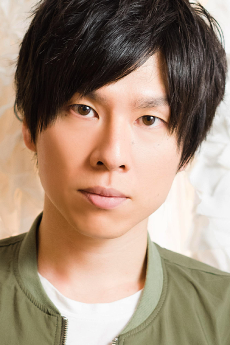
Kenji Akabane

Taifuu no Akuma

Eri Kitamura

Nazo no Otoko

Kenji Nomura

Masaki Andou
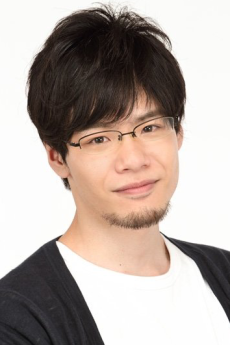
Akihiro Mine

Katou
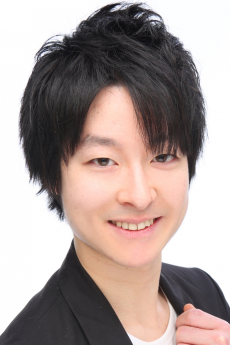
Kento Shiraishi

Tanabe

Tarou Kiuchi

Fuku Taichou
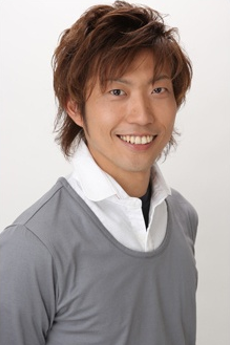
Hidenori Takahashi

Futamichi no Master
Kenichi Ono

Buta no Akuma
RELATED TO CHAINSAW MAN: REZE-HEN
 ANIME ActionChainsaw Man
 MANGA ActionChainsaw Man

REVIEWS

RandomPerson9348
A Dark, Twisted Romance Tragedy for the AgesContinue on AniList__MINOR SPOILERS!__ This film manages to pull off an almost herculean task - not only living up to, but also somehow surpassing (in some aspects), the Reze Arc - one of Fujimoto's greatest accomplishments in Chainsaw Man.  __Story and Characters__
In the manga, there is a heavy layer of subtext, lies and pretention in almost every single scene of this story. Everyone, except Denji, is trying to be someone they are not. Aki can't bring himself to admit that he cares about his co-workers, even if they are devils. The Angel can't bring himself to admit that dying would be bad, actually. Most importantly, Reze isn't able to admit to either herself or Denji that she does actually love him. However, it is her closeness to Denji (the only person who is honest with himself), that brings Reze around to changing her mind about who she wants to be.
Reina Ueda shines here the most. It's not some insane scream or particularly standout monologue that makes her the film's biggest highlight, but just her understanding of the character. There are small nuances to every line that she delivers. Voice cracks, softening, stress and so much more are placed almost impeccably in places which demand the eternal anguish of Reze's unsure mind to come across. A particularly memorable line being when she mentions that a peaceful life is most desirable, and you can make out the hurt and despair in a voice which regrets never having had any herself. Ueda does a fantastic job with such smaller, more subtle stuff with her acting.
__Story and Characters__
In the manga, there is a heavy layer of subtext, lies and pretention in almost every single scene of this story. Everyone, except Denji, is trying to be someone they are not. Aki can't bring himself to admit that he cares about his co-workers, even if they are devils. The Angel can't bring himself to admit that dying would be bad, actually. Most importantly, Reze isn't able to admit to either herself or Denji that she does actually love him. However, it is her closeness to Denji (the only person who is honest with himself), that brings Reze around to changing her mind about who she wants to be.
Reina Ueda shines here the most. It's not some insane scream or particularly standout monologue that makes her the film's biggest highlight, but just her understanding of the character. There are small nuances to every line that she delivers. Voice cracks, softening, stress and so much more are placed almost impeccably in places which demand the eternal anguish of Reze's unsure mind to come across. A particularly memorable line being when she mentions that a peaceful life is most desirable, and you can make out the hurt and despair in a voice which regrets never having had any herself. Ueda does a fantastic job with such smaller, more subtle stuff with her acting.
 Of course, so does the rest of the cast. There is a lot of character interactions and movement going on in this film, but the arc itself manages almost half a dozen characters very well with openings and ending of shorter development arcs, which reflects well in the film. There are standouts like the Angel Devil and Reze (and the way their arcs end up overlapping in the most beautifully crafted tragic ending), but everyone does manage to get enough of a focus to warrant their roles in the film.
Speaking of Reze, might as well get to the person the entire arc is centered around -
Of course, so does the rest of the cast. There is a lot of character interactions and movement going on in this film, but the arc itself manages almost half a dozen characters very well with openings and ending of shorter development arcs, which reflects well in the film. There are standouts like the Angel Devil and Reze (and the way their arcs end up overlapping in the most beautifully crafted tragic ending), but everyone does manage to get enough of a focus to warrant their roles in the film.
Speaking of Reze, might as well get to the person the entire arc is centered around -
 Reze is a masterpiece of a character. There is such subtlety to her execution and development - one that you do not find in shonen stuff polluted with overtly obvious characters. Despite appearing for a very small runtime, she manages to have a deep effect on not just Denji as a character, but also the audience's understanding of the entire show's themes. Her tragedy of a backstory and parallels with Denji would have been enough, but her present-day arc of struggling between brain and heart is as close as Chainsaw Man gets to spelling out its final themes so early on.
__Pacing, Style, Tone__
Reze is a masterpiece of a character. There is such subtlety to her execution and development - one that you do not find in shonen stuff polluted with overtly obvious characters. Despite appearing for a very small runtime, she manages to have a deep effect on not just Denji as a character, but also the audience's understanding of the entire show's themes. Her tragedy of a backstory and parallels with Denji would have been enough, but her present-day arc of struggling between brain and heart is as close as Chainsaw Man gets to spelling out its final themes so early on.
__Pacing, Style, Tone__
 The Reze Arc is fantastic in how it manages to pace itself as a bomb - lighting the fuse with Denji and her first meeting, and letting it run all the way to the explosion during the festival scene. And somehow, despite the change in director, CSM has found a compromise between the more cinematic first season and the insane action that MAPPA probably now wants to stick to after Jujutsu Kaisen Season 2. We still get the quiet slice-of-life montages with melodious piano in the background, but they are balanced by the raw, explosive action of the second half almost perfectly - delivering something that echoes the manga way more with its intention and execution.
The animation might be divisive, especially during the Typhoon Devil fight sequence and its way more One Piece-esque character design philosophy during the more heavy movement sequences. In my case, I find these to be an incredible way to convey chaotic movement that defies order, so I personally loved them a lot. The more cinematic stuff remains consistent with Season 1 in its lighting and camerawork, but the character designs themselves have certainly been simplified compared to before. Not a huge fan of that, but I can appreciate the effort put into trying to respect the previous work while making changes. It manages to strike a good balance.
The Reze Arc is fantastic in how it manages to pace itself as a bomb - lighting the fuse with Denji and her first meeting, and letting it run all the way to the explosion during the festival scene. And somehow, despite the change in director, CSM has found a compromise between the more cinematic first season and the insane action that MAPPA probably now wants to stick to after Jujutsu Kaisen Season 2. We still get the quiet slice-of-life montages with melodious piano in the background, but they are balanced by the raw, explosive action of the second half almost perfectly - delivering something that echoes the manga way more with its intention and execution.
The animation might be divisive, especially during the Typhoon Devil fight sequence and its way more One Piece-esque character design philosophy during the more heavy movement sequences. In my case, I find these to be an incredible way to convey chaotic movement that defies order, so I personally loved them a lot. The more cinematic stuff remains consistent with Season 1 in its lighting and camerawork, but the character designs themselves have certainly been simplified compared to before. Not a huge fan of that, but I can appreciate the effort put into trying to respect the previous work while making changes. It manages to strike a good balance.
 Continuing the idea of its bomb-like pacing, I also loved how it plays with color and lighting to reflect the mood and tone of any particular scene. Scenes with Makima usually don't have a lot of light even during the day, while scenes with Aki are well-lit even in the night. Scenes with Reze switch between being an inviting blue and a dreadfully uncomfortable red. It is really amazing to see more anime starting to play with vibrant color switches and lighting to add to characters, and I wish we see more of this in many, many more shows from now on.
__Music__
Holy. Shit.
Continuing the idea of its bomb-like pacing, I also loved how it plays with color and lighting to reflect the mood and tone of any particular scene. Scenes with Makima usually don't have a lot of light even during the day, while scenes with Aki are well-lit even in the night. Scenes with Reze switch between being an inviting blue and a dreadfully uncomfortable red. It is really amazing to see more anime starting to play with vibrant color switches and lighting to add to characters, and I wish we see more of this in many, many more shows from now on.
__Music__
Holy. Shit.
 Whoever on the committee first thought of putting Kenshi Yonezu and Kensuke Ushio on the same project was an absolute genius - and that continues to be true (with a surprise Hikaru Utada!)
Iris Out and Jane Doe have been on my playlist, on loop, ever since they released - but what blew me away even more was Ushio's score. Expectations were already high with his work on Dandadan in particular, and he somehow surpasses them.
In vast contrast to what you would expect, Ushio decides to play with loud and quiet music in opposite ways. The more wholesome, character-focused sequences are populated with the loudest orchestral scores while action is usually tinged with the quiet electronic riffs that Ushio does best. And as one would expect, the former go much harder than the latter with their absolute emotional appeal.
(On the other hand, that one track during the final fight with an entire choir singing the word 'bomb' in different ways individually stood out the most)
__Final Verdict__
Whoever on the committee first thought of putting Kenshi Yonezu and Kensuke Ushio on the same project was an absolute genius - and that continues to be true (with a surprise Hikaru Utada!)
Iris Out and Jane Doe have been on my playlist, on loop, ever since they released - but what blew me away even more was Ushio's score. Expectations were already high with his work on Dandadan in particular, and he somehow surpasses them.
In vast contrast to what you would expect, Ushio decides to play with loud and quiet music in opposite ways. The more wholesome, character-focused sequences are populated with the loudest orchestral scores while action is usually tinged with the quiet electronic riffs that Ushio does best. And as one would expect, the former go much harder than the latter with their absolute emotional appeal.
(On the other hand, that one track during the final fight with an entire choir singing the word 'bomb' in different ways individually stood out the most)
__Final Verdict__
 An easy must-watch. Reze Arc is not only a great continuation to the Chainsaw Man saga, but also a film which stands well on its own with its cinematic merit. There is an undeniable vision to its animation, style, tone and emotions - one which pays off so well quite heavily due to Reina Ueda's generational voice talent.
Take your time, appreciate the nuance and messages beyond its simplistic narrative structure and you'll find a romance tragedy that is somehow more relevant today than it was when first written. A devastating look into the power of oppressive authority, how it destroys and manipulates the misfortunate, and most importantly - the pain of growing up to the reality of rational thinking.
An easy must-watch. Reze Arc is not only a great continuation to the Chainsaw Man saga, but also a film which stands well on its own with its cinematic merit. There is an undeniable vision to its animation, style, tone and emotions - one which pays off so well quite heavily due to Reina Ueda's generational voice talent.
Take your time, appreciate the nuance and messages beyond its simplistic narrative structure and you'll find a romance tragedy that is somehow more relevant today than it was when first written. A devastating look into the power of oppressive authority, how it destroys and manipulates the misfortunate, and most importantly - the pain of growing up to the reality of rational thinking.

PydraxAlpta
A beautiful movie to remind you why you liked Chainsaw Man, especially if you forget by part 2.Continue on AniListI have to start by prefacing a few things. This review contains spoilers. Skip to the third paragraph if you want to hear about the actual movie. This is my first anilist review. I have not watched the anime for CSM. I read the manga, and currently have paused reading it some 200 odd chapters in. CSM is not my favourite Fujimoto work. Far from it, I always found myself caring for it less than other people in my peers who did like it a lot more while also liking his other works. Chainsaw man was fun, and some parts were cool, but overall I care about it a lot less than works like Goodbye, Eri and Fire Punch. So why did I watch this in theatres almost as soon as it was released?
Well, for one Fujimoto really likes movies. And damn does he make that clear in his works. And so when I heard Look Back was getting a movie, I was really happy for him and went to watch it. But looking back, my experience wasn't as great. The movie was cool, no doubt, but I don't go out to watch movies that much, and going alone at an overpriced theatre was kind of a mood killer. So this time I after some back and forth on deciding if I want to watch, I hit up a friend who had not watched CSM at all to go watch a movie to, just because. And honestly a much better choice. And I think the movie worked out quite well despite that, because it introduces returning characters sufficiently (in a subtle way without wasting it's minutes on this).
Chainsaw Man: Reze Arc is a really pretty movie with a banger soundtrack that I will be listening to afterwards for sure. And it covers a pretty powerful arc of the story without dropping anything essential, while adding touches that make it much more memorable and tragic. Yes, this story is a tragic one, between two teenagers who struggle to access autonomy while serving the adult world with their lives because from the very beginning they were denied a normal life. The Reze arc is about finding human connection in a world that is full of people making transactional relationships that seek to use you in order to further oneselves. Which, is one of the core themes of CSM, at least P1. At the point of writing I do not really know what P2 is about.
The main focus of the arc is obviously Reze, but it also revolves around Makima, and the relationship between Aki and Angel, and of course, Denji himself. Reze is a girl who works at a coffee shop, meets Denji in a cute scene in a phone booth, and teaches him how to swim. And then tries to convince him to leave the city life behind for the country one, for the country mice to her is happier than the city one. This folktale is at the center of the arc, and Denji prefers being the city mice, much to Reze's dismay. The city life represents continuing to be part of the war between devils and humans, and being a pawn in the schemes between goverments trying to get on top of the war. All roads lead to Metal Gear Solid. And being part of the war effort gives Denji unprecedented benefits, the ability to approach existing in a normal life. He can have good food, he can have a roof over his head, and he can have positive interactions with other people, especially girls, even if they are transactional in nature and often lead to being tried to be killed.
A brief interlude to the first scene, where Denji goes on a date with Makima, where they watch a lot of movies, for only one to be actually good, despite there being no crowd. Would be a very funny metanarrative if my theatre was empty, but it had a decent showup, though I have a feeling the other big anime movie probably has the larger crowd (or like, any non anime movie). Makima's opinion towards movies is that she only finds one in ten movies interesting, and most of them are not. While it's easy to see it as commentary on consumerist mass production of movies, and I think if I were to watch all the movies the theatre had today, I would most likely come with a similar opinion; I feel there's another sense to read into the scene, with the desire for human connection at the core of the story. We interact with a large amount of people over the time of our lives, and most of them are one offs and some are closer yet distant. And when you are a person like Makima, most of them are distant and meaningless, with only a select few meaning something to you and giving you the hope for a real human connection.
I'll say that the movie tries to present the illusion of a happy life with Reze far less than the manga, especially given it actively promotes her as the Bomb. And so I will no longer avoid the topic. Reze is a spy, developed by the Russian govt and sent by the gun devil to defeat the chainsaw devil, whose abilities actively damage the war for the devils, and a really strong devil - the bomb devil. Which makes sense. The human fear of explosives is as strong as our desire to see them explode. Her role is to entrap Denji and kill him, and retrieve the chainsaw devil's heart from him. But in the process, she ends up enjoying her time with him, and desiring to escape from the cycle of war she has been thrust into and run away with someone whom she can relate to, a fellow victim of the war who has been ridden a chance at a normal life from the start and only been given the chance to have a farce of one when acting out her role of a spy. She even realizes this attempt was moot when she learns about Makima, labelled a witch whose reach would never let her escape and have a happy life. The poem that Reze sings is also nicely done :) (miserable (positive)).
The second half of the film is a lot more full of action and I did overall like the translation of it to the medium, since I don't remember following along fights all too well in CSM. Part product of the style, part I think I just can't follow action in manga that well. Which is why Fujimoto excels at showcasing the results of action in beautiful panels over the action itself, but that is not what this review is about. It has the cool interaction between Angel and Aki over their perspectives to death and how Aki has a cut short lifespan from his choices with devil contracts, and the scene where he reaches out to protect Angel cutting into his lifespan even more. At which point I have to ask if it was the physical contact with a devil that sucks life force or the process of forming a more genuine connection with a devil and taking mental trauma from seeing people die did that. It really does remind me of the more subtler ways of presenting the story that CSM takes, which in theory means that me reading P1 again should make me care about it more as the subtleties unfold before me.
I think one small thing is I like the presentation of Bomb Devil as a lot more adult than the teenage Reze, it feels representative of the rejection of the chance at a normal childhood, and that she is like an adult, fully slotted into her role in the war fighting for the devils. By contrast Chainsaw Man keeps a more teenage appearance even when transformed, which matches him not having left his childlike perspective yet and still trying to survive in the adaptation to the adult world as someone who isn't an adult yet.
The movie ends tragically after Reze and Denji are washed away from the fight to the shore, where Reze rejects Denji again and leaves him aside, but with an offer from Denji again to have a normal life at the cafe, which she knows she cannot have because she has sinned and shown her true face to the world. And yet as she leaves, she falls for the light at the end of the tunnel to try to meet Denji and have a normal life, leaving everything behind. Alas, control over her life she shall not have, for this country mouse will be hunted by the dogs; [chose your metaphor of preference where the light at the end of the tunnel is fatal].
A really enjoyable experience, one I am pleased to have and one I want others to dabble in too. Especially with me having lost hope towards the story as CSM P2.. faltered in pacing and other departments, I am genuinely pleased to be reminded of how good P1 was, and why I cared about this arc when I originally read it.

Boom. 
Kowasub
Reze’s Smile in the Rain: A Tragedy of Innocence LostContinue on AniListChainsaw Man is so brutally deceptive that this is its great and silent trick. The series, at first glance, is just another blood-smeared spectacle, a circus of chains, entrails and volume-cranked violence. But, after all, at its most sincere it has nothing to do with any greatness of battle at all, but a boy who has been so crippled by the very idea of life that he cannot even figure out the simplest rules of love-making. Denji is not merely a chainsaw-headed demon killer, he is a child who is denied a childhood, who falls into a 21st-century world of glowing fluorescent lights, where he cannot in any way make sense of the promises that lie before him.
This is why the fights here are secondary, almost, like a period to the actual story - the stumbling in the dark of human connection that Denji experiences. Think about the silent cinematic enlightenment he experiences with Makima in the cinema trip when the violence is temporarily supplanted by the ceremony of going to the movie theater, or by the delicate delicacy of his time with Reze, the only girl who will reflect his scars instead of taking advantage of them. Reze is not any other romantic prospect, but a slyest sleight of hand of Fujimoto, the revelation of kinship concealed under the veil of love. Like Denji, she, also, did not have the luxury of innocence. The tragic love is the actual battlefield and even the apocalyptic fights against devils are in the shadow of their ill-fated love.
It is at this point that Fujimoto is shown as being more than a gore provocateur: Chainsaw Man is trauma as filtered through pulp. The beggars in the streets taking offerings to the devil-attack victims, the casual recognition of the civilian victims, the tired admissions of Aki and Denji that they do not want any more pointless killing, all these, when it comes to the manic excess, subtly destabilize it. It never turns away, like so many of its shonen peers, from the collateral damage, from the fact that every burst of blood is an acknowledgment of the lack of, of lives taken for nothing.
This dissonance is carried to the level of art through the adaptation of MAPPA. The choreography is, yes, spectacular-- kinetic cuts, stylistic whiplashes in the middle of a fighting, a dedication to bombarding the senses with visual panache. The soul of this adaptation is not there. It resides rather in the details: the imprint of the silhouette of Reze in a rainy puddle, the subtle change of posture when Denji is trying to act like what he considers normal affection to look like, how body language can speak more than words. The animators make vulnerability as sacred as brutality, and this is a lesson to us that animation is no longer a child, that even the slightest jitter can drive more than a thousand chainsaw revs.
In the event that Denji is a boy with no compass, Chainsaw Man is his guide to contradictions: tenderness hidden in carnage, intimacy twisted into violence, humanity peeking through fleeting, cruel moments only. Maybe that is the final irony the very work which sells itself as an orgy of splatter ends up being a narration of loneliness. We are not here to watch chainsaws ripping flesh to shreds; we are here to watch a boy begging in every scene, what it is like to be loved.
Not perfect,--no, its time-keeping is too slow where it becomes repetitive, and its metaphor is too often on the verge of battering where a murmur would have done. And yet what other anime of the day is bold enough to gaze so frankly at the shattered edifice of maturity? Chainsaw Man, despite all its ridiculousness, does something very few horror comics do, which is to keep in mind that horror is not in the monsters that we wage war against, but in the silent awareness of what was robbed to us before we even knew the words to name it.
SIMILAR ANIMES YOU MAY LIKE
 ANIME ComedyBakemonogatari
 ONA ActionDEVILMAN crybaby
 ANIME ActionDorohedoro
 ANIME ActionTokyo Ghoul
 MOVIE DramaLiz to Aoi Tori




SCORE
- (4.5/5)
TRAILER
MORE INFO
Ended inSeptember 19, 2025
Main Studio MAPPA
Trending Level 12
Favorited by 17,367 Users
Hashtag #チェンソーマン #CHAINSAWMAN #レゼ篇 #劇場版チェンソーマン #CHAINSAWMANMOVIE