
BAKEMONOGATARI
STATUS
COMPLETE
VOLUMES
2
RELEASE
December 4, 2006
CHAPTERS
41
DESCRIPTION
The first part of the Monogatari Series.
There’s a girl at their school who is always ill. She routinely arrives late, leaves early, or doesn’t show up at all, and skips gym as a matter of course. She’s pretty, and the boys take to whispering that she’s a cloistered princess. As the self-described worst loser in her class soon finds out, they just don’t know what a monster she is. So begins a tale of mysterious maladies that are supernatural in origin yet deeply revealing of the human psyche, a set of case files as given to unexpected feeling as it is to irreverent humour.
(Source: Kodansha USA)
Note: The English release and the JP ebook edition have Bakemonogatari split across three volumes, instead of the original two volumes.
CAST

Hitagi Senjougahara
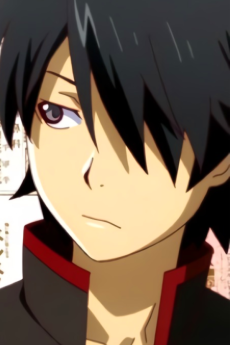
Koyomi Araragi

Tsubasa Hanekawa

Meme Oshino
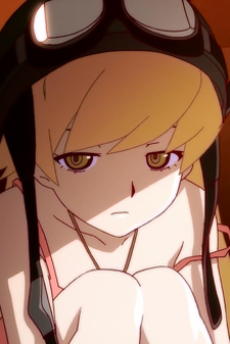
Shinobu Oshino

Nadeko Sengoku
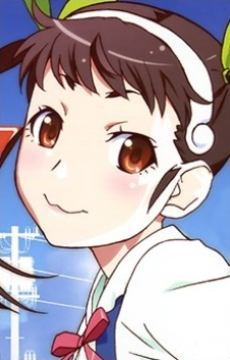
Mayoi Hachikuji

Suruga Kanbaru
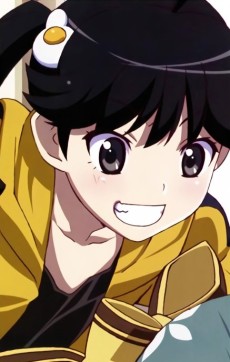
Karen Araragi
Tsukihi Araragi
CHAPTERS
RELATED TO BAKEMONOGATARI
 ANIME ComedyBakemonogatari
 MANGA ActionBakemonogatari
 NOVEL ActionKizumonogatari
 NOVEL ActionMijikanamonogatari
REVIEWS

RayRaivern
A spoiler free review of the Monogatari Series. A set of stories which makes up an overall story.Continue on AniListThe Monogatari series is a set of stories which makes up an overall story.
And it is this overall story which is highly praised as the Monogatari series.First, I should give my ratings of all the stories individually presented in the Monogatari Series: First Season.
Bakemonogatari: 7/10
Kizumonogatari: 9/10
Nisemonogatari: 8/10
Nekomonogatari: 9/10Now to critique the story, characters, and writing style.
The individual stories can be divided into parts of 2 types.
Idle Conversation, consisting of Araragi talking with a girl over idle matters.
Action, parts that progresses or brings an end to the story; consisting of fight scenes, Oshino Meme giving lectures, and resolution to the story.The main problem I had was with the idle conversations. The silly conversations Araragi had with the other characters; on some parts I couldn't fully grasp the joke because of its cultural nature, and on others I simply couldn't find it funny; most of the word plays also turned out a little stale.
An important thing to note here is that I believe these problems mostly arose because I read the translated version (the official English one). As people often say, "The Monogatari series can never be properly translated"; the intricate word plays of the Japanese language that Nisio Isin does and the cultural parts of the book are what makes it so difficult to translate.
But as I kept reading and reading, the silly jokes and unique conversations that Araragi has with the character started to grow into me; and I ended up liking them by the end of the 5th book.Now the best part of the Novels, the action parts.
Monogatari series has some of the best fighting scenes I've read. They are very well portrayed, and has the perfect pace and intensity.
Oshino's lectures can sometimes get a bit confusing because of all the cultural and language parts (Kanji characters and stuff), but overall they can be understood by the end.
All the stories itself here are good. Some of them can be very simple, but its the simplicity which makes them good.
It's easy to get confused and question the past of some characters, that's because the novels are not in chronological order. You shouldn't think too much about the parts that you don't know, and enjoy the main story that the book is telling, because little by little the series reveals everything.All the characters here are unique in their own way and most of them are pretty interesting.
It's a character driven story, so you can expect there to be good characters. And by the end you could find a character you very much like. (Meme's my favourite so far)And lastly, I presume you already probably know, Monogatari has very good writing.
No problem with the conversations and understanding who's talking when (as with a lot of other Light Novels).
Also uh, I'll add that the translation was done really well too; I didn't find any grammatical problems or weird lines.
atomx
An odd story to say the leastContinue on AniListSpoilers ahead
Critiquing something is always easy, especially when it is bad. Just like a bad dish you will know exactly why it is bad - too bitter, too sweet, too salty - we tend to have no trouble calling it bad because we know exactly what has caused us displeasure. Rich Lee's War of the Worlds (2025) was bad because I had to watch almost 90 minutes of Ice Cube sitting in front of a screen pretending to be human by acting through our emotional repertoire.
With things that are good it's much more difficult to try and figure out what especially I like about it. Throwing away the food metaphor, a juicy steak is obviously better than a dry one, it becomes almost nonsensical to try and analyse what exactly makes a work great. When I like something I tend to like the entirety of it: character design, plot, dialogue, artwork, jokes.. I could go on for hours but it never reaches a point where I can pinpoint something directly and say "This... this is what makes it good."

Bakemonogatari falls exactly into this category of works that I like without exactly knowing why. While it is often hailed as the pinnacle of light novels (sometimes even fiction itself) the story is quite ordinary and follows the same spiel for its five arcs: Our witty protagonist Araragi stumbles upon a not-so-ordinary girl and somehow gets roped into rescuing her from what is called an aberation. These represent some form of repressed trauma of its inhabitant/owner that they have to overcome by getting rid of the aberation. Hitagi Senjougahara faces her tragic past, Mayoi Hachikuji realizes that she is a ghost, Suruga Kanbaru has to make the harsh realization that love will not conform to anyones will and Nadeko Sengoku has to be freed from a snake forced upon her by a curse.
You don't have to be well read in Jung to understand what Nisio is trying to say, not to mention that Araragi explains the whole concept himself in the course of the story. However this is not to say that Bakemonogatari is as shallow as a puddle - the beauty comes from something different than the recursive trauma-aberation-symbolism.
Bakemonogatari is a story about stories, a tale of tales, a 物語の物語 and Nisio is well aware of this. Araragi is well aware of it aswell - He's the narrator of each story and an exceptionally unrealiable one at that.
Mayoi Hachikuji, the protagonist of the second arc, Mayoi Snail, is a seemingly lost child wandering through a local park, where Araragi encounters her as he talks to Senjougahara. We learn that Hachukuji is lost and follow Araragi as he tries to find her home. They walk around town until realizing that they have become stuck in some form of residential housing labyrinth. Senjougahara is sent off to visit Oshino while Araragi waits with Hachikuji. When Senjougahara returns, she reveals a shocking secret: she can't see Hachikuji because Hachikuji is nothing more than a ghost. A ghost that can only be seen by people that don't want to return home. Because the story is told in Araragi's perspective, there was no way for us to know whether Hachikuji was visible to other people.
This arc isn't actually about Hachikuji but Araragi and Senjougahara. Not only does it revolve around Araragi being unable to return home because he does not want to face his sisters, but also Senjougahara's inability to reveal the truth. Araragi is so caught up in the goal of helping Hachikuji that he brushes off Senjougahara's statements, whilst she is used to being the odd one out, therefore thinking that it is only her who can't see Hachikuji.
Whereas the Heavy Stone Crab in Hitagi Crab acts as a metaphor for Senjougahara's trauma, the entire character of Mayoi Hachukuji functions as a device to further characterize Araragi's and Senjougahara's relationship. This plot-twist, that Hachikuji itself is an aberration, works so well because Nisio understands how we as a reader work. In Hitagi Crab he introduces the concept of aberrations, which we quickly understand and acknowledge as the logic of Monogatari's world. Now, in the next arc, we expect the same logic and plot structure: Araragi meets a girl (Hachikuji) that is afflicted by an aberration (The Lost Cow) which causes her to lose her way towards a certain destination. Nisio effectively tricks us, the reader, and Araragi into misinterpreting the events of the story.
Also.
Nisio's writing is weird.
There's lots of dialogue.
Basically all of it is dialogue.
And sentences are often written.
In this short cut-off form.
There are pauses too.
"....."
Is it over yet?You can mostly forget getting descriptions of surrounding places and side characters. Most of the novel is witty dialogue, banter, wordplay, intertextuality, irony and metafiction. My favorite example of this is a chapter of Tsubasa Cat, in which Araragi is invited on a spontaneus date by Senjougahara. By this point of the novel we have learned that they have entered a romantic relationship with eachother but glimpses into it have been few; in a way we are just as surprised with each twist and turn as Araragi is.
The date quickly turns out to be a failure. Having not thought of it before, Araragi is caught off-guard by a two-hour drive to the destination. Even worse, as they both have no drivers license, it's Senjougahara's father who drives them there. Using her father's presence as a weapon, Senjougahara "tortures" Araragi first by using her words and then her sex appeal. They go back and forth arguing until they arrive at a parking lot. Senjougahara exits the car, leaving Araragi alone with her father. The tone immediately switches as her father tells Araragi his thoughts on their relationship. After they have an honest man-to-man talk, where her father reveals things he hasn't even told Senjougahara, she returns and leads Araragi to a spot where they can watch the midnight sky. As they lie on the ground gazing up into the stars we get an insight into their relationship.
She'd recalled something she'd forgotten.
"This is it. My treasure"
It was a pretty cliche turn of phrase for Senjogahara-but that only added to the sense she was sharing her unadorned, true feelings with me.
This starry summer sky..
This sky she once saw with her family.
This was it-everything.
".........."Endorned by her showcase of feeling Araragi has the desire to hug her but resists, as their relationship has been purely platonic till this point and he is afraid of messing it up. This time he, and not Senjogahara, is the one who hides his true feelings.
"Let's kiss Araragi."
"So that's what you're going to settle on."
It wasn't too inappropriate a way to phrase it.
In fact, no way to phrase it could be more her.
And so-today become a memorable day.
For us.In just about forty pages, Nisio switches from his quirky dialogue to a heartfelt conversation and, then again, to an intimate scene between two lovers. He wastes no time setting up the scene but throws us and Araragi right into the action. The result is a style so unique that it makes you feel as if you were part of the story itself.
Another question I had to ask myself was why this novel, which is so full of tropes, has characters that feel so real. Although they fall into pre-established tropes, they possess a certain amount of agency and self-awareness that makes them feel real. As a comparison, let's take Negi Haruba's The Quintessential Quintuplets: each of the five siblings presents some form of a stereotypical woman. The shy nerd, the strong-headed tsundere, the older mature leader, the serious and earnest student, and the energetic clumsy girl. These characters are defined by a trope they are unaware of and they act according to it. The tropes are not subverted and the girls are confined to the mannerisms of their respective trope.
It's not necessarily a bad thing to be part of a trope, they only exist because people act a certain way. Everyone has certain mannerisms that can be categorized - the problem arises when a character is so confined to their trope that they become unable to act in certain ways and become an empty husk.
Senjougahara is aware of Araragi's perception of her and the existence of the tsundere trope. When she teases him, it's not because she is a tsundere but because she plays the part of the tsundere. Calling her a tsundere is not only dismissive of Nisio's great writing but also a sheer misunderstanding of the characters. Furthermore, our perception of her is derived from Araragi's unreliable narration. What we perceive her as is not her "true" character but Araragi's subjective view of her. We don't see how she interacts with her father or teachers; Whether her personality fluctuates between the people she interacts with or stays consistens throughout.
Ultimately I think that Bakemonogatari is a series one will either love or hate. It can be pretty strenuous to read countless pages of dialogue and chitter-chatter with no end in sight, but for me it pays off in the end. After five arcs that introduce a total of ten characters I'm left wanting more. What's the deal with Shinobu? Will Meme return? Where will Araragi and Senjougahara's romance lead to? What person will Araragi grow into? I guess only the future can tell.
Thanks for reading
SIMILAR MANGAS YOU MAY LIKE
 NOVEL ActionKatanagatari
 NOVEL ActionDurarara!!
 NOVEL HorrorBoogiepop wa Warawanai
 NOVEL ActionToaru Majutsu no Index


SCORE
- (4.35/5)
MORE INFO
Ended inDecember 4, 2006
Favorited by 1,228 Users