

IKIGAMI
STATUS
COMPLETE
VOLUMES
10
RELEASE
March 30, 2012
CHAPTERS
60
DESCRIPTION
Dear Citizen: Thank you for your loyalty. You've no doubt noticed that the world is a troubled place. People are apathetic, lazy, unmotivated. You've probably asked yourself: WHY ISN'T ANYTHING BEING DONE TO STOP THIS SYSTEMATIC DECLINE?
Rest assured that measures are being taken. Beginning immediately, we will randomly select a different citizen each day who will be killed within 24 hours of notification. We believe this will help remind all people how precious life is and how important it is to be a productive, active member of society.
Thank you for your continued attention and your cooperation and participation...
CONGRATULATIONS! YOU HAVE BEEN RANDOMLY SELECTED BY THE GOVERNMENT...TO DIE IN 24 HOURS!
(Source: VIZ Media)
Note: Was nominated for the Angoulême International Comics Festival in 2009.
CAST
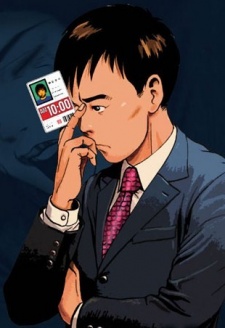
Kengo Fujimoto
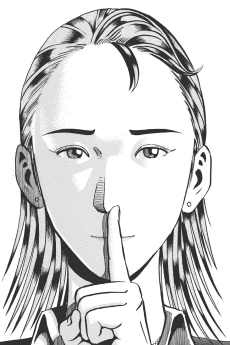
Kubo Nanako

Yousuke Kamoi
CHAPTERS
RELATED TO IKIGAMI
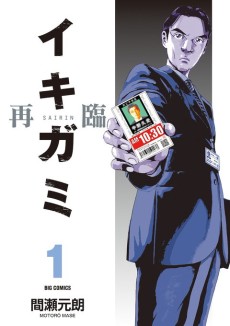 MANGA ActionIkigami Sairin
REVIEWS

Revisionary
In spite of its weaker overarching storyline, this dystopian manga excels when it comes to its episodic side stories.Continue on AniListAlthough there is an occasional imbalance of overall quality when it comes to its storytelling, Ikigami: The Ultimate Limit is one of the most thought-provoking seinen manga to come out in recent years.
Exploring complex societal issues, this manga is centred around Kengo Fujimoto, a government courier whose responsibility is to deliver Ikigami - death papers - to citizens to inform them of their imminent deaths as a result of a nationwide program that has a random segment of the population randomly chosen to die through the use of a nanocapsule injected into their bodies during their inoculations in elementary school. As he begins to become more personally involved with the people he comes across throughout his duties, Fujimoto struggles with his jobs and the ramifications of a system that he comes increasingly disillusioned with, while at the same time avoiding the ire and suspicion of his colleagues who are inclined to report on any citizens who have hints of treasonous thoughts towards the country.
Told primarily in an episodic format, the majority of Ikigami is focused on the people who receive Fujimoto’s death papers. While the protagonist of the entire manga is Fujimoto, it is arguable that the main stars of this manga are the numerous characters that readers are introduced to over the span of the manga’s run. Ikigami feels like an anthology of stories about people who live under the system and are forced to come to terms with their deaths (which occur within 24 hours of receiving notification). Some stories are inspirational and uplifting, showing how there are those who work to make sure that their last moments are impactful to those around them, while others are admittedly depressing and tragic, showing how people with nothing to lose will do anything to make themselves heard, even at the cost of those around them. One interesting thing to note is that not all the stories necessarily have a lesson for the audience. In a world where arguably insane laws and policies force sane people to do insane things, not every story has meaning.
Motoro Mase, the author of this manga, is effective at writing characters that are relatable and captivating, in spite of the fact that most of these characters only have a chapter or two worth of time for development.
Unfortunately, however, while Mase shows his prowess at creating short stories, the same amount of quality is somewhat lacking when it comes to the general overarching plot involving Fujimoto and his life under the system. Kengo Fujimoto is an incredibly interesting character, given the contrast between the nature of his job and his true thoughts towards the Ikigami system, but his story is arguably the weakest of all the ones told in the manga, which is unfortunate given his status as the main protagonist. That is not to say that his story is bad; it is not. Many key moments in Ikigami involve Fujimoto, and many of the most memorable scenes include him as the focal point. But what makes Fujimoto’s tale seem like such wasted potential is probably because its strong points are overshadowed by those episodic storylines. No matter how compelling his struggle with the system is, audiences will likely find it to be relatively run-of-the-mill in comparison to Ikigami's far stronger side stories.
That being said, the climax and end of Fujimoto’s story is an amazing one. While the idea of the government killing its own citizens for the sake of encouraging citizens to value life is admittedly far-fetched, the ending chapters of Ikigami deliver a conclusion that not only wraps up the story in a satisfying manner, but also gives a well thought-out rationale for a system that was previously thought to be unjustifiable.
There’s a great deal of depth available in this manga that would arguably fit right in with a university-level ethics class. As such, this series is not only easy to recommend to seinen manga fans, but also as just an excellent graphic novel for anyone looking for a mature and dark read. One thing to note is that while Ikigami is a dystopian novel set in a bleak future, it is also one that has many emotional moments for people looking for extremely human stories.
In terms of its art, Mase uses a more grounded style than most manga. Some backgrounds look traced from actual photos, while body proportions and facial features are on the more realistic side. During emotional moments, Mase’s art style shines as every frame is given an amazing amount of detail that suits the typically high-intensity nature of the stories being told. Ikigami is arguably one of the best-looking manga series out there.
To conclude, Ikigami is an amazing manga that capitalizes on its unique concept of a society that kills to preserve the sanctity of life. In this bizarre dichotomy, there is an abundance of interesting stories to be told. And while the overarching plot is somewhat weaker than the rest of the manga, Ikigami is a worthwhile read even if just for the episodic stories alone.

Magicfist
Revolt, or you might as well be dead!Continue on AniListIkigami is set in a country where citizens have to go through a process called National Welfare. When children enter the first grade, they are injected with a vaccine, wherein 1 in 1,000 vaccines contain a nanocapsule that will end their life at any time between the ages of 18 and 24. The chosen are informed only 24 hours before their death. This system is said to help citizens understand the value of life, and work harder towards peace and prosperity.
The main character, Kengo Fujimoto, is tasked with delivering citizens with their Ikigami, also known as Death Papers (or Death Notice). However, the central focus of the story lies in seeing how these characters, chosen to die, and the people around them, react during their final moments. Truly, this episodic (or anthological?) nature of storytelling is extremely effective in conveying all sorts of different moral themes through the characters. I'll be honest, more than one have brought me to near tears.
Ikigami also does a great job in accurately displaying what I at least think all the different kinds of people would do if they were to receive a Death Paper, from rage, resentment, grief, revenge, to a sort of ego death and altruism, a desire to go out in peace. Although at time, it can be hard to believe just how altruistic and optimistic some of the moments can get, but those are always the ones that touch you the most, so I won't get too much up in arms about that kind of overly-dramatic emotional representation.
The overarching storyline regarding Fujimoto moves at a much slower pace, however, I find it to be absolutely incredible as well. The radicalization of the everyday man when faced with an oppressive state never gets old to me, and it is very reminiscent of Orwell's 1984, from 'thought crimes' and 'social miscreants' to prisons for 're-education'. It explores very real, hard-hitting social issues and how we have become too docile and passive to take advantage of our own democracy, no, our very own bodily autonomy! All blame falls towards the system, a force that can so easily be put blame on but nothing changes. We are given two options and forced to pick either because it's easier than fighting for a third (remind you of anything?).
Chapter 59 is Ikigami at its finest. This is where:
Fujimoto vehemently scolds the working class at their inability to fight against the system that has been oppressing them. The words used are extremely harsh, in your face, and at times, it reads as if Motoro Mase is directly venting his disappointment to his audience at their own inability to revolt out of a system that kills so many every year (do I even need to mention what system it is?) Fujimoto is enraged to the point where his inner monologue can be boiled down to 'Revolt, or you might as well be dead!'We run away everyday from our responsibility as members of society to ensure that we as a collective can survive, thinking "It's only 1 in 1000, surely it won't be us!" It's a mentality that plagues our very society and causes injustice to go unchecked every single day of our lives.
In short, Ikigami is a highly political manga that criticizes corrupt systems and our (lack of) response.

Makaveli
When Death Becomes PolicyContinue on AniListIkigami The Ultimate Limit by Hiroshi Motomiya is not a manga that you would like to read in the traditional meaning of this word. It is the one you in the process of reading reflect on and silently bear after reading a chapter. Constructed on a heartless concept in which a government initiative arbitrarily chooses individuals to be killed in the name of social well-being Ikigami raises a query that never ceases reverberating. Who is the one to decide what makes a life valuable?
The Ikigami notice itself a death certificate presented twenty four hours before execution is the center point of the story. Instead of revolting or spectacle, the manga is rooted in banal cruelty of bureaucracy. Fujimoto, the civil servant who is supposed to deliver these notices is neither sadist nor a hero. He is just a man doing his job. That choice is crucial. Ikigami is not based on over the top villains. Rather it blames systems complacency and the silent violence of just taking orders.
Every chapter presents a new recipient of the Ikigami and this episodic format is where the manga is at its best. We observe how individuals respond in the most drastically different ways. Some disintegrate some lash out some attempt to reunite with family and loved ones and others decide to live with honesty finally. They are agonizingly human because these are small stories. No grand speech that destroys the system and no last minute miracle. Regret love anger, fear Can be packed into one day only.
The reason why these moments resonate so deeply is the restraint of Motomiya. The art is so rooted and realistic that it is nearly banal at points that only adds to the emotional impact. Lingering faces and lingering awkward pauses. Death is not romanticized or stylized. It is discontinuous and bureaucratic. This graphic lightening supports the main idea of the manga. When death is made policy even tragedy is handled like a piece of paper.
The inner struggle of Fujimoto is gradual but with a purpose. He opens the series emotionally detached behind the rules and procedure. Gradually the aggregate mass of the lives which he observes tends to break that armor. Notably his reservations do not make him a revolutionary in a day. They are not expressed as guilt confusion and silent expressions of humanity. This gives his arc the feeling of honesty. Ikigami realizes that it is not dramatic when one becomes morally awakened. Gradual, it is not very comfortable, and may not be finished.
The political message of the manga is straightforward and efficient. According to the National Welfare Act, the fear of death enhances productivity and appreciation of life. Practically it produces an empathetic-trading-efficiency society. What is disturbing is the fact that this logic is quite realistic. Ikigami is a reflection of the real world justifications behind sacrifice in the name of the greater good that compels readers to accept how easily the lives of human beings can be turned into numbers when comfort and order is concerned.
That Ikigami cannot be said to be perfect. Its themes might seem monotonous and there are more effective characters in its stories than others. Introduction countdown and death are emotional rhythms that turn out to be predictable with time. Even this repetition has a reason. It is a reflection of the system itself cold and merciless and insensitive to personality.
Finally Ikigami The Ultimate limit is an exploration of the responsibility and complicity to mortality. It does not pose the question of the way you would struggle against a wrong system. It queries how many years would you spend in silence in it. The manga conveys the most devastating message by paying attention to regular individuals instead of great heroes. It is not death that is so horrifying but the fact that we are able to become comfortable with that once it ceases to become personal.
This is a manga that does not scream its message. It hands it to you in an envelope gives you twenty four hours to think and walks away
SIMILAR MANGAS YOU MAY LIKE
 MANGA DramaHimitsu: Top Secret
 MANGA ComedyFujimi Lovers
 MANGA ComedyKokumin Quiz
 MANGA DramaShiyakusho
 MANGA Sci-FiDemokratia
 MANGA DramaYomawari Sensei
 MANGA DramaFool Night



SCORE
- (3.75/5)
MORE INFO
Ended inMarch 30, 2012
Favorited by 154 Users