
MY GIRL
STATUS
COMPLETE
VOLUMES
5
RELEASE
September 3, 2010
CHAPTERS
44
DESCRIPTION
Kazama Masamune - a single 23-year-old man... has a child? During the season of cherry blossoms, his beloved passes away. He happens to meet a little girl outside work and realizes she is his daughter who was raised in secrecy by his lover. The worst spring of his life is transformed into a painful yet vivid spring.
CAST
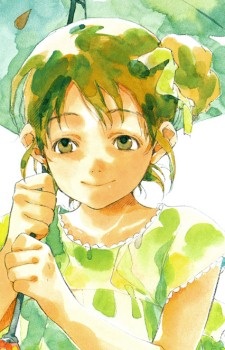
Koharu Kazama

Masamune Kazama
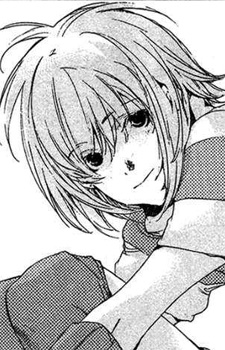
Youko Tsukamoto

Shuu

Katagiri
CHAPTERS
REVIEWS

deli000
Exploring parenthood in a responsible way.Continue on AniListMasamune reminisces over his late girlfriend. He feels a lot of emotions. Regret. Resent. Hopelessness. These feelings flood his mind, causing him to reconsider everything he’s wanted in his life. He lives on, but he can’t move forward. That is until he meets his daughter, Koharu. Masamune decides to roll the dice with this encounter and together, he and Koharu form a precious bond as they navigate through the world of families. My Girl tells the heartwarming tale of a man trying to become a father and a daughter trying to understand the world of parenthood.
The biggest strength of this manga lies in its benevolent view of parenting. Masamune struggles to give the best for his daughter as a single parent while simultaneously wrestling with his own inner conflicts. He’s not a perfect parent. He’s also not a perfect person. He makes mistakes, and he learns from them. That’s what makes him human and very relatable. Even if you have no experience being a parent, it’s still easy to relate to a lot of Masamune’s struggles. We’ve had our own fair share of regrets in life, and it’s something that will stay with us for a long time. We’ve all juggled with loneliness, aimlessness, and the fear of uncertainty. These things are what make Masamune such an endearing character and it also makes his development all the more fulfilling.
Little by little, with the help of the people around him, Masamune learns to become a true father for Koharu. Koharu, on the other hand, attempts to understand her own complicated emotions. She holds a surprising amount of maturity for a girl her age, and she strives to help Masamune in any way she can. Both Masamune and Koharu have lost someone precious to them. In a way, they’re not just family but also kindred spirits. It’s through this similarity that they’re able to support each other on an equal level.
Masamune, while being the grown-up of the two, still has a lot to learn about the complexity of a child’s mind, and he finds himself relying a lot on Koharu in order to find meaning in his own life. Koharu, while striving to move forward, realizes throughout the course of the manga her own desires and ambitions and what she wants for both herself and her father. These conflicts play out naturally, and the way they maneuver through other sides of the parenting spectrum highlights the grounded nature of the manga. The father-and-daughter duo go through loss, regret, and finding the courage to move on. They do so in the most tender way possible, which makes their journey incredibly endearing to read through.
My Girl explores different forms of parenting, through various perspectives and circumstances. The manga addresses divorce, the anxiety of pregnancy, the fear of not being a good enough parent, and it explores these ideas in a responsible way. The manga never strays away from the cold hard truths, creating a sense of melancholy and desolation. But while the manga does have its depressing moments, it also adopts a positive and optimistic outlook on the themes of parenthood. While the bleak reality is there, there is also a sense of hope and happiness that sprout alongside it. The author perfectly conveys the fact that, while challenging, parenting can also be deeply rewarding and satisfying for all parties involved. Having an overtly depressing manga may appeal to the realism, but having a complimentary amount of joy and wonder is also just as realistic.
The manga’s art style greatly compliments the themes and tones of the story. The illustrations give a sense of comfort that emphasizes the story’s fleeting sense of time, creating a unique sense of atmosphere that elicits the feeling of solace. Characters are drawn beautifully, and their facial expressions perfectly convey their own emotions in a delicate manner. The shading and linework are meticulously outlined and illustrated. Things such as a gentle smile or a straight face may seem like simple things, but they elicit deep emotions; pictures are worth a thousand words after all. The author knows exactly how to evoke certain feelings at just the right time with their understanding of these subtle gestures. There are also specific panels and scenes that are just stunning to look at, the scenery evoking a warmth that matches the manga’s tonal direction. The author’s illustrations breathe life into the manga, strengthening its emotional weight and depth.
My Girl presents a profound portrayal of parenting and what it truly means to develop a relationship with your children. It doesn’t shy away from the bleak and fleeting moments of life, but it also accompanies it with positive and optimistic messages that are sincere and genuine. With its endearing cast of characters, its heartfelt style of art, and its mature story, My Girl provides an experience that will leave a touching and long-lasting impression on your soul.

Goropi
Navigating parenthood and grief in a deeply human and authentic wayContinue on AniListMasamune, the protagonist, who works a mundane office job, still reminisces about his relationship with his former girlfriend, Youko, from five years ago. He refuses to move on and still loves her, even though he hasn't heard from her once in all this time. Suddenly, he receives a call from Youko's mother, who informs him that she has passed away in an accident and learns that Youko has left him with a young daughter named Koharu, who has been raised in secrecy overseas. With a strong sense of responsibility, Masamune decides to raise this young girl on his own.
Masamune, aged twenty-three, has to learn how to be a father, and at the same time, Koharu has to learn how to be a daughter, with both unfamiliar to one another. One of the story's greatest strengths lies in its portrayal of parenthood. Rather than presenting parenting as a skill someone simply possesses before having a child, the manga shows that it is something learned over time. It also reminds us that you need to earn and work towards becoming a 'parent', and is not something to take lightly. Masamune struggles to be the father he wants to be, uncertain whether he is deserving of raising his late girlfriend's child. We see Masamune battle with his own inexperience and inner conflicts while simultaneously doing the best he can for his daughter. My Girl doesn't shy away from the ugly parts of parenthood, and shows us the various challenges of raising a child, especially as a single father. Rather than resolving conflicts with idealised solutions, the manga allows its characters to stumble through loneliness, grief, miscommunication and emotional distance in ways that feel deeply authentic, embracing the discomfort of unresolved tension. Yet beneath this lies the hopeful message that communication, transparency and understanding can gradually heal wounds and strengthen the bonds between parent and child.
Masamune's daughter, Koharu, must also cope with the loss of her mother, Youko, at just five years old. The author does a remarkable job portraying how a child so young experiences grief and learns to live with a loneliness she is too young to fully understand. While Masamune cannot erase the pain of losing Youko, he understands the emptiness that her absence has left behind. Rather than trying to "fix" Koharu's grief, he supports her as she gradually learns to carry it. I really loved this aspect, and how the story allows the characters to heal through time, rather than attempt to mend broken hearts.
Koharu also faces the everyday challenges of childhood, particularly at school. Surrounded by classmates from two-parent households, we often see Koharu feel isolated. Through new friendships, disputes and the growing relationship with her father, we watch her slowly find comfort. Perhaps due to being raised solely by her mother in her early years, Koharu displays a maturity beyond her age, making her especially aware of the changes in her life. She struggles to accept herself, process the loss of her mother, and embrace her new life with Masamune, all while remaining a small child. What makes Koharu's journey so deeply moving, is that she tackles these emotions and problems with the innocence of a five-year old. She searches for simple answers to problems that have none. As the reader, I found Koharu's perspective poignant yet hopeful, as we see a young child look forward and fight for happiness, despite her lonely circumstances.
Masamune is not portrayed as perfect figure, and through his character, My Girl tells a story of regrets, unsaid words, internal unrest, and the painful search for closure, reminding us that not every relationship ends with the chance to say everything we wish we had. Instead of offering neat resolutions, the manga embraces the reality that some emotions can only be carried forward inside us and teaches that we can use these feelings to support us moving forward. This imperfection extends to the other characters too, including Koharu, Youko's mother, and even Masamune's co-workers. None of the characters in this manga are perfect, ideal or have it figured out. Yet, it is these blemishes and flaws that make the characters so endearing and human. As the reader, it often felt like I was peering inside of a mirror, seeing parts of myself reflected in the characters.
The gentle art style complements the themes and tone of the story. Characters are drawn beautifully and distinctly, and their facial expressions convey the emotions really well. This manga shows that parenting is an ongoing relationship in which both parent and child grow together, through moments of joy, grief, conflict, and reconciliation. Through its unpolished humanity, mature story and emotional depth, My Girl is a work that reaches your heart and leaves a lasting sense of satisfaction.
If you enjoy comforting, yet deeply mature works, My Girl by Sahara Mizu may be for you.
SIMILAR MANGAS YOU MAY LIKE
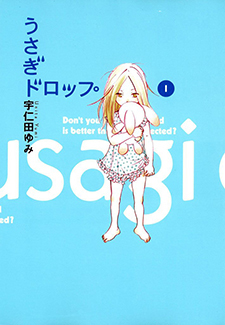 MANGA DramaUsagi Drop
 MANGA ComedyAmaama to Inazuma
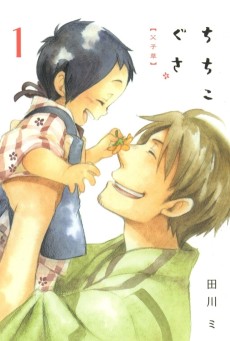 MANGA Slice of LifeChichi Kogusa
 MANGA DramaKoneko Hiroimashita
 MANGA DramaAishiteruze Baby★★
 MANGA ComedyChichi to Ko



SCORE
- (4.1/5)
MORE INFO
Ended inSeptember 3, 2010
Favorited by 409 Users