
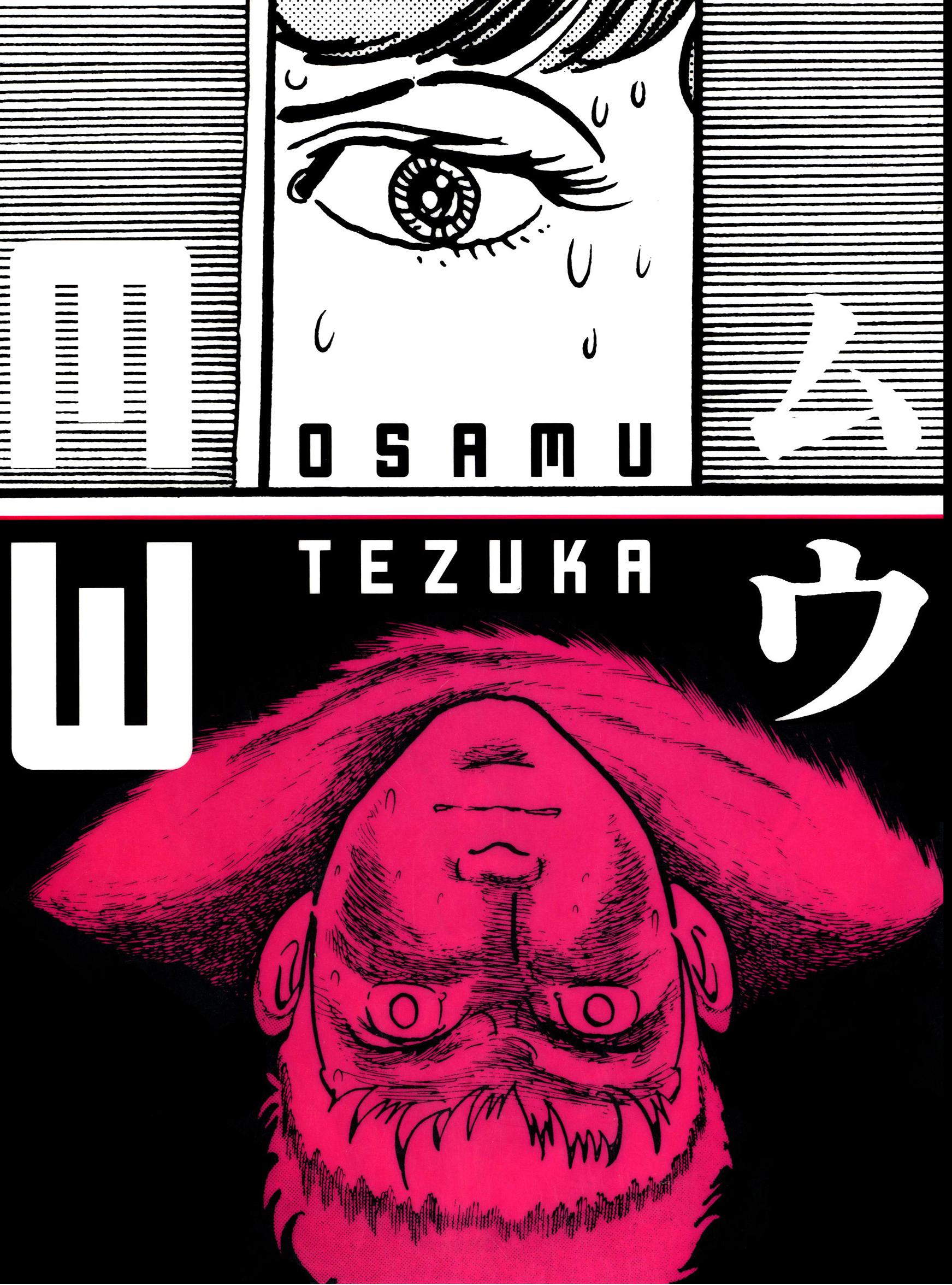
MW
STATUS
COMPLETE
VOLUMES
3
RELEASE
January 25, 1978
CHAPTERS
26
DESCRIPTION
Michio Yuki has it all: looks, intelligence, a pedigree as the scion of a famous Kabuki family, a promising career at a major bank, legions of female admirers. But underneath the sheen of perfection lurks a secret with the power to shake the world to its foundations.
During a boyhood excursion to one of the southern archipelagos near Okinawa, Yuki barely survived exposure to a poison gas stored at a foreign military facility. The leakage annihilated all of the island’s inhabitants but was promptly covered up by the authorities, leaving Yuki as an unacknowledged witness—one whose sense of right and wrong, however, the potent nerve agent managed to obliterate.
Now, fifteen years later, Yuki is a social climber of Balzacian proportions, infiltrating the worlds of finance and politics by day while brutally murdering children and women by night—perversely using his Kabuki-honed skills as a female impersonator to pass himself off as the women he’s killed. His drive, however, will not be satiated with a promotion here and a rape there. Michio Yuki has a far more ominous objective: obtaining MW, the ultimate weapon that spared his life but robbed him of all conscience.
There are only two men with any hope of stopping him: one, a brilliant public prosecutor who struggles to build a case against the psychopath; the other, a tormented Catholic priest, Iwao Garai, who shares Yuki’s past—and frequently his bed.
(Source: Vertical)
CAST

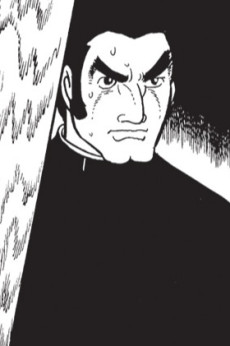
Michio Yuuki
Garai Yutaro
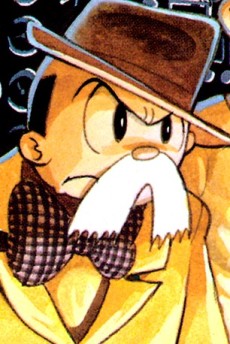
Shunsaku Ban
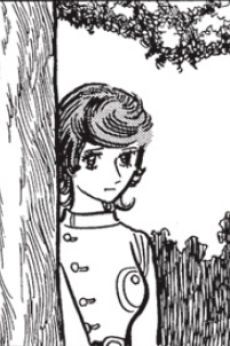
Sumiko Taniguchi
CHAPTERS
RELATED TO MW
 MANGA ComedyTezuka Gakuen
REVIEWS

SenpaiSina
Monster's bisexual granddaddyContinue on AniListI think nowadays it's customary to introduce Tezuka as the godfather of manga. And that's rightfully so. Without Tezuka, Manga wouldn't be the Manga that we know and enjoy. Tezuka's influence over the medium is palpable. A prime example of this: MW. The story MW would go on to inspire Naoki Urasawa's mystery/thriller series and opus, Monster...

The Similarities between Monster and MW are almost exclusively to the antagonist of Monster, Johan, and the protagonist of MW, Michio Yuki. Both are a product of humanity's experiments in war. While Johan was a biologically altered human created to succeed Hitler, Michio was a casualty of a gas weapon of mass destruction. Both have lost their human emotions and are entities of pure nihilism due to their brains being altered. I say that but at first, it seems like Michio's story is a revenge story. However, as the plot unfolds, he heads towards nihilism and the same mass destruction which created him. As a result, they will both go to great lengths to achieve their goal, a perfect suicide, by murdering and even cross-dressing. All of this, executed perfectly like a master plan. While their ideas of a perfect suicide were different, the main principle is the same. Please don't take me comparing them as, the stories being a substitute to each other. Monster is told through Dr. Tenma's point of view and has much more of a mystery tone while MW is told by Michio's point of view. The best way I could put it is: if Monster was told from Johan's perspective. I recommend you read both and formulate your own opinions as they are different stories with differentiating plots.

Also, I want to say that it is not confirmed that Monster was inspired by MW, but the similarities are too many to call it a coincidence. Also, Urasawa is a fan of Tezuka. Having written pluto, a take on Tezuka's classic, Astro Boy. So I can say with confidence that Urasawa is at least familiar with Tezuka.
Now I will stop comparing and get onto my review of the story...
The character of Garai Yutaro, the lover of Michio, and accomplice, is quite the interesting one. While he is a catholic priest and is supposed to be a holy person, he has a dark past with the MW bomb. Michio serves as a reminder of that past as well as another faucet of sin. Which in this case is a gay relationship. The best comparison I can give is that of Mozgus from Berserk. Both are people who turn to religion for affirmation while not exactly being a saint themselves. That sort of hypocrisy and his internal conflict result in a pretty fascinating character.My only complaint is that you can tell the story is somewhat outdated by modern standards, but considering when it was written, it holds up pretty well. Overall a decent story with great themes. All things considered, it's one of my favorite Tezuka short stories. I give it a really good score of....

LordEnglishSSBM
A fun thriller, and not quite "worse Monster"Continue on AniListNote: This score is 60/100 because that divides out to 3/5, which more accurately captures how I feel about the work.
Tezuka's influence can't be overstated. The "grandfather of manga" helped inspire or all but directly created half of today's popular genres and a number of less popular, more experimental ones. He so directly influenced Naoki Urusawa's work in particular that his estate should probably be asking Urusawa for royalties (Urusawa, if you're reading this, I do love your work). The trouble is that going back to his work now, it becomes clear that the reason he was so influential is because his works were intriguing but flawed. You can see how, for instance, Princess Knight eventually morphed into shows like Revolutionary Girl Utena, but actually reading it you can see that Tezuka couldn't quite capture the psychology that made the discussion of gender roles work there. Like I Am Legend or the E. E. Doc Smith stories that birthed the space opera genre, his provided a lot of intriguing threads that other authors picked up on. Case in point: If you've read or watched Naoki Urusawa's Monster, you've mostly read MW, which follows a man with a moral code which explicitly forbids killing as he struggles against a charismatic and seemingly unstoppable man who seems to delight in violence and death. Many of the more specific story beats line up too, though going into detail there would be spoiling both series.
For all that, I actually did enjoy MW on its own merits, and it captures what makes Tezuka interesting: The sheer variety of themes he was willing to tackle. His cartooney art style (which for the record I quite like) gets him pegged, rather unfairly, as an mangaka who wrote for kids. In reality he wrote many different stories for many audiences, with MW being one of his adult stories. It's about murder, imperialism, religion, corruption, sin and gay love (his treatment of it here, incidentally, is remarkably progressive for the time), and juggling this many balls at once makes the story varied. There are a lot of twists and turns here, even if a few of them are a bit more contrived than I would have liked. The downside, of course, is that it's relatively unfocused, which is a bit of a problem because the short length means that the story doesn't really have room to sprawl.
The bottom line is that it's a fun enough thriller, and it worked for me in a way that the other Tezuka stories I've read didn't. It can't match Monster in character psychology, atmosphere, or tension, but that almost feels like cheating given that Urusawa was writing the same story four decades later. In a way, perhaps the more remarkable thing is that the sheer variety of themes here allow MW to have an identity of its own, despite being rewritten forty years later.
Again, Urusawa: Love your work.
SIMILAR MANGAS YOU MAY LIKE
 MANGA PsychologicalNingen Konchuuki
 MANGA DramaAdolf ni Tsugu
 MANGA Drama20 Seiki Shounen
 MANGA ActionHikaru Kaze
 MANGA DramaKirihito Sanka


SCORE
- (3.7/5)
MORE INFO
Ended inJanuary 25, 1978
Favorited by 151 Users