
SAYONARA ZETSUBOU SENSEI
STATUS
COMPLETE
VOLUMES
30
RELEASE
June 13, 2012
CHAPTERS
301
DESCRIPTION
Nozomu Itoshiki is depressed. Very depressed. He's certifiably suicidal, but he’s also the beloved schoolteacher of a class of unique students, each charming in her own way: The stalker. The shut-in. The obsessive-compulsive. The girl who comes to class every day with strange bruises. And Kafuka, the most optimistic girl in the world, who knows that every cloud has a silver lining. For all of them, it's a special time, when the right teacher can have a lasting positive effect on their lives. But is that teacher Itoshiki, a.k.a. Zetsubou-sensei, who just wants to find the perfect place to die?
(Source: Kodansha USA)
CAST
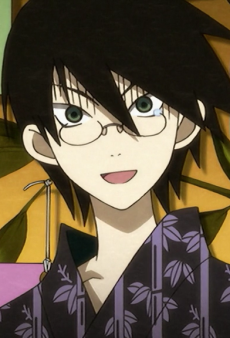
Nozomu Itoshiki

Kafuka Fuura
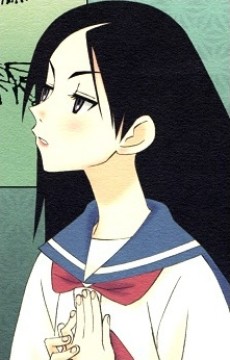
Chiri Kitsu

Kiri Komori
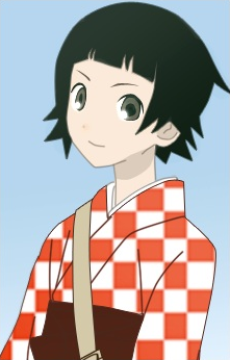
Matoi Tsunetsuki
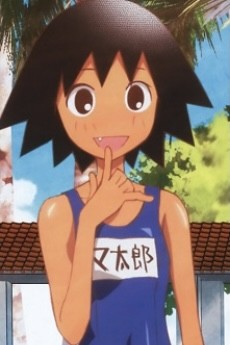
Tarou Sekiutsu

Abiru Kobushi
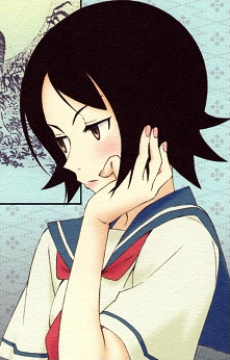
Nami Hitou
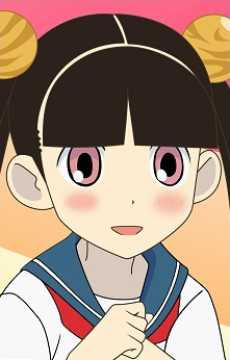
Meru Otonashi

Harumi Fujiyoshi
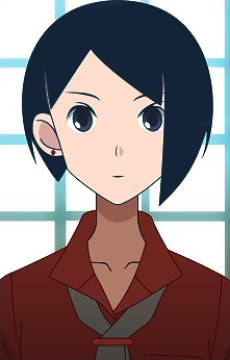
Chie Arai

Ai Kaga
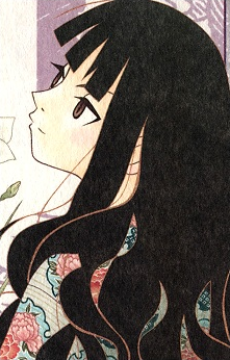
Rin Itoshiki

Kaere Kimura
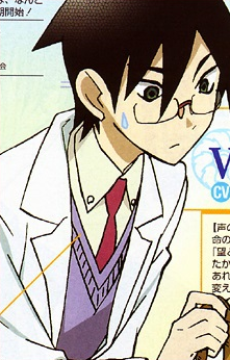
Mikoto Itoshiki

Jun Kudou
Kouji Kumeta

Majiru Itoshiki

Kanako Oora

Tane Kitsu

Mayo Mitama
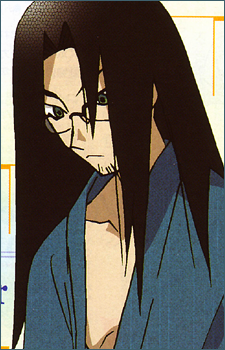
Kei Itoshiki
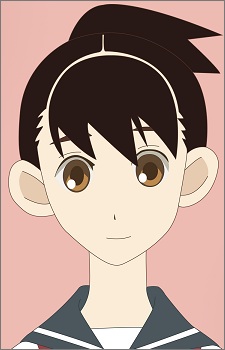
Manami Ookusa
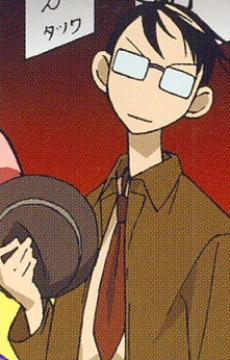
Kagerou Usui
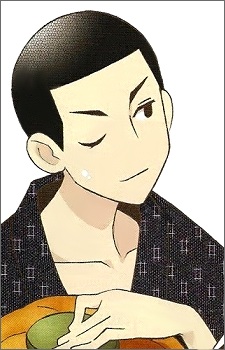
Ikkyu
CHAPTERS
RELATED TO SAYONARA ZETSUBOU SENSEI


REVIEWS

Pordexel
One of the greatest endings to a story I have ever read.Continue on AniList_Thank you, Shaft._ 
Kafuka Fu’ura is an angel From the very first episode, you know that Fuura is special. When the rest of the characters are introduced, you know that something weird is going on with Fuura. Why is she the only one with a pen name? Why is she seemingly more important than the other girls? After finishing the show and analyzing the openings (especially the Goku OP), you may come to a speculation that Fuura is actually dead. But this still makes no sense because everyone can see her.
When you read the last 10 chapters (or all 300 if you’re a real man), there is no way you could have predicted what the actual truth was. What was introduced as a gag in a random chapter (that was not in the anime) turned out to be the glue that was keeping this entire cast together. Who would have thought that transplantation induced memory transfer was behind everything?

This is a story about hope. A girl who died in an accident but was so stubborn and hopeful that she refused to remain dead. A girl so hopeful that pieces of herself being transplanted into suicide victims is enough to save them from the despair of their life. All of the girls are truly damaged individuals whose negative traits were possibly what drove them to attempting suicide, but Fuura was the beacon of hope that turned their life around, which is why these traits that originally brought them all despair are now a source of comedy instead.

The other person who was saved by Fuura was Nozomu himself. When he is first introduced, Fuura has to literally save him from hanging himself. This is Nozomu’s first meeting with his love who is supposed to be dead. A meeting that was never meant to happen. Eventually, we learn that Nozomu secretly does not want to die, and there is a gag about how he trains his body to survive these suicide attempts (neck training for example). Fuura’s revival is what is keeping him alive. She is what gave birth to his new life, along with the other students’ lives. In the first episode, Nozomu’s line “I am a person whose life is worth nothing” hits much harder when you read the final page of the manga, when he says, “I have no special talents and I am a simple man of no merit”.

_accurate portrayal of Fuura curing my depression_ The Zetsubou Sensei anime inspired me to be unique and laugh at all of life’s sorrows. It also inspired me to create; haven’t you seen the animation clip at the start of this review? I hope that this obscure Japanese gag manga can potentially save someone the way Fuura saved everyone. Because that’s another special thing about comedy. Being able to joke about taboo and dark topics is what keeps people from being exhausted. We know there’s nothing we can do about most of our and society’s problems, so what’s the point in being miserable? Comedy should be about laughing at the darkest parts of the human condition, and I think that’s the reason why Zetsubou Sensei is so special to me.
Even if people watch the show and just like it because it’s an obscure gag show that’s kinda wacky and they don’t care about reading the manga, that’s fine. Even if nobody will ever understand this show, I hope it at least made them laugh, because there will never be another comedy like Sayonara Zetsubou Sensei.


Kowasub
A Beautiful Spiral Into Absurdity and Self AwarenessContinue on AniListSayonara, Zetsubou-Sensei is a manga that’s almost impossible to describe in simple words. It’s a unique blend of comedy, embarrassment, intelligence, and, at times, even fatigue. At first glance, it appears to be a dark comedy about a hopeless pessimistic teacher who finds despair everywhere. However, as you delve deeper into the story, it reveals itself to be much more than just a comedy manga. It serves as a bitter mirror reflecting contemporary society, human insecurity, and the strange contradictions that govern our lives.
What makes Sayonara, Zetsubou-Sensei so memorable to me is its ability to transform ordinary ideas into extreme ones. Kumeta takes emotions and behaviors that most people experience, such as overthinking, fear of rejection, social anxiety, and the desire to fit in, and magnifies them to almost surreal levels. The genius of the manga lies in its ability to make even the most ridiculous situations feel familiar. Behind the absurdity, there’s always something that resonates on a deeper level.
This is what makes the manga so sharp. It’s always observing. It observes the peculiar little hypocrisies and contradictions in people’s lives and transforms them into humor. It’s something that makes you laugh, but it also makes you realize how irrational much of our everyday lives are.
While much of the satire is rooted in Japanese culture and social hierarchies, its emotional core is universal. Emotions like alienation, anxiety, insecurity, and the exhaustion of maintaining appearances resonate with a much broader audience than a single culture. This universality is why the series remains relevant and even seems more contemporary today.
The image obsession, the fear of judgment, and the way individuals conform to societal roles all sound very contemporary. The manga’s scenes border on being prophetic, commenting on societal compulsion and the need to control how one is perceived.
My favorite aspect of the manga is its approach to despair. Unlike silent despair, this manga’s despair is melodramatic, noisy, and almost theatrical. Itoshiki doesn’t accept his hopelessness meekly; he plays it too fiercely that it becomes absurd. This theatrical quality transforms something gloomy into something humorous.
I find that oddly reassuring. The manga makes despair close enough to touch and yet so overwhelming that it becomes laughable instead of distant and unreachable. It doesn’t eliminate the pain behind those feelings but instead amplifies them.
That’s why I never feel empty of humor. It’s cathartic. There are times when one can only carry heavy burdens, and this series understands that.
The art style also contributes significantly to this. Kumeta’s chaotic panels and over-the-top phrases alternate between calm and manic in a moment. The disheveled aesthetic style supports the emotional bombardment that characterizes much of the show. It’s sloppy in a deliberate way.
The chapter structure is also somewhat literary. They usually begin with a straightforward premise and then veer into more ridiculous and insightful digressions. It doesn’t read like a typical story but rather like a satirical essay in the form of comedy.
Although it’s episodic and centered around jokes, the manga has a profound emotional impact. After the laughter subsides, the result is usually irritation, not necessarily bad irritation, but a pensive kind. It prompts you to reason about the fears and contradictions that exist not only in society but within yourself.
It raises thought-provoking questions without explicitly asking them. Why do people feel the need to conform to societal norms? Why do humans fear being forgotten? Why are people so obsessed with intellectual pursuits? Why do humans have to adhere to systems that often lead to misery?
The strength of the series lies in its refusal to present simplistic solutions or comforting conclusions. Life is messy, individuals are contradictory, and most of our fears persist. The manga acknowledges these realities and refuses to simplify them.
Instead, it offers a profound recognition. It acknowledges the absurdity of life, the exhaustion of existence, and the coexistence of hopelessness and joy.
This sincerity is what I will always remember. Sayonara, Zetsubou-Sensei doesn’t aim to heal despair or find a solution to the human condition. It merely observes life through a mirror and finds humor in its reflection.
This unique approach makes it a brilliant manga to me. It’s funny without being shallow, dark without being empty, anarchic without being accidental. All jokes are based on observations, and all absurd moments are rooted in something deeply real.
None of the manga can capture the peculiar blend of misery and humor as effectively as this one. It recognizes that laughter can sometimes be the purest response to life’s absurdities.
Ultimately, it’s not the plot that makes Sayonara, Zetsubou-Sensei memorable, but its voice. It offers a clear and cynical view of the world, with a strangely sympathetic side beneath the satire.
The manga directly confronts the fears that reside in people’s hearts, the roles they play, and the contradictions they navigate daily. It transforms these elements into something that elicits laughter and profound reflection.
Sayonara, Zetsubou-Sensei is a manga that made me laugh and made me feel like I was being observed in a peculiar way. That’s one of the greatest compliments I can give it.
SIMILAR MANGAS YOU MAY LIKE
 MANGA ActionKatte ni Kaizou
 MANGA ComedyKakushigoto
 MANGA ComedyTakeo-chan Bukkairoku
 MANGA ActionBakemonogatari
 MANGA ComedyStudio Pulp
 MANGA ComedyShinmai Nittaism
 MANGA ComedyVoynich Hotel


SCORE
- (4.05/5)
MORE INFO
Ended inJune 13, 2012
Favorited by 599 Users