

NIPPON SANGOKU
STATUS
COMPLETE
EPISODES
12
RELEASE
June 21, 2026
LENGTH
26 min
DESCRIPTION
A revolution sparked by nuclear war, natural disaster, and misrule leads to the collapse of Japanese society. The country splits into three nations vying for hegemony, and the Sangoku era begins. Aoteru Misumi, a former agricultural officer, vows to reunify Japan. He rises through the ranks with only his knowledge and eloquence. Witness the legend of the man later hailed as a genius strategist.
(Source: Amazon Prime Video)
CAST

Aoteru Misumi
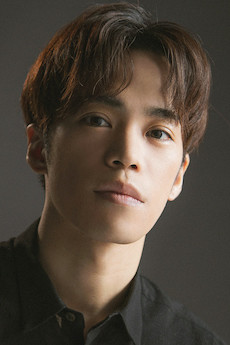
Kenshou Ono

Yoshitsune Asama
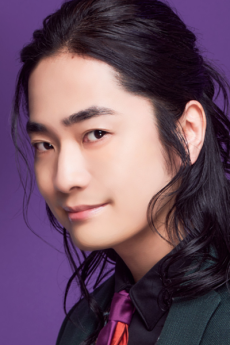
Jun Fukuyama

Yasuaki Kaku
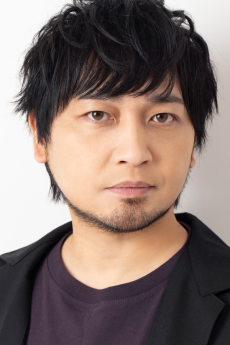
Yuuichi Nakamura

Ohga Wajima
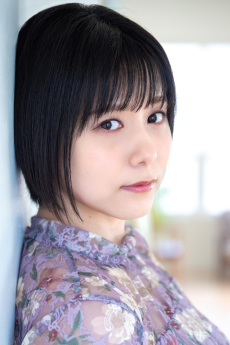
Minami Tsuda

Mitsuhide Ryuumon
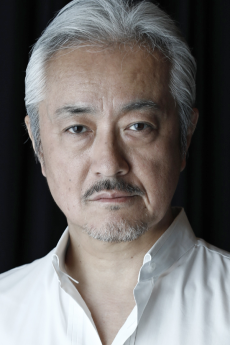
Kazuhiro Yamaji

Saki Higashimachi

Asami Seto

Denki Taira

Takashi Nagasako

Gou Sugou
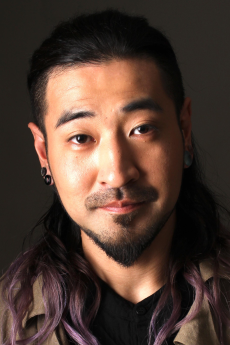
Ryouta Takeuchi

Yayakichi Hei
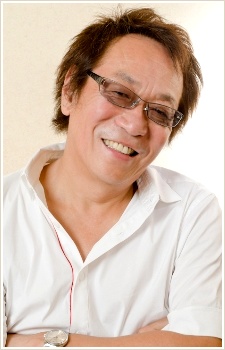
Kenyuu Horiuchi

Nagao Muuton
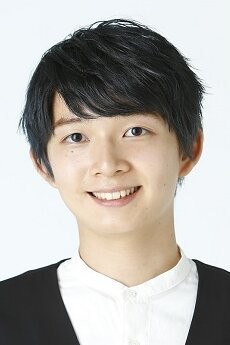
Shuuichirou Umeda

Aterui Kura
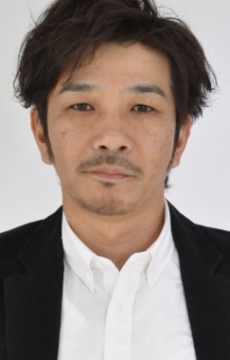
Shunsuke Sakuya

Tonotsugu Taira
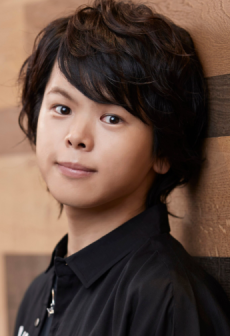
Ayumu Murase

Fuji Sansei

Taihi Kimura

Himehito Ookimi

Takeo Ootsuka

Shiryo Nagamine
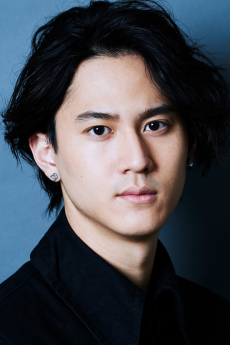
Shunsuke Takeuchi

Yoshinaga Satou

Youji Ueda

Hina Hiraizumi

Chinatsu Akasaki

Yukihane Kokuryou

Douitsu Kata

Masafumi Kobatake

Yasuke Hei
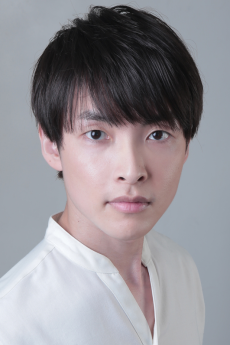
Atsushi Tamaru

Seiko Ogami

Risae Matsuda

Maguro Toyota

Minoru Shiraishi

Junichi Tamaki
Kazuyuki Okitsu

Shinzou Haranishi

Taichi Takeda

Yubari Muchari

Satoshi Yamaguchi
EPISODES
Dubbed
Not available on crunchyroll
RELATED TO NIPPON SANGOKU
 MANGA ActionNippon Sangoku
REVIEWS

RandomPerson9348
Too Lost in Scale, Too Obsessed with Grandiosity (Spoilers)Continue on AniListNippon Sangoku was the premiere of Spring 2026. Everything about it was perfect. The storytelling, the character work, the music, the animation, the themes. The storyboarding was chaotic madness, but there was a method to it. It was one of the most cohesively put together visions that told you precisely what you were going to be in for.
I would know, because I was right there on the front line telling people to watch it left and right.
And then…forgot about it all. By the time the fourth episode rolled around, the cracks began to show, and it all downhill from there. In my opinion, at least.
That is primarily because Nippon Sangoku begins exactly how it needs to, but then completely misunderstands what makes it work. It wants to tell a war story, but it is so obsessed with being a war story and that it forgets to be a war story. It becomes so lost in its own scale and strategy that it forgets there are meant to be humans behind them.
Story and Themes War affects common people more than it affects those who begin it. That is something that the first episode of this show affects perfectly. It is a slow, yet tight meditation on how quickly corruption can spread, and how we all have the power to stand up against it. Aoteru Misumi is a compelling protagonist because he has the means to do something, but refuses to stand up. It is not until he is able to learn a lesson from his wife, only to lose her immediately after, that he understands the weight of his inaction. It is only then that he uses his intellect to get revenge in the most subtle way possible.
This continues well with episodes 2 and 3, where he meets Yoshitsune Asama and Mitsuhide Ryumon. There is meaning to his actions, and a proactivity to his decisions. He is actively trying to make this world a better place, and the pacing supports him. The narrative is moving towards him doing great things by crawling his way up the food chain. In the very third episode, he has Ryumon kneeling in front of him. Up until now, you are watching the tale of a man who has been hurt by war, and wants to see it change, and is doing something about it.
Then, you start focusing on the war.
Misumi all but disappears and Nippon Sangoku turns into this sprawling epic about the war between the Yamato and the Seii. It starts focusing far too much on the wider strategies that these sides are employing, without letting any of them evolve as people. Ryumon and Kaku are immediately put into a war council before we know who they are. Ohga Wajima is given a political dimension, but never a truly personal one. Yayakichi Hei is introduced to you as a strategist before he is introduced to you as Wajima’s father figure.
And even if it does try to correct some of these wrongs later, the damage is already done.
The story has already become obsessed with the mechanics of this war, and the back and forth between two sides. You know that you must root for the Yamato, but only because you’ve known Ryumon for longer than you’ve known Wajima. Only because Kaku said that Wajima is a cunning leader before a good person, and not because you reached that conclusion yourself.
It says a lot that the strongest episode of this block is Episode 6, that stands proud because of its ending. Is that because it has incredible strategy or amazing militaristic battles? No. Because Nippon Sangoku is also afraid to do those. Episode 6 stands out amidst the bunch because it lets the people shine over the war once more. It is telling a story about soldiers willing to stand up for their leader because he has treated them right.
Even when the story does return to Misumi, it is too little too late. And once more, it becomes exclusively focused on him as a strategist instead of him as a protagonist. After the first episode, Aoteru Misumi is the most static character in the story, and the story supports that. There is discussion of war, and discussion of battle plans, and there are maps drawn everywhere. But beyond a passing mention of Misumi’s wife, there is hardly any importance to his personal motivations.
That, more than anything else, betrays the very essence of what the story promises in the beginning. It stops being about Misumi’s personal vendetta in any way. It becomes the show where Misumi outsmarts Taira and then does something for the Yamato. We begin with the reminder that war leads to destruction, death, and corruption, and end with Misumi becoming a champion of the Yamato.
If there is some deeper meaning behind this, and a reason for him to be as he is, the story takes far too long to get to it. By the time the season ends, his presence as a character might as well be non-existent. His presence is merely as a plot point meant to wow you. Even that, unfortunately, is subjective because none of these ‘strategies’ are particularly awe-inspiring.
Structurally, one of the weakest points of the story was Yayakichi’s death. You cannot introduce a character as nothing more than a strategist and objective mentor figure for the entire run of the show, then randomly pivot to the emotional connection between him and Wajima, and kill him in the exact same episode. And even when it does do that, an overextended amount of time is dedicated to a council where people are scheming and double-crossing each other.
That is Nippon Sangoku’s biggest failure. It begins as a story about people in a war, and ends up becoming a story about a war which happens to have some people in it. This is perhaps best illustrated in the finale, where the most important developments of the plot happen in a rushed montage. It builds up its characters as little as it can, and then just tells you that they do something instead of showing it to you.
Characters A war story lives and dies by its characters.
There is a reason why classics All Quiet on the Western Front dedicate time to letting you connect to these soldiers you are following. There is a reason why Legend of the Galactic Heroes gives its personal conversations just as much weight as political decisions. If you do not care about the people involved in this fight, then you will not care about the fight itself.
As discussed above, the protagonist of this show itself, might as well not exist after the first three episode. He is not only missing for most of it, he also barely has any development, impact, or personality in the little bit of time where he does show up. Misumi starts off as a slightly grief-ridden man who wants to set things right, but then becomes Generic Smart Anime Protagonist #422 by the time Episode 12 rolls around.
A larger chunk of the story, in fact, is dedicated to Ryumon and Kaku. This would not be an issue at all, if they were well-developed characters. But they are not. We spend so much time listening to their tactical discussions and war philosophies, that we do not get to understand them as people. I can see why I objectively wouldn’t want Ryumon to die on a bridge, but I couldn’t personally care less if he did.
Just being a man who cares about his comrades is not enough of a ‘character’ to make you feel for them. Not that it is impossible, but it’s certainly a bit too little for someone with so much screen time.
Yoshitsune…exists. I guess. I don’t know why.
Moving on to the antagonists.
Denki Taira is a joke of a character. Once more, this is not because he is one-note and written to be frustrating, but because he is nothing more than that. Some of the most effective villains are the ones who cannot be explained, and have no deep motivations. But they are also meant to be charming to a certain extent. Think Yoshikage Kira, for example. And if you are going to write them to be annoying, then they should have at least some depth to justify their behavior. Think Matou Shinji, for example.
Taira tries to be square in the middle. He has no history explained, he has no depth, he is villainous purely because he craves power, and he is then meant to be annoying. Even though he works on a thematic and metaphorical level, there is absolutely nothing which makes him a narratively competent villain other than that the one person he does affect – the Emperor – is an even bigger joke.
Ohga Wajima. The less said about her, the better. She is a classic case of wanting to have your cake and eat it too. The story itself cannot make up its mind about what she needs to be, and thus nobody else can either. She is charming, and she is strong, and she understands the will of her people. But she is not doing it on purpose. Or maybe she is doing on purpose. She is more of a convenient plot point, much like Misumi, than she is a character.
As for everyone else, they are forgettable at best.
The story frequently uses its characters as nothing more than forces of nature that do something to push the plot forward. They rarely ever feel like real people, and more like repetitive caricatures of the same type. There are good-hearted people, and bad-hearted people. There are stoic people, and loud people. There are wise people, and foolish people. There are content people, and greedy people. Without any depth, they are one thing only.
Because Nippon Sangoku does not care about its characters. It wants to pretend that it does, but nothing about its story suggests it. All it cares about it being a massive, sprawling epic that is trying to be the Romance of the Three Kingdoms.
Presentation In all fairness, there is very little to complaint about here. If there is one thing that this show consistently succeeds at, it is having a cohesive visual direction. It is purposeful, creative, and always has some new trick up its sleeve. There is always something fun to watch when you start an episode of this show.
That goes for every single one of its aspects – cinematography, storyboarding, composition, music. There is real heart and attention to detail in all of these departments, which helps it carve out its own place in the season. There is no other anime which looks and moves like Nippon Sangoku, and that is a very difficult thing to achieve. Especially more so in the modern landscape of anime where even the most high-budget productions do not manage to hit that high.
The voice acting is also always on point, and might actually be one of its strongest aspects. Kenshou Ono’s Misumi is a genuinely incredible performance, and so is Takashi Nagasako’s Denki Taira. Narrative placement aside, the work by both of them is worth praising. Of course, the same goes for Kazuhiro Yamaji’s Ryumon and Minami Tsuda’s Ohga Wajima. An unmentioned character as of yet, but I was also impressed by Shuichirou Umeda’s work as Nagao Muuton.
Moving on the openings and endings, there is hardly much to say here. Tatsuya Kitani is always a pleasure to listen to, and “Hidane” is just as great as the rest of his discography. The storyboarding of the OP to go along with it is strong, and would easily be the best of the season if not for Kamiina Botan.
Leina’s “Chikai”, on the other hand, was a good surprise. It provides a nice change of pace as the ending, though the visuals don’t quite hit as well as they could.
TLDR All in all – do I think Nippon Sangoku is worth watching?
As just a good story? No. As a war story? No. As a revenge story? No. As a story that you might like if you like three different factions killing each other without any good reason why? Sure. I guess it might be palatable then. Just think Game of Thrones except 90% of it takes place in King’s Landing’s court, and a narrator at the end of Season 3 explains the Red Wedding in 3 lines with some PNGs instead of showing it to you.
Despite having a strong beginning, Nippon Sangoku is unfortunately not able to stay true to its own promise. It lies to you, it lies to its characters, and ultimately lies to itself. Even with a stellar production and breathtaking visuals, it can’t fix that. It can’t be the Romance of the Three Kingdoms, when there is absolutely nothing romantic about its adventures, in any form of the word.

mikaeil
Nippon Sangoku was a beautiful surprise for me, and I absolutely love it.Continue on AniListSpoiler Warning!
# Story The story and theme of Nippon Sangoku are inspired by the very famous novel Romance of the Three Kingdoms, and one could say it pays homage to it even the full title of the anime is NIPPON SANGOKU: The Three Nations of the Crimson Sun
As someone who grew up watching the classic anime Sangokushi as a child, and rewatched it several times during my childhood, and also watched several different live-action adaptations later, I have a deep and lasting love for this story. This very attachment made me fall in love with the theme of Nippon Sangoku from the very first episode.
But aside from the fact that the main theme of Nippon Sangoku is inspired by Three Kingdoms, even the direct adaptations of the original Three Kingdoms novel whether in anime or live-action form differ from each other in many ways:
-
in which character is chosen as the protagonist,
-
in which characters are portrayed as positive or negative,
-
in how dark a tone they choose for the narrative,
and in many other aspects.
I mention this because, firstly, Nippon Sangoku might seem like a copy of Three Kingdoms at first glance, but that's not the case at all. As I said, even the adaptations of Three Kingdoms themselves differ greatly from one another.
And Nippon Sangoku, despite its clear and deliberate inspiration from Three Kingdoms, creates a story and theme entirely its own by skillfully blending that inspiration with three other elements:
-
modern Japan,
-
a post-apocalyptic world,
-
and its beautiful, unique storytelling methods (which I will elaborate on later).
The result is a narrative that is not only highly enjoyable to watch, but deeply satisfying and distinct in its own right.
Regarding the narrative method and techniques in my opinion, Nippon Sangoku uses three approaches to storytelling. These methods are not unusual in themselves, but in Nippon Sangoku, their presence and the results they produced felt incredibly clear to me. The combination of all three together was what made the storytelling of Nippon Sangoku special for me to the point that I now want to pay closer attention to this type of storytelling in other works as well.
1) The first storytelling method especially for the two main themes of the story in Nippon Sangoku works like this:
The anime shows an event (let's call it Event A). In response to this event, the anime presents the most obvious answer that a character, the characters, or the audience could have to Event A through the words of a character. Let's call this Answer B.
But instead of continuing the story with Answer B as the next step, the anime immediately right after Answer B is stated provides reasons why B is not the best choice, or why it's the wrong answer. This gives depth to the story. Let's call this Answer C.
However, the anime is aware that Answer C which comes right after B might not be entirely convincing on its own, or might not fully refute B. So throughout the story, through small details, it presents additional reasons to reject B. Let's call this Answer D.
And from all of this, the anime is building toward a conclusion which might come several seasons later, or within the same season.
This is a simple narrative technique not nearly as complicated as it might sound. But what I loved most about it was: first, how beautifully it's woven into the story, and how clearly it can be felt; and second, that the Answer C part is what makes the story much more open and flexible, giving the writer more options for where to take the narrative, and making the story feel dynamic for the audience.
Example of this first method in the two main themes of the story:
In the first episode, the anime shows that Saki is killed by Taira. That's Event A.
The most obvious response to this is: Misumi should kill Taira and take revenge on the spot and the anime presents this obvious answer through Misumi's monologue (at least theoretically, Misumi could kill Taira right there).
But immediately after that, the anime refutes Answer B again through Misumi's monologue and gives reasons why B is not the best response to this situation. This response is not only used to reject B, but also for a broader perspective. This is Answer C.
After this, the anime gradually shows over the course of the season that Taira is not a foolish character. He's greedy, he's cruel but he's not stupid. And the people he keeps close to him, who are not his family members, are also not stupid. In terms of combat ability, he probably surrounds himself with capable individuals. This raises the question: Could Misumi really have killed Taira in that moment? This is Answer D in this section.
And eventually, the anime will reach a conclusion from all these parts.
What Answer C achieves here is that it opens the story beyond a simple revenge narrative. By choosing to have a broader perspective, Misumi allows the anime itself to take a broader view, focusing on things beyond just the protagonist's revenge. This also allows the anime to set Misumi aside for large portions of some episodes and focus on other characters and the world itself which brings dynamism to the world and story of Nippon Sangoku.
The same applies to the other main theme of the story the war with Sei Sei in the same manner.
2) The second storytelling method in Nippon Sangoku is related to visual storytelling more specifically, character designs.
In manga and anime, there's an advantage: through designs, you can visually reflect the inner nature of characters, and also depict their behavior in a way that clearly matches their inner selves. Nippon Sangoku does this exceptionally well. Some characters appear dignified, others seem detestable and so on.
3) The third method is simplifying details and turning them into generalities.
This is especially a double-edged sword in strategy-driven stories:
-
Over-simplifying strategies makes the story lose depth.
-
Over-complicating them slows down the pacing and reduces the audience's enjoyment.
So the story must either find a middle ground between complexity and simplicity, or take a very intelligent approach: focus on simplification while still showing that each strategy has depth even if the story doesn't explicitly dive into that depth. Nippon Sangoku does this very creatively, and it makes the narrative smoother and more beautiful.
Example: the Soldier-Farmer plan mentioned in the story.
Through Misumi, the anime gives a summary of this plan and focuses more on its results rather than diving into complex details. At the same time, the anime visually shows that this plan has pages of details written in Misumi's notebook, and Kaku is reviewing them. So in terms of dialogue, the anime presents the generalities and in visual terms, it shows that details exist within those generalities.
The anime uses this method in other cases too. For example, when presenting strategies, instead of diving into the finest details, Nippon Sangoku uses various references to show that the mentioned strategy has depth even if the anime doesn't explore that depth. This prevents those strategies from feeling shallow.
However, this style of storytelling creates a kind of illusion the illusion of a flaw. Because the storytelling focuses on simplification, it creates the illusion that the story has flaws. But in my view, that's not the case.
When it comes to simplification, there are two types of criticism:
Illusory criticism: the anime is moving in a certain direction, and the illusory criticism acts like a wall blocking the narrative path but there is an answer to that illusory criticism, and if you apply it, you realize the criticism might not actually be valid.
For example, in the Soldier-Farmer plan, an illusory criticism might be: "This idea is stupid" or "It has flaws, I don't accept it." That acts as a wall to the narrative. But the response is: "No the Soldier-Farmer plan fits the story in its generalities, and the anime visually shows that it has details."
And as far as I can tell, Nippon Sangoku has no serious storytelling flaws, at least I didn't notice any. Even when I tried to look at it from broader perspectives, I found that any criticism that could be leveled at Nippon Sangoku is the illusion of flaw created by the story's simplification.
Beyond all of this, I deeply enjoyed Nippon Sangoku both for its unique moments and for its references.
One other aspect I truly loved was how the story intelligently and clearly critiques several topics:
-
collective mindset,
-
social pressure to prove something to a minority,
-
how some people blindly criticize or defend a subject without fully understanding either the generalities or the details.
At the same time, the anime also shows the consequences of thoughtlessly opposing the majority. I loved this part of the narrative it felt incredibly realistic.
And finally, one more aspect of the storytelling in Nippon Sangoku:
Certain positive changes are made by people in power, and these changes have rapid effects sometimes solving problems that had existed for years. The reason for this is the act of change itself.
In reality both in the past and even today changes can be made that solve some long-standing societal problems. But creating these changes often brings no financial benefit to those who have the power to make them, so they aren't done.
But in the world of Nippon Sangoku, changes are made quickly for goals beyond financial profit and wealth. That's why they achieve rapid results.
# Characters First of all, the anime does an outstanding job of making the audience emotionally invested in its characters. It can introduce a character in less than half an episode, and within those ten minutes, make us care about them and root for them — or at least, that's how it was for me.
Additionally, some characters in the story undergo character development that I genuinely did not expect and it was truly surprising.
Regarding the characters of Nippon Sangoku in general: I can say that all of them are well-written in terms of quality, and all of them are given the opportunity to grow throughout the story. The story even ensures that in the final moments of a character's presence, we receive a great deal of information about them, their mindset, and their life.
My review has already become quite long, so I'll refrain from analyzing each character individually. But in my opinion, most of the characters are written so well that one could easily discuss their strong current presence, their potential from the past, and their future possibilities and simply enjoy them within the story.
# Production Nippon Sangoku is beautiful in every aspect the unique and stunning art style, the incredibly creative and dynamic direction, the exceptional music and no matter how much I talk about the technical quality of this anime, I still can't fully express the depth of its beauty.
In terms of direction, Nippon Sangoku goes beyond current standards, and because of that, I can't find any flaw in its technical quality unless perhaps the art style isn't to everyone's taste, which in my opinion doesn't count as a flaw at all.
One hundred percent, the direction of the anime has elevated the story, delivering it at its peak, and has amplified the impact of every event in the story by several levels.
And once again, I have to say: the music here is phenomenal whether it's the story's soundtrack, the incredibly beautiful opening (in terms of both music and visuals), or the equally lovely ending theme. I watched all the openings of this season, and the opening of Nippon Sangoku is among my top three openings of the season. The ending music is also very beautiful.
This was from this section.
With thanks to:
the manga author (Ikka Matsuki) for the beautiful story and the wonderful characters
(for me, at least),and to everyone involved in making this beautiful anime: the director, the members of Studio Kafka, and all others who contributed to its creation.
# Final Thoughts Nippon Sangoku was a delightful superstar for me. I enjoyed it in every way, and I am eagerly waiting for its continuation. Without a doubt, this anime is a masterpiece in my eyes.
I should also add: maybe Nippon Sangoku isn't flawless I don't think any work can be completely flawless but the way the anime presented itself over these twelve episodes turned it into an incredible experience for me, beyond any small flaw it might or might not have.
Thank you.
-

melamuna
It has the potential to be one of the great seinen anime, but…Continue on AniList

Revenge stories are not only a staple genre in seinen manga, but one that carries immense prestige. The so-called “big three” seinen titles—Berserk, Vagabond, and Vinland Saga—not only deliver some of the best revenge narratives out there, but also transcend their own art form and genre through the immense character growth of their protagonists.
These standards alone place Nippon Sangoku on top of a shaky pedestal. The question then becomes: how does it stand among such well-established seinen giants? Can it stand on its own and become something distinct, or will it merely remain in the shadows of already legendary titles? ***

From its very first episode, Nippon Sangoku already sets itself apart with a uniquely compelling start. Set in a future where Japan has regressed into a more authoritarian era, the series places its characters in a constant state of tension, where imminent death feels like it could arrive at any moment.
This creates an oppressive perspective of a dystopian society that goes beyond the familiar trope of “empty spaces” and heavily segregated minorities often seen in other titles. Instead, it embraces a pessimistic and bleak vision of the future while blending it with the violent nature of the past, resulting in a societal dynamic that reflects remnants of history, anxieties about the future, and—strangely enough—the unsettling atmosphere many people feel in the present, especially if you’re aware of current political climates.
It’s an impressive approach to tackling themes like complicated politics, betrayal, mistrust, and unchecked power, all without becoming overly preachy.

But a well-detailed, rich world wouldn’t make for a great story without a lead capable of carrying the series, and this is where I’m somewhat mixed. On one hand, we follow Aoteru Misumi, a character who seeks “revenge” after a major event changes his life. However, instead of pursuing it through bloodshed, he chooses to use his intellect, observant nature, and sheer determination to save others as his form of revenge.
Right away, this gives us a uniquely compelling protagonist who keeps you hooked and intrigued by whatever move he pulls next. Paired with Yoshitsune Asama—who acts as the complete opposite of our main lead, being smug and self-centered—their odd dynamic surprisingly works well, especially because of the similar goals they share. There are also several side characters in Nippon Sangoku that demand your attention whenever they appear on screen.
However, these same strengths are also what hold me back from fully loving the cast, especially Aoteru himself. Beyond the first episode, we rarely see meaningful growth from him. While he remains interesting, later episodes make him feel increasingly passive, both in terms of his proactiveness and overall character development. The same issue applies to many of the side characters as well—something that becomes more noticeable since the series constantly shifts focus between them.
That said, not every character suffers from this. There is one villain-presented character who undergoes a satisfying change, though even that development doesn’t quite feel as impactful as the scene itself seems to demand.
In the end, despite its excellent world-building and characters with motivations you can genuinely get behind, the series’ limited 12-episode run doesn’t give many of them enough room for meaningful growth. As a result, it becomes the kind of series where you can often predict where scenes are headed and how characters will react.

Though it’s not really unwatchable. Despite the major issues I have with the series, they’re easily compensated for by its stellar animation and direction, which ultimately carry the show. Many scenes wouldn’t feel nearly as intense without its impressive cinematography, stellar music, and strong voice acting, all tied together by uniquely crafted direction that feels a step above a lot of anime released this season. ***

Does Nippon Sangoku compare well to the great seinen juggernauts? Absolutely not. But the series never needed to stand alongside the very best in order to be good on its own.
By itself, it remains a unique series that tackles socio-political issues within a dystopian setting, hooking viewers through its stellar direction and presentation. However, many of its characters ultimately feel more like vessels used to tell the story rather than characters whose personal journeys become stories of their own. Still, that doesn’t stop the series from being an engaging and worthwhile watch. ***
SIMILAR ANIMES YOU MAY LIKE
 ANIME Action86: Eighty Six
 ANIME ActionGolden Kamuy
 ANIME AdventureTengoku Daimakyou
 ANIME ActionNige Jouzu no Wakagimi
 ANIME ActionVINLAND SAGA
 ANIME DramaYuukoku no Moriarty
 OVA DramaGinga Eiyuu Densetsu
 ONA DramaHeike Monogatari
 ANIME ActionSnowball Earth


SCORE
- (4.2/5)
TRAILER
MORE INFO
Ended inJune 21, 2026
Main Studio Studio Kafka
Trending Level 14
Favorited by 1,762 Users
Hashtag #日本三國 #NIPPONSANGOKU