

SHINGETSUTAN TSUKIHIME
STATUS
COMPLETE
EPISODES
12
RELEASE
December 26, 2003
LENGTH
24 min
DESCRIPTION
Shiki Tohno sustained a life threatening injury as a child, and due to that incident he was sent away from the Tohno household and was given to a relative to be raised. Years later, when Shiki is in high school, the head of the Tohno household—his father—dies, and he is ordered to move back in by his sister Akiha, who is the new head of the household. However, Shiki holds a huge secret. Ever since that injury, he has been seeing lines on objects, and only with a special pair of glasses is he able to stop seeing them. Also he is unable to remember anything well from the time before his accident. The day he moves back to the Tohno household is the day he stumbles upon a woman named Arcueid Brunstud and decapitates her with one stab of his knife in a temporary fit of insanity. When she suddenly showed up beside him later alive and well, and ask him to be her bodyguard, Shiki's journey to unravel the mysteries of his past begins.
(Source: Anime News Network)
CAST

Arcueid Brunestud

Hitomi Nabatame
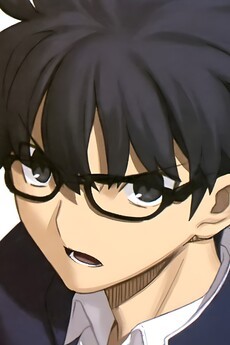
Shiki Tohno
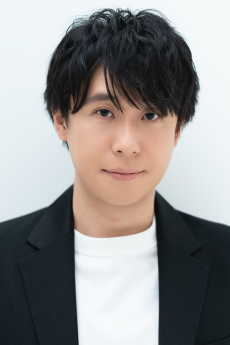
Kenichi Suzumura

Ciel

Fumiko Orikasa
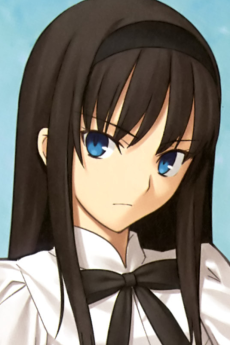
Akiha Tohno

Shizuka Itou

Aoko Aozaki

Akiko Kimura

Kohaku

Kana Ueda

Hisui

Yumi Kakazu
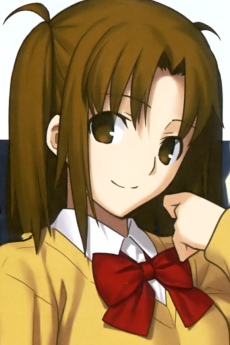
Satsuki Yumizuka

Kaori Tanaka
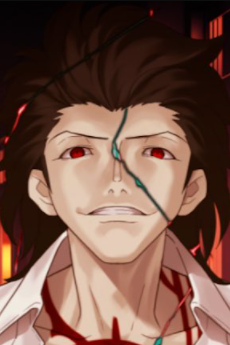
Michael Valdamjong
Hiroyuki Yoshino
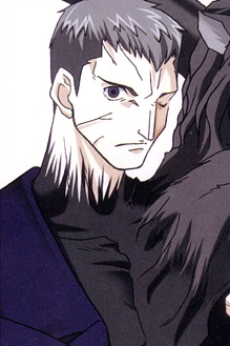
Nrvnqsr Chaos
Kenta Miyake
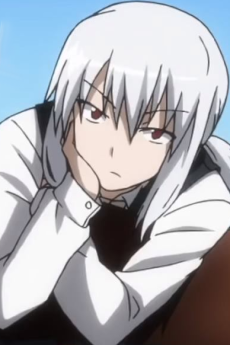
SHIKI Tohno

Takako Honda

Arihiko Inui
Takahiro Sakurai
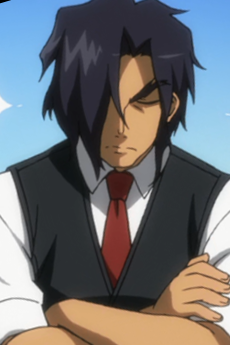
Kouma Kishima
Makihisa Tohno
Kinryuu Arimoto
Keiko Arima
EPISODES
Dubbed
Not available on crunchyroll
RELATED TO SHINGETSUTAN TSUKIHIME

REVIEWS

Alvy
Shingetsutan Tsukihime: How Not to Adapt a Visual NovelContinue on AniListTsukihime was my first Visual Novel, and the engaging story, well thought out world, and the cast of equally lovable and complex characters completely drew me in. The game came out in 2000, and is SUPER dated, with minimal and poor CGs, no voice acting, and no hand-drawn backgrounds. Like, they literally just took real-life images and placed a blue filter over them. Despite it's age and clear lack of budget, the sheer strength of the storytelling and characters massively outweighed the minor gripes I may have had. Tsukihime has undoubtedly become one of my favorite stories of all time, however as far as an anime adaptation goes, it seemingly has never received one, unfortunately. Or at the very least, the community would rather sweep it's mere existence under the rug. So, on to the main topic, what do I think of the infamous yet elusive Tsukihime anime? Honestly, despite what people say, this really isn't the worst thing to ever exist. It tries it's best to adapt some semblance of the Tsukihime story to the point where a newcomer might kind of enjoy this series just a little bit. However, what I can't ignore is how unfathomably insulting this series is when stacked up to the source material. First of all, it was basically doomed from the start when they gave it only 12 episodes. A 50-ish hour Visual Novel was definitely not going to fit in such a meager amount of time without cutting some corners, which they definitely did. They basically adapt Arcueid's route but try to cram in the plot twists from Ciel and Akiha's as well. Just about everything from Hisui and Kohaku's routes are 100% omitted, basically. That aside, this anime somehow manages to present itself poorly in almost every single aspect imaginable, which absolutely baffles me. The artstyle is terribly dull and ugly. The colors are drab, grey, and lifeless. The character designs are all adapted to look more "serious" and "edgy" and it completely falls flat when compared to their original designs, which are full of color and personality. I get that this shift in artstyle was likely done to preserve the crushingly dark tone of the series, but that can be done without making everything look as lifeless as a Dead Apostle. On top of this, the animation itself is absolutely atrocious. The "action scenes" if you can even call them that, are painful to watch. There's really only a couple instances where there's any fighting, but most of it is just really slow with as little movement as possible. There were approximately TWO scenes in this ENTIRE series where it looked like they kind of tried even just a little bit, and even then they are probably not much better than average. Every time the characters are even a meter away from the camera, they become indistinguishable meshes, and every little movement is just so painful, with absolutely zero impact or weight to any of it at all. It's hard to believe that this came out of J.C. Staff, considering that they produced Utena under their studio name just 5 years prior. Obviously, the studio behind the production definitely doesn't absolutely determine it's quality, but still, I would imagine there would be at least some level of quality control. Sure, this show came right at the beginning of the 2000s, when digital animation was still fairly new and people were still adjusting to it, so a certain level of jank is probably a given, but this is just too much. The original Hellsing, which came out two years prior, looks MILES better than this show, and people constantly rag on about how poor it's production quality was. I think there's a lot of similarities to be found in these two shows, actually. The old Hellsing, however, actually looks like it was made by people who care just a little bit. There's not much positive I can say about this anime, but hypothetically, if you had never heard of the Tsukihime Visual Novel and came across this anime, and were also able to get past it's copious and glaring production issues, you may find yourself enjoying the story at least a tiny bit. However, if you have not seen this and want to get into Tsukihime or Type Moon in general, this is not the way to go.
Essentially, TL;DR, I would absolutely not recommend this series as your introduction to Tsukihime. If it was, I'm sorry, but I hope that any mild interest you may have picked up could lead you toward playing the Visual Novel. Hell, Tsukihime also has a manga adaptation that's actually pretty damn good. I would highly recommend either of those choices. If you're already familiar with Tsukihime and just want to watch this anime for educational purposes, (which I did) I can't say I'd really encourage that because it was pretty painful for me, and ultimately it didn't really feel worth it. Well, here's hoping that we get a ufotable Tsukihime anime once they're all done with Fate.

wallyNHK
Tsukihime/Leyenda Lunar: una humilde tesis sobre la grandeza de Tsukihime.Continue on AniListEsta es mi primera y última reseña. Además de ciertas consideraciones, no pretendo hacer de ella algo especial, pues nació del deseo transitorio de escribir, como quien necesita beber agua, pero con mayor intensidad. Mejor dicho, como la urgencia de saciar una sed insufrible. Es pues una sensación de querer soltar, de darle voz a la melodía que escucho y me susurra con ternura: escríbelo.
Si hay algo que quiero dejar muy en claro, se trata de evitar redundancias tales como la fidelidad del material adaptado, cronogramas y tiempos, o la precariedad de la producción. Serán mencionados cuando yo lo crea oportuno y necesario. Pero no se puede evitar algo sin reconocerlo, y en vista de que todos parecen hacerlo, ahora quiero encargar una pequeña tarea a todo aquel que lea este texto, una tarea absurda la cual, desde la hondura de mi alma, deseo que la medite profundamente.
¿Usted percibe amor? o ¿Usted siente amor?
Por favor, piénselo con detenimiento. Y mientras lo hace, estoy seguro que vendrán a su cabeza recuerdos, paisajes de su infancia, memorias borrosas o, en última instancia, fragmentadas. Mientras hace eso, si usted es mínimamente sensible, habré colado felizmente un sentimiento que, casi con cinismo, llamamos «melancolía». Le suplico nunca olvide ese sentir, y le aconsejo que lo evite romantizar, mucho menos ignorar. Yo espero y creo que al mencionar dicha palabra, de forma casi automática pensará en Tsukihime. Una obra precaria en lo técnico y nacida de el sincero anhelo de compartir lo interior, ese rugir artístico que siente quien lleva el don, pues su misma existencia le obliga a escribir por miedo al olvido, miedo a desaparecer y abrazar a la Muerte, porque es un miedo irracional que escapa la frontera de la vida, y queda pequeño frente a su propia alma.
Déjenme decirles que ese sentimiento lo veo reflejado en el anime. Con toda su torpeza, con toda su humildad y con todo su cariño; no existe momento o detalle que no transmita amor por la obra.
Como bien habrá notado, esto no es una reseña. Acúseme de charlero o pretencioso si así desea. Sucede que siento un profundo asco por el análisis cuantitativo. Me saben a mierda los números y disculpen la expresión, pero no me pidan respeto por un método de castración que convierte el arte en producto, el cine en comida rápida, los libros en estantes con polvo y las pinturas en superficie manchada de colores.
Si por casualidad usted no encuentra sentido a este texto, o no ve la relación con el asunto a tratar: ya tiene la respuesta a la pregunta anterior.
Con toda mi humildad y buena vibra, sea cual sea su respuesta, no deseo menos que el mejor de los futuros para usted, quien me leyó y dedicó unos minutos de su valioso tiempo, tiempo que le recuerdo, es irrecuperable; acepte por favor mis más sincera gracias y buena suerte.Y recuerde que, aunque usted y su alrededor puedan cambiar, sin importar los años, sin importar las lluvias o sequías; la luna siempre estará brillando en un mar de oscuridad.
Usted siente a la luna brillar, aunque no la vea.
BlightVILE
How a toxic fanbase destroyed the legacy of a cult classic animeContinue on AniListAnime? What anime?
In the year 2003, Christopher 'moot' Poole launched his website 4chan, itself a spinoff of the Japanese imageboard Futaba Channel, better known as 2chan. The same year, J.C Staff produced Shingetsutan Tsukihime, an adaptation of the 2000 doujin game. The series garnered a cult following, and would go on to become a hit with the then anime-obsessed userbase of 4chan. So enamored were the fans that interest in the source material steadily grew and grew. Then, in 2006, the translation group Mirror Moon, led by a Japanese man looking to improve his below-average English skills, began a project that would change everything. For many, his translation of Tsukihime would be their first exposure to the medium of visual novels, and their first exposure to the writing of Kinoko Nasu.
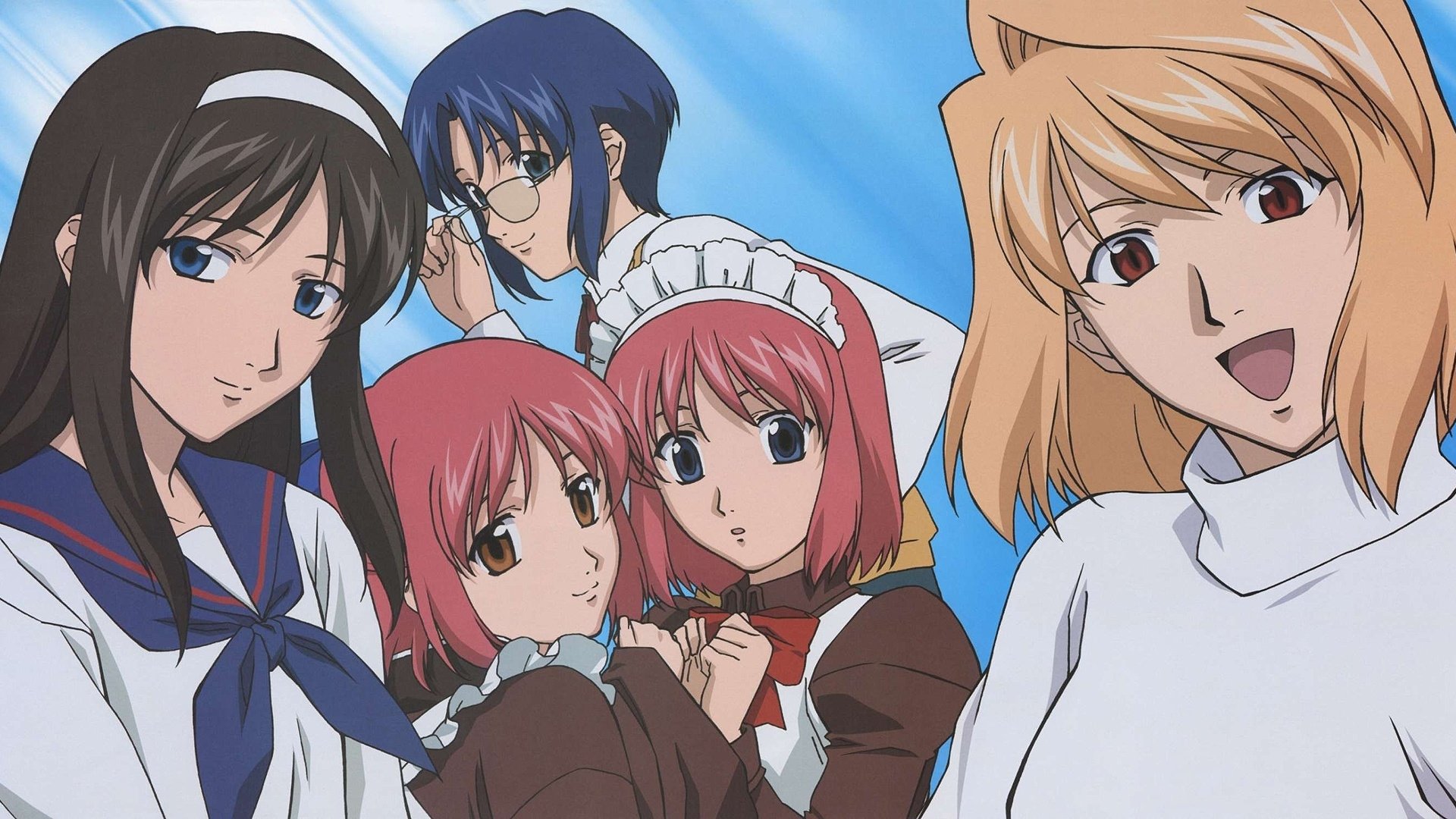
As of 2026, Lunar Legend Tsukihime is treated as an entity so horrendous it doesn't even exist. This reputation is almost entirely constructed. The 2003 anime is not a disastrous failure but a wholly competent adaptation that preserves the original work’s atmosphere far more faithfully than many later reinterpretations.
The Myth (The Legend)
Shortly after Mirror Moon’s translations were disseminated, fans quickly realized Kinoko Nasu's writing style is dependent on long-winded, diaristic, and repetitive first-person monologues that aim to detail the protagonist's deep inner world and psychology.

It's thus argued that a nuanced portrayal of protagonists such as Shiki Tohno, the first-person perspective the story of Tsukihime is told from, is near-impossible in the animated medium without them.
But perhaps the most essential part of the identity of Type-Moon is sweet, urban fantasy action spectacle, complete with fluid, stunning animation, detailed choreography, and bold, vivid colors. Centering on supernatural beings with mighty powers, high-octane magical fight scenes are a staple of Nasu's works. It's then fair to judge that an adaptation that fails to adequately deliver on this promise is sadly incomplete, and a waste of potential.
Many have attempted to adapt Nasu's epic vision, but few have succeeded. After years of attempts by Studio DEEN, Ufotable finally delivered the ultimate Fate experience in 2011, Fate/Zero. Success after success followed. Ufotable, with their Unlimited Budget Works, went on to adapt the Heavens Feel arc in three feature-length films, impressively preserving incredible fidelity to the original work while turning the spectacle to 11.
The absolute supremacy of Ufotable's approach cannot be understated. Their understanding of the source material comes second only to Nasu himself, and it's fitting that the same individuals also directed the long awaited Tsukihime remake visual novel's opening.
Indeed, the exponential speed that technology advances never ceases to fascinate. Dated experiments like 2003's Lunar Legend Tsukihime are best left in the past, to fade into obscurity.
Puncturing the Myth
Engaging with Mirror Moon's translation of the original Tsukihime is, to put it bluntly, very painful. It can hardly be called "Nasu's writing" in the first place. The quality of the translation's prose is poor and awkwardly phrased, as if written with all the sensitivity of a grade schooler. But it's more accurate to say that Takajun literally does not have the strongest grasp on the English language, since he learned it while translating the text. It doesn't help that the original visual novel's monologues (including "This chair.") are often highly melodramatic and redundant - sometimes altogether unnecessary.
The 2000 visual novel was heavily constrained by its limited budget, using only a handful of hand-drawn CGs, sprites, and only 10 or so unique musical tracks. The backgrounds were filtered blue photographs. There was no voice acting whatsoever. And by no means was action central to the source material. Instead, the text prioritized atmosphere, mystery, and supernatural romance. It was by all accounts, a minimalist production. However, it would be foolish to dismiss it on this basis. The gaudy, expansive Tohno manor feels empty, oppressive, and full of secrets. The lonely urban centers and school settings create a sense of liminality. With the vast majority of scenes being one-on-one conversations with a character sprite, it all feels strangely intimate. The sound novel's limitations created something uniquely charming, however intentional, and its storytelling - in spite of deep flaws - was strong enough to be effective for many.
Ultimately, the expectation that Type-Moon ought to prioritize shōnen hype and visual spectacle over character drama did not arise naturally from the original works, but was constructed through a calculated decision made by Ufotable personnel adapting said works for mass appeal. This, ironically, left less space for the introspection central to the originals' style.
These expectations, accelerated by Fate/Zero, solidified into truth a half-ironic, burgeoning meme - that there is no Tsukihime anime - because to newer fans, the approach taken by J.C Staff meant it might as well not exist to them.
There IS A Tsukihime Anime
When actually engaging with 2003's Lunar Legend Tsukihime, something curious is found: it is not incompetent - far from it, actually - and may be the most faithful adaptation of the original visual novel to date.

Detailed setpieces and movement are highly limited, instead relying on close-ups and panning stills whenever possible, presumably due to a rather modest budget. Typical of its time - an era in which animators were adapting to newer technology - the anime features muted, desaturated colors in favor of bold, bright neon. Background elements, however detailed, contain close to zero movement overall, centering speaking characters in the foreground as the only truly living beings. It's an approach that has been variously described as dull, uninspired, and soulless.
It's perfect.
You could not more accurately recreate the feeling of Tsukihime. The result is calm, but subtly unnerving, giving certain scenes exactly the kind of anxiety they deserve. The great character designs remain crisp, but static. It's an approach that closely mirrors the original's own minimalist visuals, developed from the same kind of limitations. It's quite stylish; the kind of visual style that doesn't need to announce itself at every moment. It's rare to find in the sense that the only style we recognize is loud, obvious, heavy-handed. But the series is also more than capable of deploying more stylized shots, it's just strategic in the manner it selectively adjusts "volume". See the beautiful opening for example:
Mostly, however, the quiet visuals allow the score to speak louder than words. Far from an afterthought, the lovely OST, far more diverse and expansive than the original’s 10 tracks could ever aspire to be - and whose arrangements are heavily reminiscent of those used in the visual novel - is used tastefully throughout the series to develop mood and tone. In just the first episode, there is a brilliantly directed scene where Hisui clinically explains the strict rules of the Tohno manor upstairs as a solo violin fades in as background music. Moments later, the resounding melody is revealed to be diegetic music as the scene cuts to Akiha in the middle of her practice regimen. If there's one thing the series does not lack, it is intent; uninspired it is decidedly not.
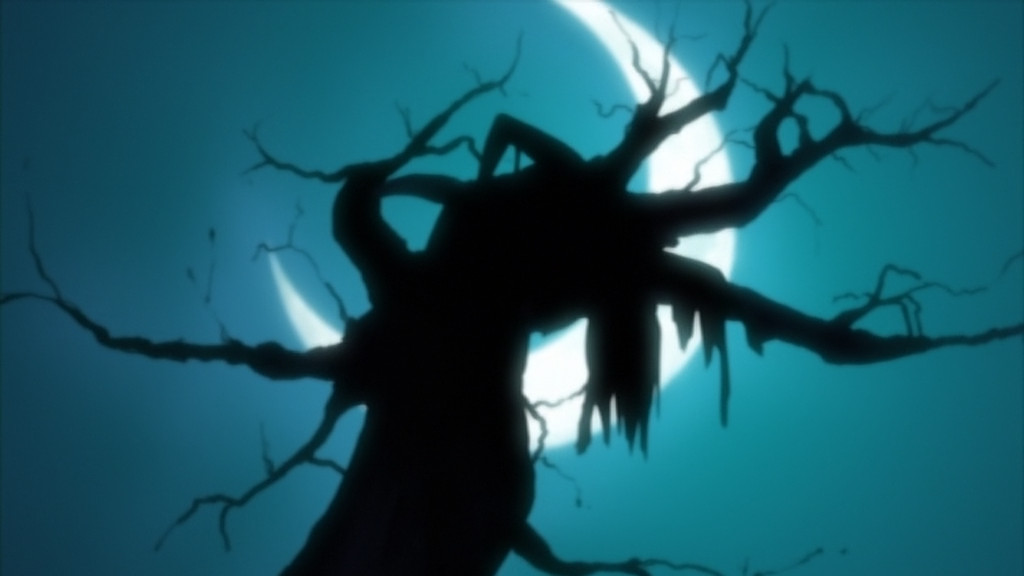
In terms of sheer frames per second, J.C Staff’s approach obviously falls short of the expectations of modern audiences. However, when judged on its own terms, the direction is not only competent, but maintains incredible fidelity to the style of the original work.
Fidelity To The Original Work
Still, the 2021 remake visual novel, Tsukihime -A piece of blue glass moon-, is often treated as the definitive, most faithful version of Tsukihime’s narrative. Its first route follows many of the same story beats as the original - where Shiki and the mysterious Arcueid Brunestud team up to put an end to the vampire Michael Roa Valdamjong’s terror - but reinterprets them through modern production values and an emphasis on spectacle.

This makes it an ideal point of comparison because it reveals exactly what the 2003 anime chose to preserve. To compare these versions meaningfully, some plot details are unavoidable. In many ways, glass moon is just as much of a departure as it is a faithful recreation.
It’s uncontroversial to admit the 2021 remake greatly expands the world and the scale of its action. Suddenly, Arcueid leaps over buildings and fights battles in massive urban centers, causing major property damage, mass death, and highly visible destruction. New additions like Mario (and his subordinates) serve to ground shadowy institutions like the Church in Nasu’s more concrete worldbuilding, literalizing its role as part of a larger recognizable mythos, while quirky characters like Goto Saiki and Dr. Arach exist to make the Tohno manor feel more lived-in and functional.
But these changes also raise major questions about suspension of disbelief, style, and tone. If their violence is so conspicuous, how is the existence of vampires not already widely known? What is gained from exposing the Church’s role that isn’t offset by the loss of intrigue and mystery regarding the nature of the series’ world? And is it not contradictory for the desolate Tohno mansion to suddenly emphasize domestic warmth?
Lunar Legend Tsukihime understands that the series is not concerned just with what happens in the city - rather, it is about what happens there in the moments no one is looking. In this adaptation, the world’s sense of scale is preserved, with no additional characters, and violence confined to seedy underbellies, back alleys, and obscure buildings, illuminated only by the light of the moon. And, as with the original, narrative stakes escalate not with increasingly detailed setpieces, but with internal conflicts and interpersonal drama.
A piece of blue glass moon not only reimagines the series’ action, cast, and setting, but also its central heroine. In the original story, and especially the 2003 anime, Arcueid is presented as an enigmatic adult woman who appears older and more composed than Shiki. As a vampire, she approaches her supernatural duties with blunt pragmatism but remains strangely naive about ordinary human life. Her childlike curiosity exists in tension with her mature appearance, producing a character who feels both ancient and awkwardly new to the world she inhabits. This contradiction gives Arcueid much of her charm. She is not an idealized romantic fantasy but an unusual presence: someone powerful, alien, and slightly out of place.

The remake reinterprets her differently. She appears much younger, more energetic, stylish and self-assured. Her awkwardness is reduced, her mystique softened, and her personality leans closer to a familiar archetype: the playful Magical Girlfriend. Even while hitting several of the same emotional beats, there remains the unmistakable sense that something essential has been lost.
If the remake departs from the original in the name of expansion and legibility, the anime departs from it in the name of focus.
The original, and, to a large extent, the remake, depicted Shiki Tohno’s character not just through verbosity but also as beholden to bloodlust and sexual violence with uncomfortable, pornographic emphasis. Deeply misogynistic, many passages are first-person accounts detailing his ghoulish predatory urges in depth. At one point, when Shiki is demonstrably lucid, even, the character remarks to a certain figure that if she continued to stand in his way, he would not hesitate to rape her.
Curiously, the anime largely excised these strangely fetishistic elements in favor of a more melancholic portrayal that in no way whitewashes the character’s connection to violence. The series - controversially - trusts the audience to infer Shiki’s mental state through visual storytelling over outright narration and shock value. Take for example, Arcueid’s iconic dismemberment, which is executed without words, yet still centers Shiki’s psychological rupture through framing, composition, and sound. The result is not a diminished character, but a protagonist that can sustain the story’s central romance without being overwhelmed by excess - making for, arguably, more effective storytelling than Nasu’s monologues can realistically deliver.
Several of the series's choices are justified by the same pragmatic logic. In a 40+ hour eroge with branching routes, withholding information becomes increasingly necessary, bordering on inevitable, to preserve intrigue and a sense of thematic progression. In a 12 episode anime adapting such an eroge, focusing on just one of those routes, the calculus naturally shifts, focusing instead on telling a complete story. Which is why an oft-lobbed criticism is that the anime adaptation, in addition to compressing a long, complex narrative, indiscriminately blends plot elements from multiple routes.
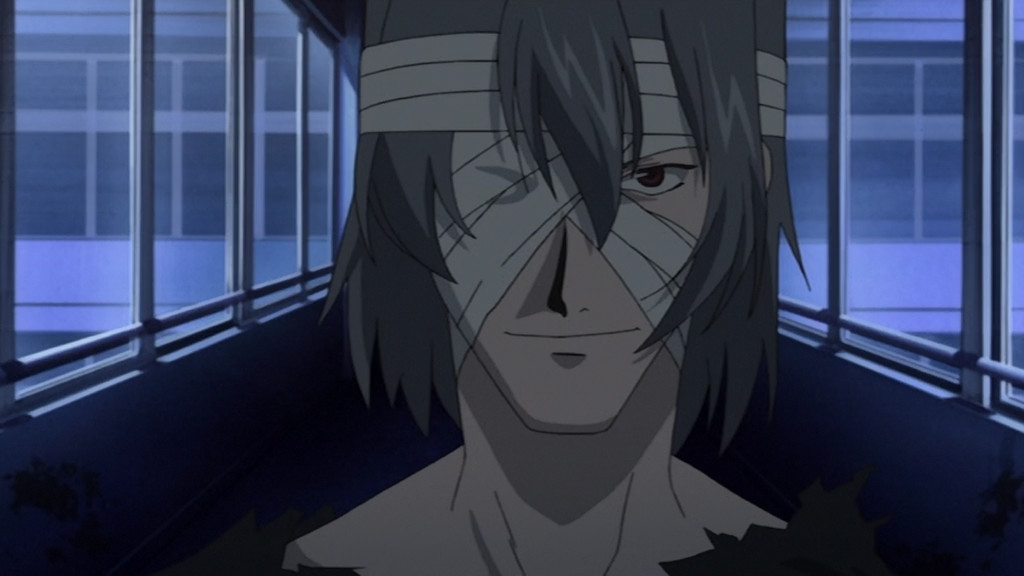
In particular, it opts to unravel the mystery of the Tohno family’s history and center SHIKI, the true biological heir to Makihisa Tohno, as the primary antagonist and vessel of Roa rather than relegating him to a separate route. In the original structure, SHIKI’s significance is withheld, reserved for later revelations. While effective in a multi-route format, this delay weakens the thematic clarity of the Arcueid route in isolation. The anime resolves this by foregrounding the parallel between Shiki, SHIKI, and Arcueid: one resists his violent nature, one succumbs to it, and one exists in a constant struggle against it. What the visual novel distributes across multiple routes, the anime consolidates into a single, elegant thematic framework: one that strengthens Shiki and Arcueid’s romance by grounding it in a shared internal conflict that is shown and not told.

Crucially, the incorporation of these elements doesn’t at all require destroying the pace or integrity of Arcueid’s story, which was already quite simple at its core. The adaptation remarkably covers all of the narrative in depth, giving the viewer ample time to be acclimated with its characters and world. Instead of asking whether a 4-hour, 12 episode anime series can reasonably adapt all of the story 2 to 3 times longer, perhaps the more appropriate question is whether the original story justified this length in the first place…
Satsuki
…and if it always made perfect decisions about major plot elements. The character of Satsuki Yumizuka, Shiki’s classmate and friend who holds an unrequited crush, becomes a case study.

In the original, the character’s inclusion is justified by transformation into a vampire and death, reinforcing the horror of the supernatural’s intrusion into everyday life. The anime takes a different approach to the same theme.
Presumed dead in a vampire-related incident, she later reappears completely unharmed, creating a moment that, for Shiki, is not shocking, but uncanny, as his perception of reality becomes unreliable. She remains what she always was: a normal girl with ordinary feelings. But her earnest feelings are not returned, as Shiki is incapable of doing so. After this revelation, he doesn’t stabilize; instead, the world of mundane school life that Satsuki represents becomes increasingly liminal, as if Shiki no longer belongs to it.
In the series’s final episode, Arcueid Brunestud and Ciel vanish from the world’s memory - only Shiki’s memory of them remains. But Satsuki still holds feelings for him. She propositions him again, but is rejected off-screen.
The tragedy is not that she dies, but that she is left behind. By rejecting Satsuki, Shiki fundamentally admits he can’t go back to being the person he was before meeting Arcueid.You’re Not The Same After Finishing The Anime That Supposedly Does Not Exist
The “there is no Tsukihime anime” meme persists because it is easy to repeat. It requires no thought, no reconsideration, and no engagement with the work itself. The fact that the vast majority of fans that do repeat it have not even touched the series is nothing short of a tragedy. Imagine my shock, having believed this without questioning its basis, only to discover that the Tsukihime anime is not only nowhere near as bad as it is made out to be, but also astonishingly competent. Every episode was spent on edge, waiting for the moment everything would suddenly turn to shit. That moment never came.
Remake culture quietly assumes that art’s quality scales linearly with technological progress. The remake itself is evaluated not as art, but as a kind of software update, judged on technical and easily quantifiable metrics. Such an approach is incredibly harmful. Shingetsutan Tsukihime, nor the game it was derived from, is not a prototype to be replaced. It is a unique interpretation full of merit, and something of beauty. And thus, it becomes a study in how a toxic fanbase can destroy the legacy of a cult classic before it is even received.
SIMILAR ANIMES YOU MAY LIKE
 ANIME ActionFate/stay night
 ANIME ActionFate/Apocrypha
 ANIME ActionKimetsu no Yaiba
 MOVIE DramaTsuki no Sango
 MOVIE FantasyTa ga Tame no Alchemist
 ANIME ActionWonder Egg Priority


![Cover Art for Fate/stay night [Heaven's Feel] I. presage flower](https://s4.anilist.co/file/anilistcdn/media/anime/cover/medium/bx20791-yPCX5GJuMH2k.png "Fate/stay night [Heaven's Feel] I. presage flower")


SCORE
- (3/5)
MORE INFO
Ended inDecember 26, 2003
Main Studio J.C.STAFF
Favorited by 315 Users