

UMAREKAWATTEMO MATA, WATASHI TO KEKKON SHITEKUREMASU KA
STATUS
COMPLETE
VOLUMES
4
RELEASE
September 20, 2019
CHAPTERS
25
DESCRIPTION
Toranosuke fell in love with his servant Kaoru. For twenty years, they slowly developed their love for each other, thus a Showa couple of clumsy husband and muscle brained wife was born. They spend a lot of time together, and they begin to talk in a nostalgic manner in Toranosuke's hospital room.
Gentle memories of a deeply in love husband and wife.
Note: Includes three extra chapters.
CAST
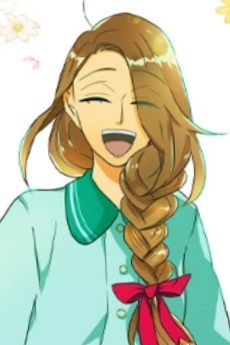
Kaoru Okouchi
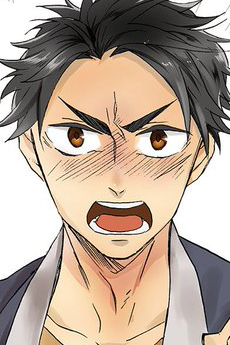
Toranosuke Ibuki
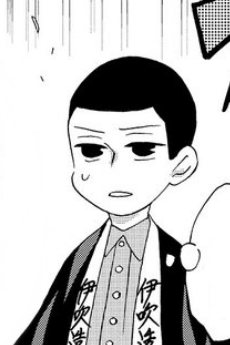
Senkichi Oda
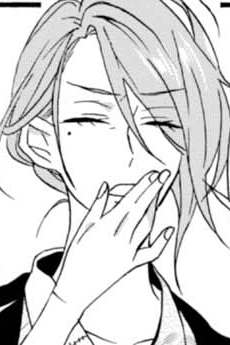
Mitsuru Okouchi
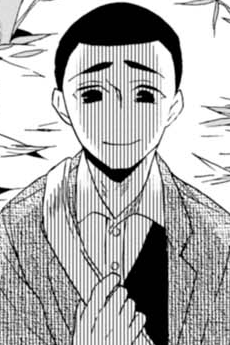
Toyokichi Oda
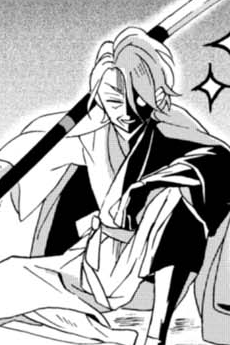
Tsuru Okouchi
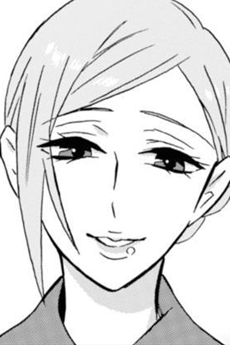
Haru Okouchi
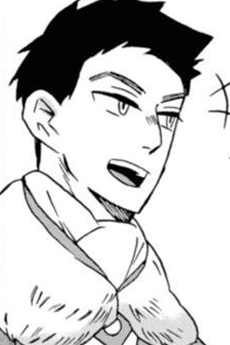
Masaomi Naruse
CHAPTERS
REVIEWS

ClearlyNotDaph
Never did I expect that I would cry and be happy at the same time literally in every chapter in a manga.Continue on AniListNever did I expect that I would cry and be happy at the same time literally in every chapter in a manga.

~ Quick synopsis ~
This manga is mainly about an old couple with an old family that survived a horrific world war. That’re twenty years later, now reminiscing and remembering the good and the bad memories they’ve had and made. Now what makes this completely different and unique, is how the story goes and it’s pacing in particular. It isn’t that special or really different but overall how it shows you the scenes and how captivating it is. Like really, you’d only understand me if you’ve read the manga.
~ Thoughts ~

First and foremost, this really messed me up inside and out. I’ve said this the second time already, yet I’ll say it again. You’d get heavily and emotionally invested with it’s characters and it’s conflicts and overall the story. Which is also really something to take note of.~ The characters ~

I’d have to say, each and everyone one of them is unique and isn’t shallow. They have depth. They have emotions and interests. They have their likings and whatnot. They’re characters that’re people who felt really real. Like the Young Toranosuke whos’ having the dilemma of Juvenile love. Troubled so heavy in confessing and having the hand of the beautiful Servant Kaoru. The main couple’s power dynamic is very entertaining. Yet this isn’t the only relationship in the story that is unique and wholesome. Some of it was also very bothersome and saddening. The struggles and strong emotions they’ve had. You can’t help but feel and somehow and somewhat relate also. The characters aren’t simple as they’re quite written decently. Enough to respect the story for what it is and how it goes.~ Illustrations/Art ~
The illustrations aren’t that particularly special or great. But it definitely did a good job on delivering and maneuvering the characters with their emotions. You can really feel the mood and the situation that they’re in. Which makes the story and the manga overall even better.
~ Favorite Scene/Panel ~

Honestly, I’d say everything and every simple yet crucial panel of the story. It really hits different when you’re invested whole heartedly. But that would just be crude and ridiculous. So I might have to pick this one. There’s still a lot of powerful and impactful scenes that I can show but I can only show this. To also avoid spoilers. .^_^.~ My Gripes or Critical criticisms/Nitpicking ~
As much as the author did a good job, in my opinion. The story hits you with the same emotional beats, again and again. It’s something to really critically take note of as it shouldn't frequently happen in a story. Because it makes things simple and even bad to others. Like the constant emotional scenes of being worried, sad and crying of the characters. Which is too simple yet still an effective way to make your audience feel emotional. But despite this, it still doesn’t change the fact that I really got hit by it too. Which isn’t too bad. And the author provides a buildup for every conflict and emotional payoff.
If you’ve read all of this, then I appreciate it!
Would love to know what you think about the review and the story too!

NapoJ
Un amor a prueba del tiempo (reseña en ESP y ENG)Continue on AniListLa siguiente reseña está en Español e Inglés (traducida con el apoyo de DeepL)
La versión leída es la traducida al español por Semisemii de Shimpaku Scanlation.
Su principal cualidad viene desde su presentación, es una historia de amor despojada de características excepcionales más allá de ser auténticamente de por vida, únicamente interrumpido por los achaques de salud del ser humano. Y constituye su ventaja porque al carecer de particularidades se asimila mejor en el sentido de credibilidad, como una historia que puede ser contada por un familiar, un conocido o alguien en algún momento en cualquier lugar. El resto de su estructura narrativa apoya este enfoque.
La progresiva integración de personajes conforme avanzan los capítulos va directamente relacionado a la propia existencia, mientras más se prolonga a más conocemos por las diferentes circunstancias. Y cada uno tiene su propias vivencias que se intersectan con la de los otros, de ahí las historias secundarias que hacen eco a la temática principal, el amor. Si bien se realiza especial hincapié en el amor de pareja, también está presente el amor entre amigos, colegas, el familiar de padres e hijos y entre hermanos.
Y este amor no es idealizado ni utilizado como una extraña fuerza misteriosa, es un sentimiento que se nutre porque sus integrantes se esfuerzan en volverlo posible, sea en la comunicación de una pareja para hablar sobre los inconvenientes y seguir adelante juntos. Del amor incipiente entre dos amigos con ganas de un nuevo paso, y de otro que germina al paso de los años en el momento adecuado.

También es el amor el refugio ante lo imprevisto, hacia la mitad de su narrativa se cierne un conflicto que seguro podrás intuir al saber que la historia se desarrolla durante el Japón de la era Showa. La aproximación acerca del conflicto se realiza con respeto, entre la condena por el dolor de quienes no regresaron más sin minimizar el honor de quienes participaron. Y es ahí donde se cierne gran parte de las cicatrices emocionales, entre esas historias secundarias interconectadas ahora sobrepasadas por algo más grande y desgarrador, resultado en amor mutilado o no concretado.
Nuevamente, se alinea correctamente con el planteamiento narrativo, no puede haber un rememoración de hechos sin excluir aquellos que fueron tristes, son parte de nuestra conformación como personas. Revisando únicamente aquellos pertenecientes a la pareja principal es destacable el listado de memorias agridulces, precisamente son los momentos claves del desarrollo de su relación, tal cuál debería ser.
Puede que a varios les resulte algo despistante la desaparición y reaparición de personajes, desconozco si Miku Morinaga pretendía reflejar que precisamente los recuerdos funcionan de esa manera, ni tampoco es que la historia se haya planteado de testimonio ni biografía. Es un acto de comunicación en todo aquello que hemos considerado importante.

Aprovechando la mención de la autora he de destacar el dibujo de la obra, tiene una simplicidad que le permite plasmar de forma efectiva las emociones de sus personajes para estar en sintonía con la situación de cada episodio, los fondos suficientemente detallados e incluso difusos de vez en cuándo para apoyar su planteamiento narrativo, y su construcción de paneles en los instantes precisos para darle una excepcional belleza al momento.
Aún comprendiendo el planteamiento de la autora y destacando las múltiples cualidades de su historia, todavía hubiese preferido unos cuántos capítulos más para momentos omitidos que apoyan a la relación protagónica. Además por sí mismo no tiene otra característica especialmente destacable, para bien y mal, porque quienes conecten lo suficiente con lo presentado, se topan con una narración más íntima y sentida que se entiende a sí misma, y lo que quiere comunicar, acerca del amor de una pareja entre sí y quienes los rodean durante toda su vida, y lo que siga después.

English
Its main quality comes from its presentation; it is a love story stripped of exceptional characteristics beyond being authentically lifelong, interrupted only by the health problems of human beings. This is its advantage because, lacking particularities, it is more credible, like a story that could be told by a family member, an acquaintance, or someone else at any time, anywhere. The rest of its narrative structure supports this approach.
The progressive integration of characters as the chapters progress is directly related to existence itself; the longer it goes on, the more we learn about the different circumstances. Each character has their own experiences that intersect with those of the others, hence the secondary stories that echo the main theme: love. While there is a special emphasis on romantic love, love between friends, colleagues, parents and children, and siblings is also present.
And this love is not idealized or used as some strange mysterious force; it is a feeling that is nurtured because its members strive to make it possible, whether it be in a couple's communication to talk about problems and move forward together. It is the budding love between two friends eager to take a new step, and another that germinates over the years at the right moment.

Love is also a refuge from the unexpected. Halfway through the narrative, a conflict looms that you will surely sense when you learn that the story takes place in Japan during the Showa era. The conflict is approached with respect, condemning the pain of those who never returned without minimizing the honor of those who participated. And that is where much of the emotional scarring lies, among those interconnected secondary stories now overshadowed by something bigger and more heartbreaking, resulting in love that is either mutilated or unfulfilled.
Once again, this aligns correctly with the narrative approach; there can be no recollection of events without including those that were sad, as they are part of what shapes us as people. Looking only at those belonging to the main couple, the list of bittersweet memories is remarkable, as they are precisely the key moments in the development of their relationship, as it should be.
Some may find the disappearance and reappearance of characters somewhat distracting. I don't know if Miku Morinaga intended to reflect that memories work that way, nor is the story intended to be a testimony or biography. It is an act of communication in everything we have considered important.

Taking advantage of the author's mention, I must highlight the artwork of the work, which has a simplicity that allows it to effectively capture the emotions of its characters to be in tune with the situation of each episode, the backgrounds sufficiently detailed and even diffuse from time to time to support its narrative approach, and its construction of panels at the precise moments to give exceptional beauty to the moment.
Even understanding the author's approach and highlighting the many qualities of her story, I would still have preferred a few more chapters for omitted moments that support the protagonist's relationship. Furthermore, it has no other particularly noteworthy characteristics, for better or worse, because those who connect sufficiently with what is presented will encounter a more intimate and heartfelt narrative that understands itself and what it wants to communicate about the love of a couple for each other and those around them throughout their lives, and what follows afterwards.

SIMILAR MANGAS YOU MAY LIKE
 MANGA ComedyMizutama Honey Boy
 MANGA RomanceKimi no Koe
 MANGA ActionHusk of Eden
 MANGA ActionSpirit Circle
 MANGA ComedyZense Coupling


SCORE
- (4.2/5)
MORE INFO
Ended inSeptember 20, 2019
Favorited by 612 Users